
Expert Packing Tips & Tricks from LIFE Moving Co.
This guide is designed to help LIFE Moving Co. customers prepare their homes for a successful move. It covers everything from general packing strategies and room-by-room organization to detailed instructions for packing fragile belongings, electronics, furniture accessories, clothing, kitchenware, and specialty household items.
The goal is simple: pack smarter, protect your belongings, make moving day easier, and help your movers work efficiently.
Get a quote
25 Golden Rules of Packing
These are the most important things to remember before you start packing.
1. Anything that could go in a box, should go in a box. Loose items take longer to load, are harder to secure, and are more likely to get misplaced or damaged. If it fits safely in a box, box it up!
2. If you're not comfortable packing it, leave it for the pros. Valuable artwork, antiques, delicate electronics, oversized mirrors, specialty items, and difficult-to-pack belongings may require professional attention.
3. Don't pack air — pack efficiently, but don't overpack. Fill empty spaces with packing paper, towels, or other appropriate cushioning to prevent items from shifting.
4. Heavier items go on the bottom; lighter items go on top. This keeps boxes balanced and helps prevent fragile belongings from being crushed.
5. Never make a box too heavy to safely lift. A small box full of books can be much heavier than a large box full of linens. When in doubt, use a smaller box.
6. Use the right box for the right item. Dish packs, wardrobe boxes, picture boxes, and specialty cartons exist for a reason. The right supplies make a big difference.
7. Label every box — and label it clearly. Include the destination room and a brief description of its contents.
8. Mark fragile boxes on multiple sides. Don't assume a mover will see a label that's only on the top of a box.
9. Pack one room at a time. Mixing items from different rooms creates confusion when unloading and unpacking.
10. Keep boxes organized by destination room. This makes it easier to place everything where it belongs at your new home.
11. Never leave empty space inside a packed box. Items that shift during transportation are more likely to break.
12. Don't use excessive packing tape as a substitute for proper packing. Secure the box properly, but remember that cushioning and organization are what protect the contents.
13. Keep screws, bolts, hardware, and small parts together. Designate a specific parts box or clearly labeled bags for furniture and household hardware.
14. Take pictures before disconnecting electronics. Photograph the back of televisions, computers, entertainment systems, and complicated wiring setups.
15. Keep important documents, medications, jewelry, cash, and irreplaceable valuables with you. These should not be placed in the general moving shipment.
16. Don't pack things you no longer need. Moving is a great opportunity to donate, sell, discard, or give away unwanted belongings.
17. Don't pack liquids that can leak. Properly dispose of or transport cleaning products, chemicals, and other potentially hazardous materials according to their instructions.
18. Secure drawers, doors, and loose components. Anything that can slide, swing, open, or fall off should be properly secured or removed.
19. Don't use newspaper directly against delicate items. Newspaper ink can transfer onto dishes, glassware, artwork, and other surfaces. Use clean packing paper instead.
20. Don't stack heavy boxes on top of fragile boxes. Clearly mark fragile cartons and keep them protected from excessive weight.
21. Don't pack food that can spoil. Dispose of perishable food before moving day and plan ahead for frozen and refrigerated items.
22. Prepare a designated first-night box. Include the things you'll need immediately after arriving at your new home.
23. Keep pathways clear while packing. Avoid creating trip hazards with boxes, packing supplies, and loose belongings.
24. Finish packing before moving day whenever possible. Last-minute packing slows down the moving process and increases the chances of items being overlooked.
25. When in doubt, ask your moving company. Every move is different. Your moving professionals can help determine what should be packed, what requires special preparation, and what is best left to them.
Before packing, gather your supplies. Having everything ready prevents interruptions and encourages consistent packing techniques.
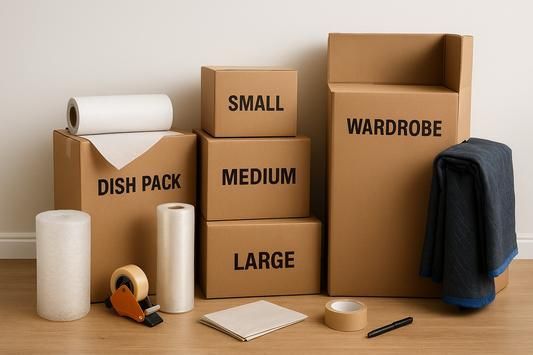
Moving boxes
Small, medium, large, heavy-duty, dish packs, picture cartons, and wardrobe boxes.
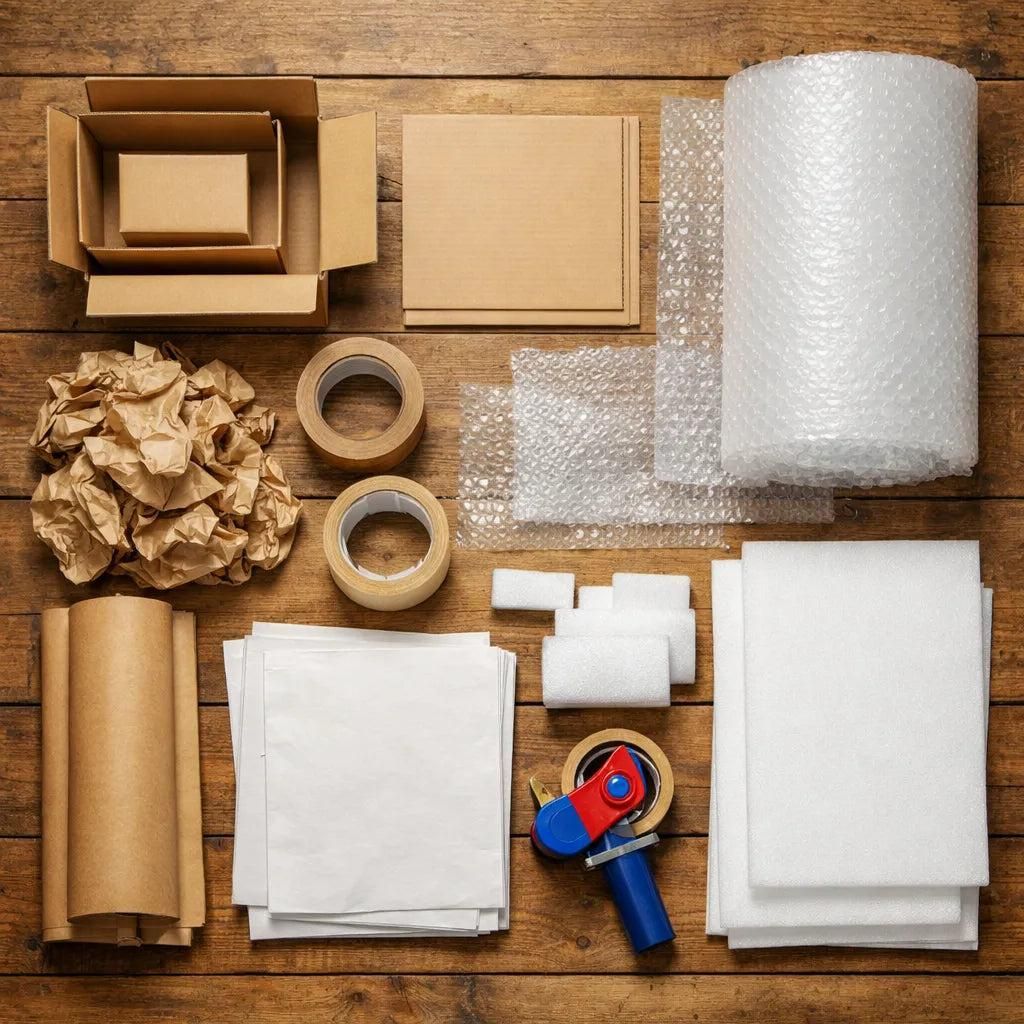
Protective materials
Packing paper, bubble wrap, foam sheets, foam corners, and cushioning.
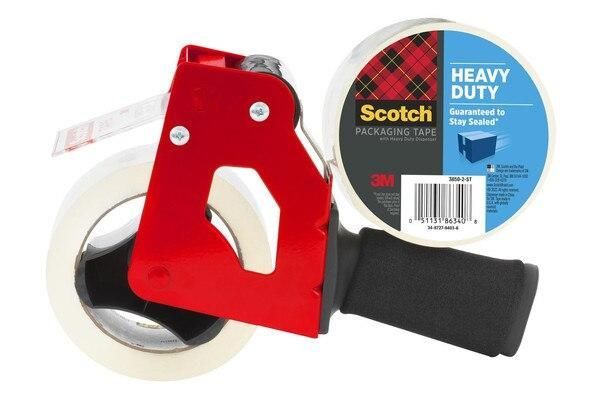
Sealing supplies
Heavy-duty packing tape, tape dispensers, stretch wrap, and labels.
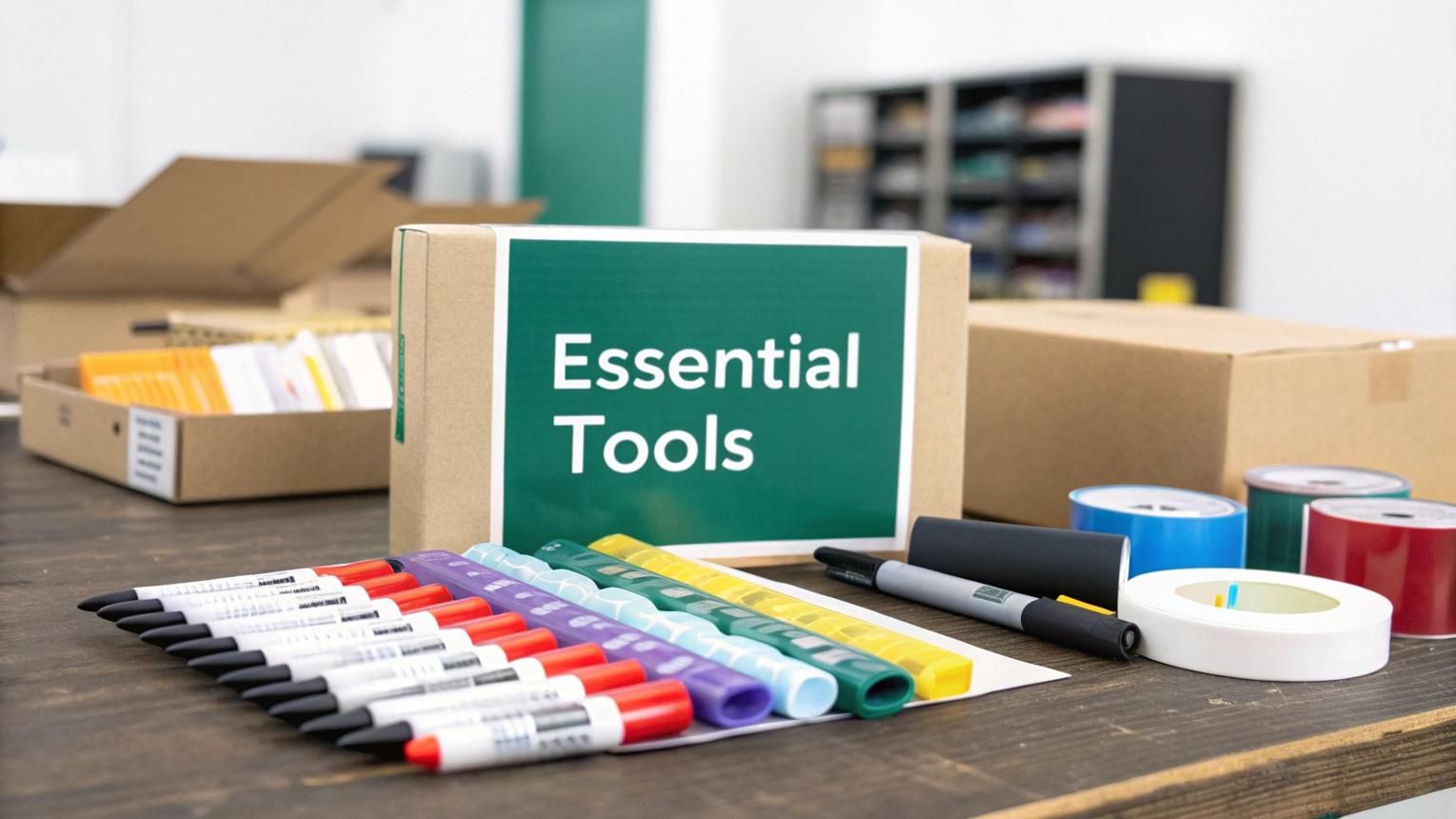
Organization supplies
Permanent markers, colored labels, resealable bags, scissors, and inventory sheets.
Other helpful supplies:
- Mattress and box spring bags.
- Sofa and chair covers.
- Furniture pads and moving blankets.
- Plastic bags for hanging clothes.
- Zip ties and twist ties for cords.
- Small hardware bags.
- Specialty TV and mirror cartons.
- Dish dividers and glassware inserts.
- Disposable gloves and cleaning supplies.
LIFE Moving Co. Tip: Don't underestimate the importance of quality packing materials. Long-distance transportation requires more than ordinary household boxes. Properly reinforced cartons, quality tape, and adequate cushioning help protect belongings through loading, unloading, and extended highway travel. LIFE Moving Co. offers professional-grade packing materials for customers who prefer to pack themselves. Learn more about our packing materials.
Detailed Packing Instructions by Household Item
The following techniques are designed to help protect specific belongings and make unpacking easier. These are the items that commonly require extra attention during a household move.
1. Pictures, Paintings, Artwork & Wall Decorations
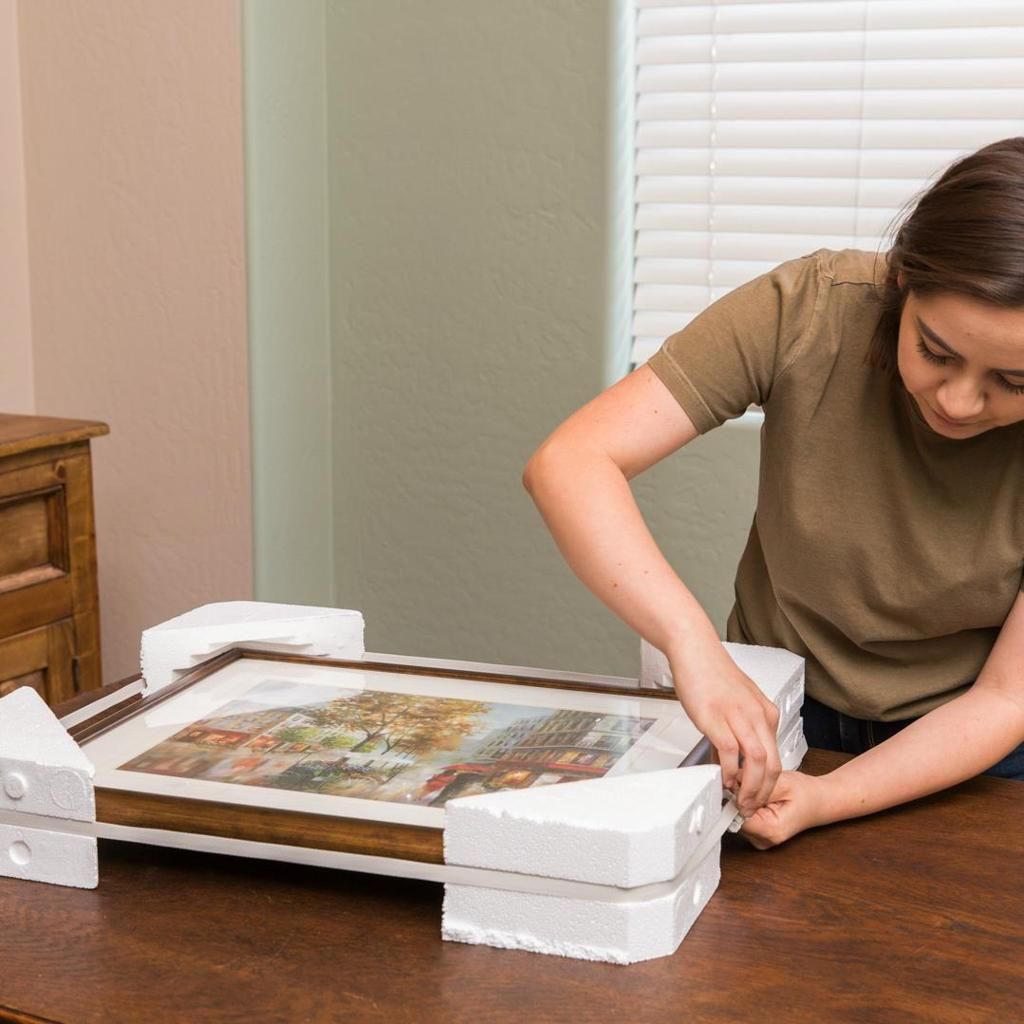
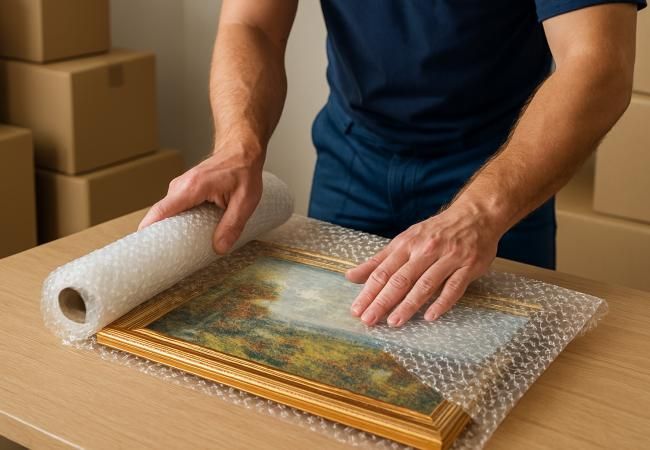
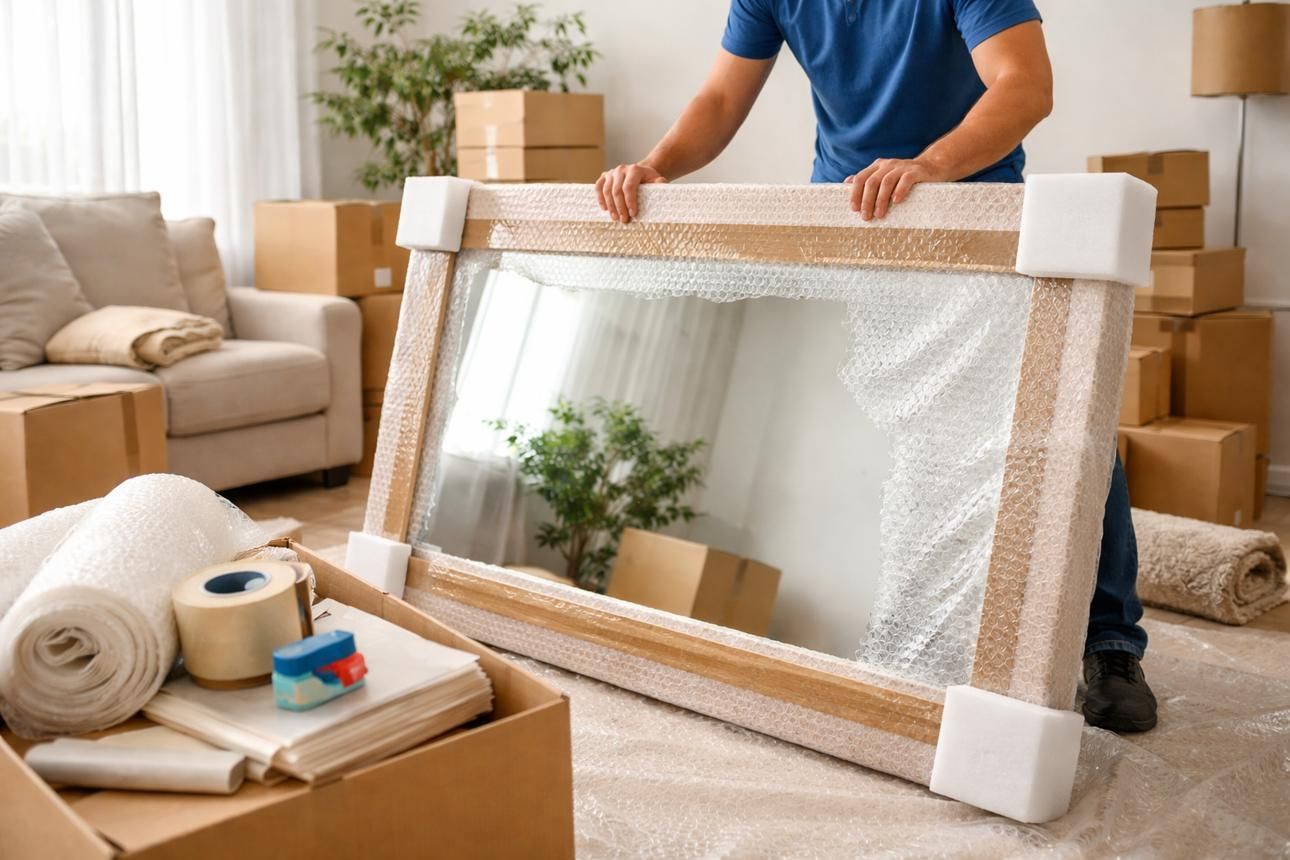
Pictures and artwork are especially vulnerable to broken glass, scratched frames, punctures, and corner damage.
How to pack them:
1. Remove pictures from walls and take off hanging hooks or loose hardware if practical.
2. Place cardboard or a protective sheet over the glass surface.
3. Apply painter's tape across glass in an X pattern only when appropriate for the glazing. Do not apply tape directly to artwork or delicate finishes.
4. Wrap the entire frame in clean packing paper or a protective foam sheet.
5. Add foam corner protectors to all four corners.
6. Wrap with bubble wrap, paying special attention to the corners and edges.
7. Place the item inside a properly sized picture or mirror carton.
8. Fill any empty spaces so the picture cannot shift.
9. Label the carton FRAGILE and PICTURES.
10. Transport especially valuable or irreplaceable artwork separately when possible.
Important tips:
- Pack framed pictures vertically, not flat, whenever the carton is designed for upright transport.
- Never place heavy objects on top of picture boxes.
- Never allow glass surfaces to rub against one another.
- Large mirrors, oversized artwork, and expensive paintings are best left to professional packers.
2. Lamps & Lampshades
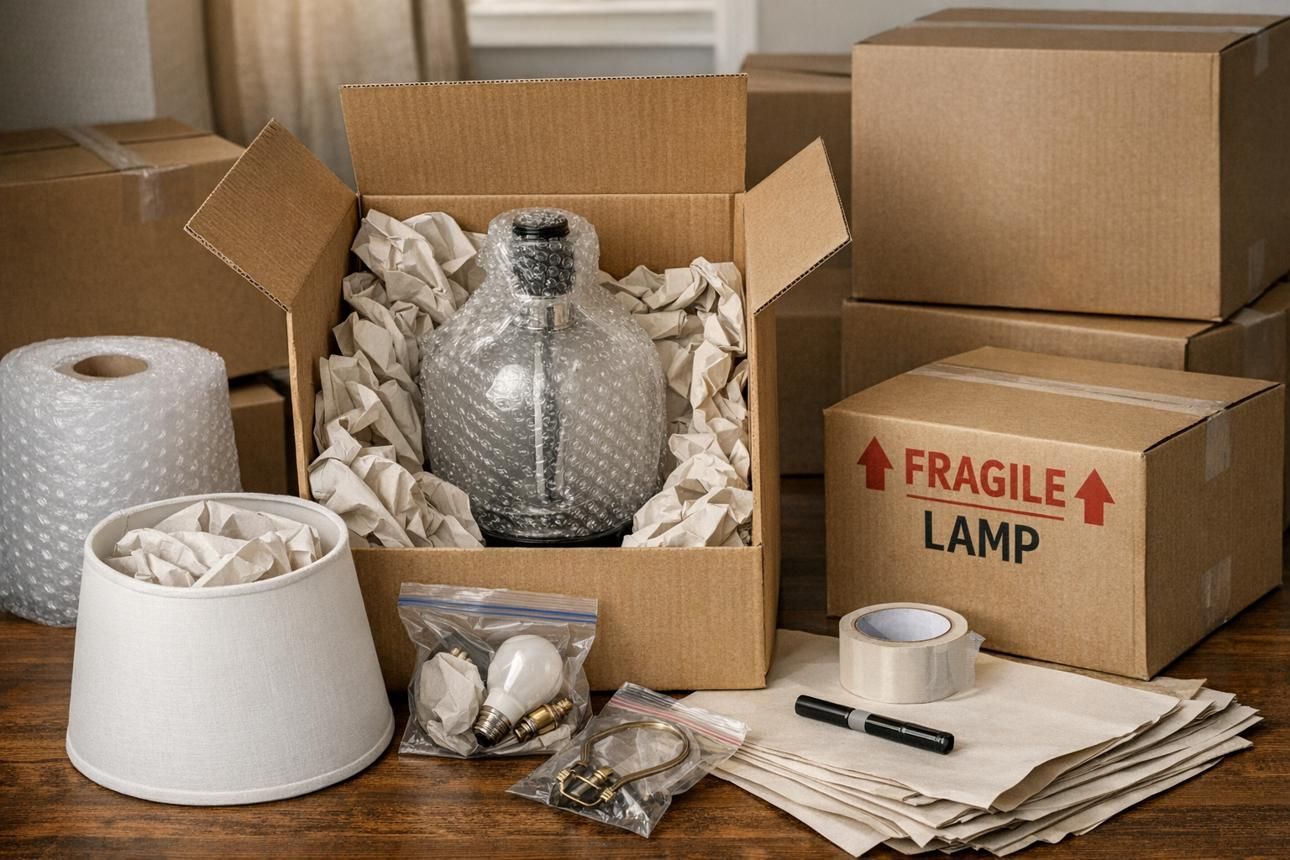
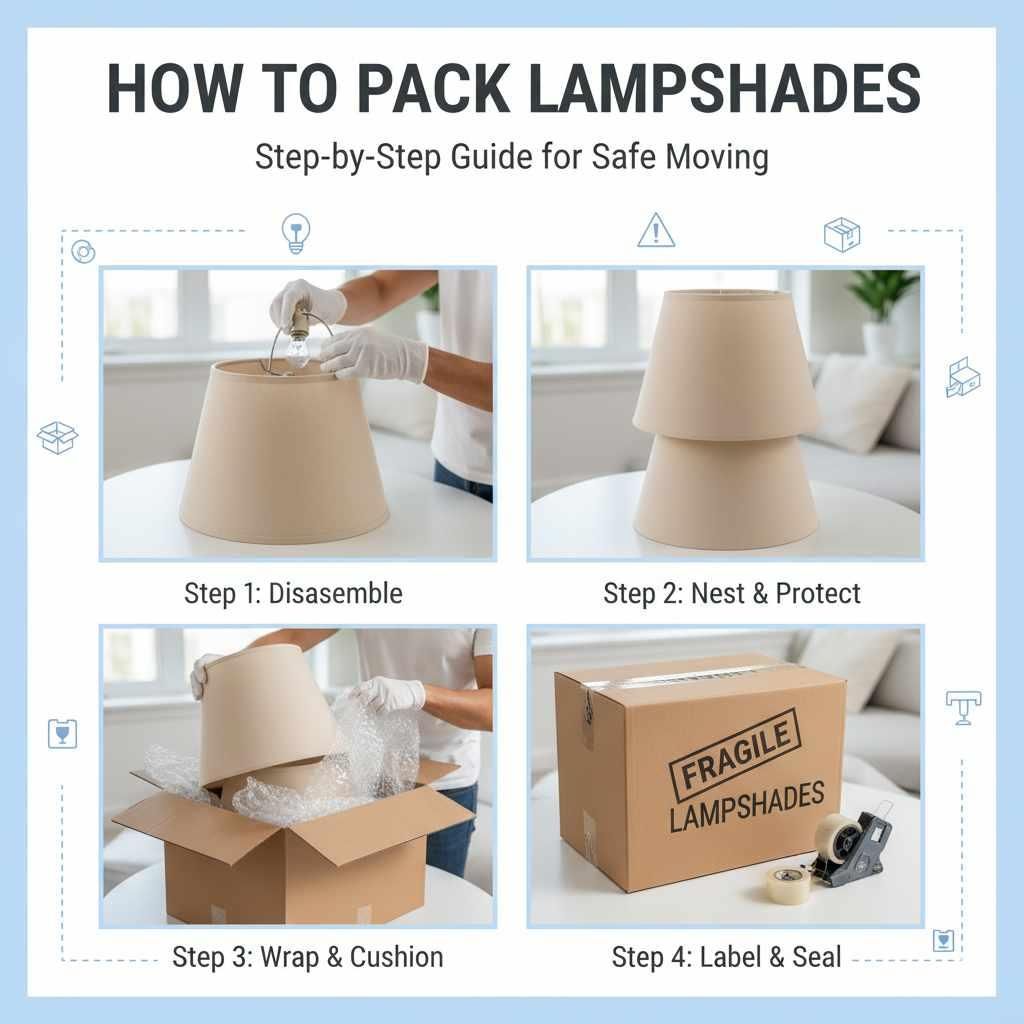
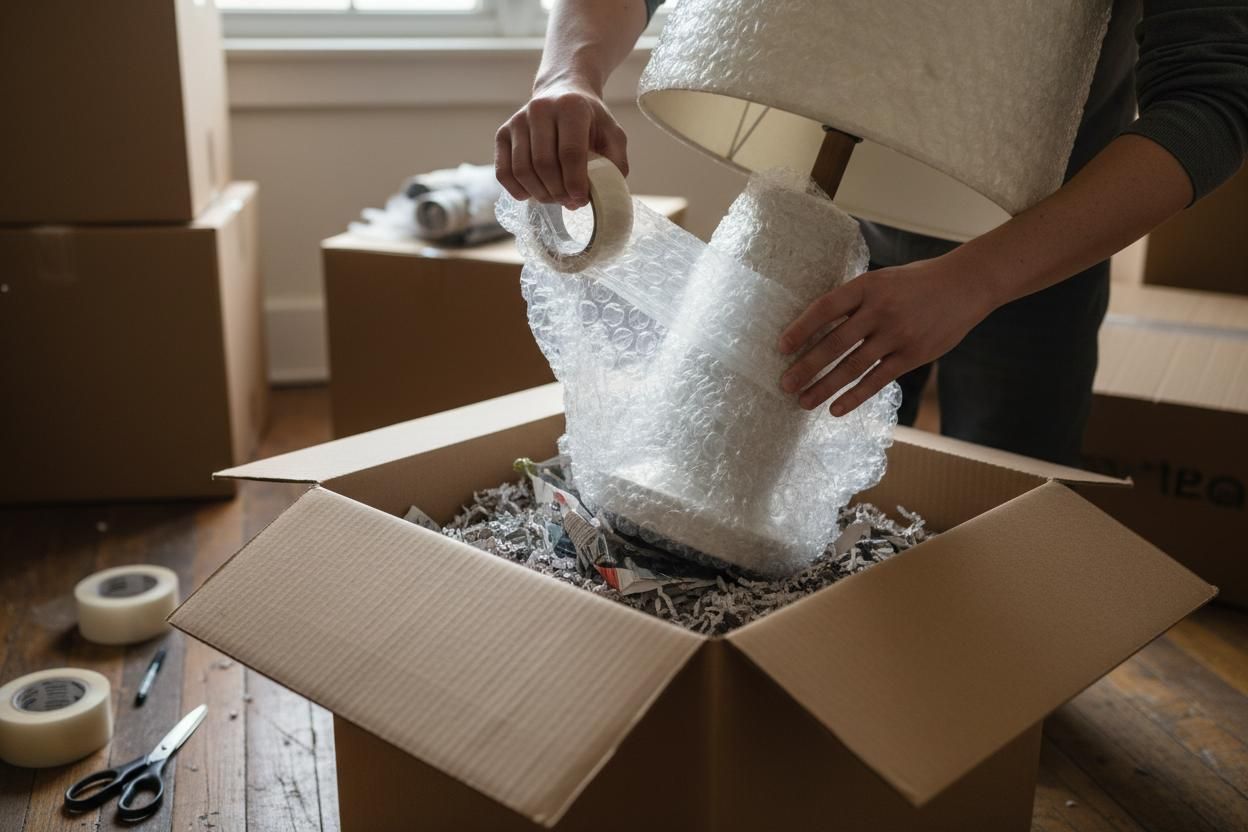
Lamps are awkwardly shaped, and lampshades can be easily crushed.
How to pack them:
1. Unplug the lamp and remove the light bulb.
2. Remove the lampshade and harp (the metal support holding the shade), if removable.
3. Wrap the lamp base separately in packing paper and bubble wrap.
4. Protect delicate decorative sections and protruding components.
5. Place the base in a properly sized box with cushioning on every side.
6. Wrap lampshades individually in clean packing paper.
7. Handle lampshades by their metal frame, never by pressing on the fabric.
8. If nesting shades, place a clean protective layer between them.
9. Place lampshades in a separate box with plenty of room and cushioning.
10. Mark the box FRAGILE.
Important tips:
- Never pack a lampshade underneath heavy objects.
- Do not force a lampshade into a box that is too small.
- Keep light bulbs separate and protected.
- Don't leave bulbs inside lamps during transportation.
3. Dishes, Plates, Bowls & China
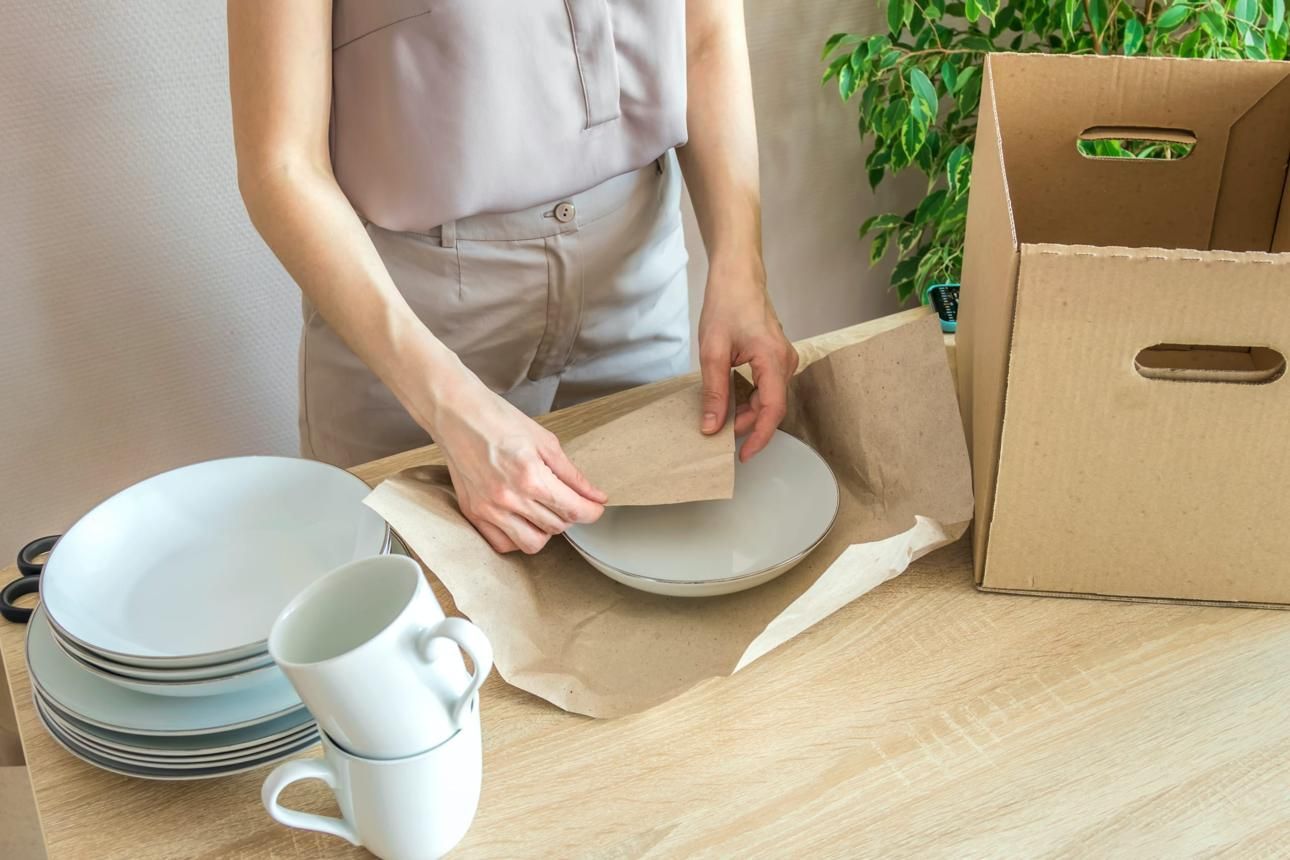
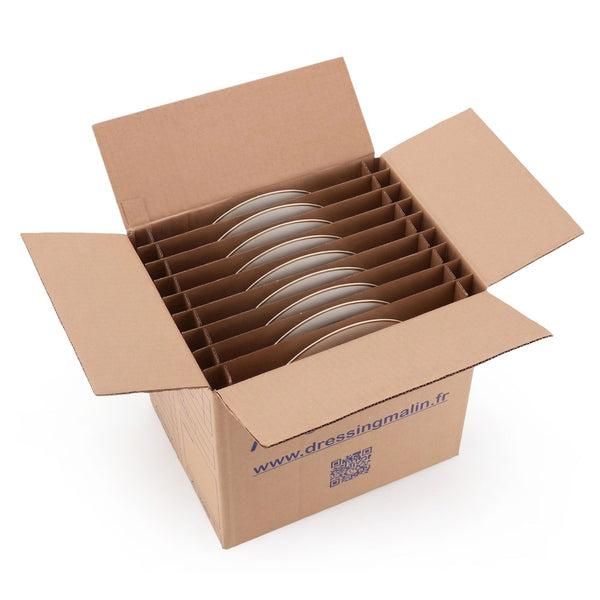
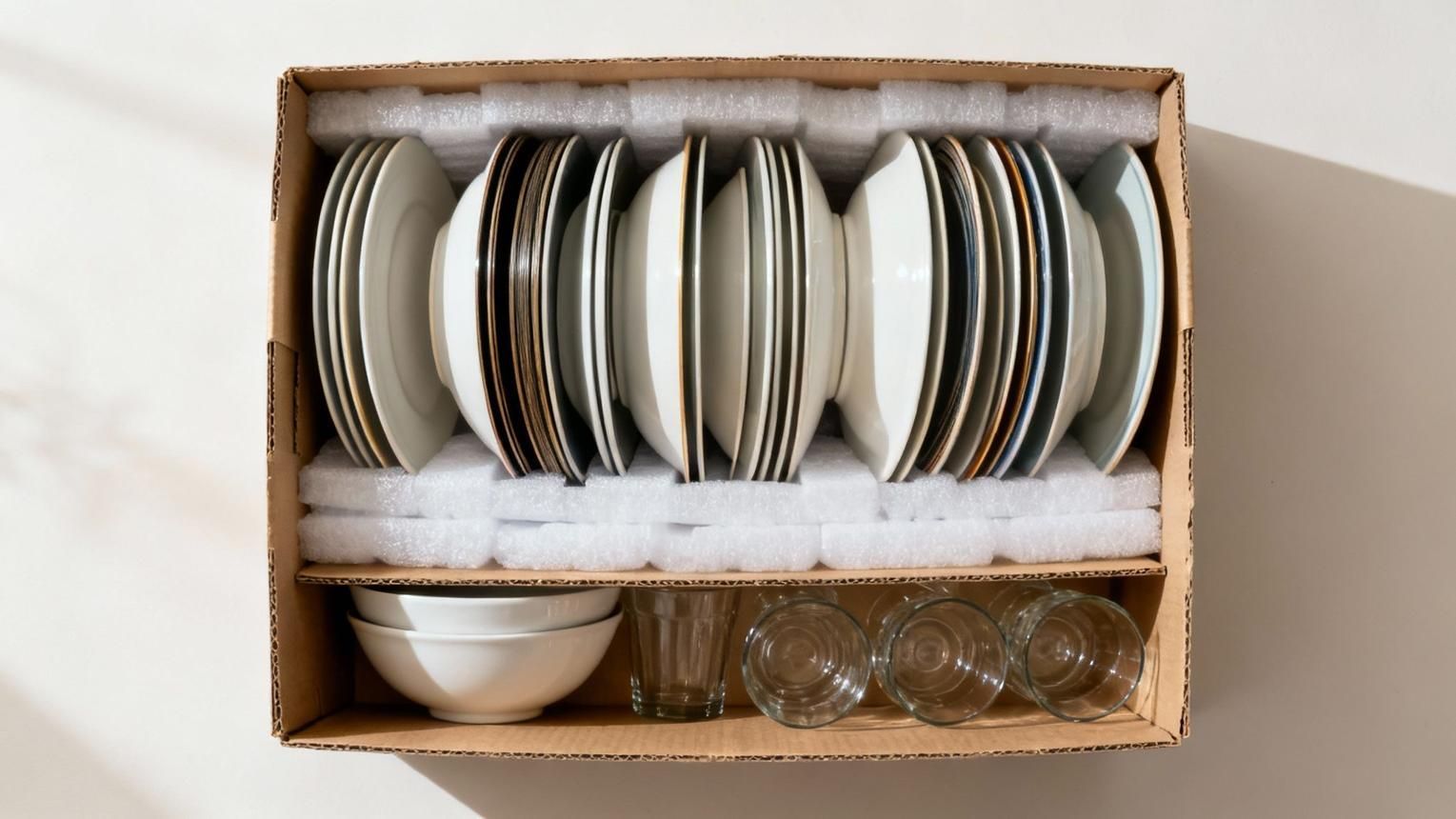
Dishes are among the most commonly damaged household items when packed incorrectly.
How to pack plates:
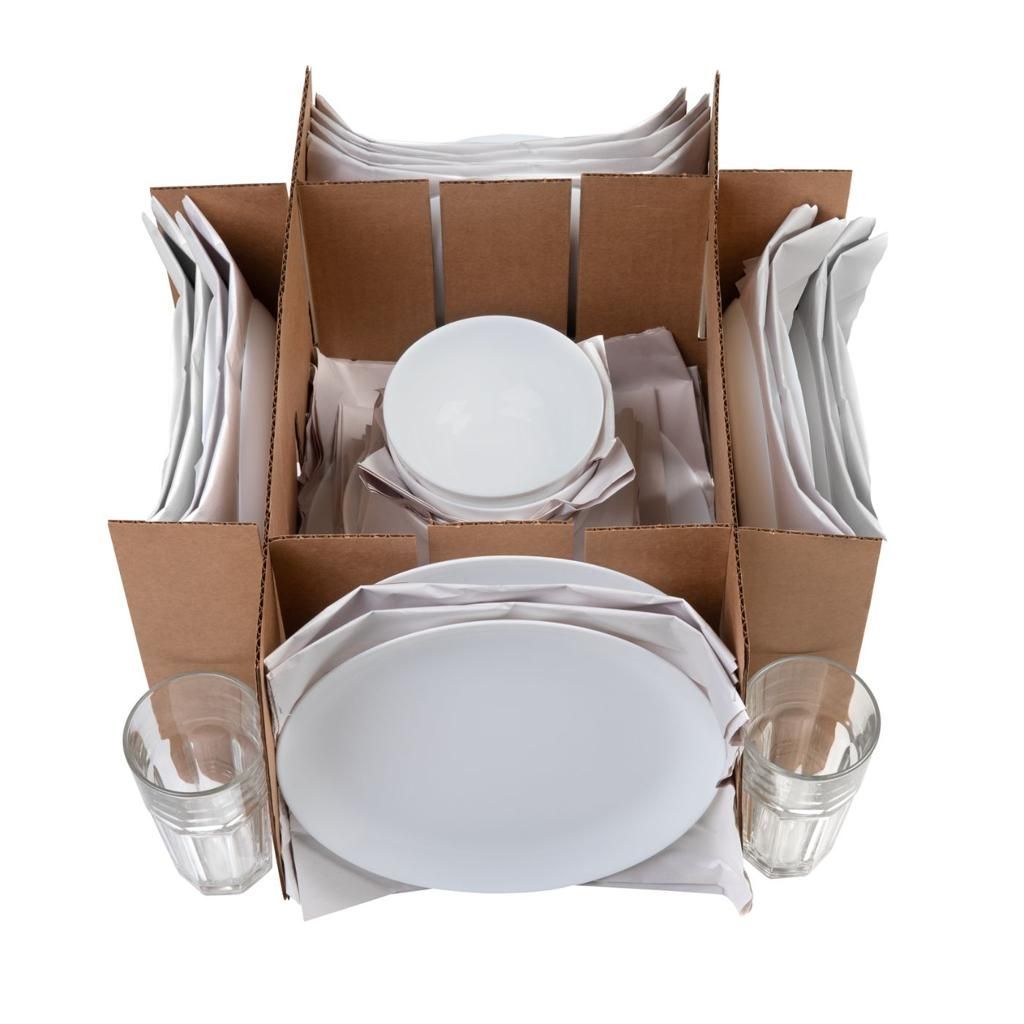
1. Start with a sturdy dish pack box.
2. Reinforce the bottom with multiple strips of packing tape.
3. Place a thick layer of crumpled packing paper or cushioning material on the bottom.
4. Wrap each plate individually in packing paper or foam.
5. Stack plates in small, manageable bundles only after individually wrapping them.
6. Place plates vertically on their edges, like records in a record collection, rather than laying them flat in tall stacks.
7. Fill the spaces between plates with crumpled paper or appropriate cushioning.
8. Place lighter items toward the top.
9. Add a protective layer across the top before sealing.
10. Label FRAGILE – DISHES.
How to pack bowls:
1. Wrap each bowl individually.
2. Place cushioning inside larger bowls when appropriate.
3. Nest similar bowls only when each is properly protected.
4. Place heavier bowls on the bottom and lighter bowls above.
5. Fill gaps to prevent movement.
Important tips:
- Don't leave open spaces between dishes.
- Don't overload dish packs.
- Avoid placing heavy pots or pans on top of delicate china.
- Antique china, heirlooms, and expensive collections may require professional packing.
4. Drinking Glasses, Wine Glasses & Coffee Mugs
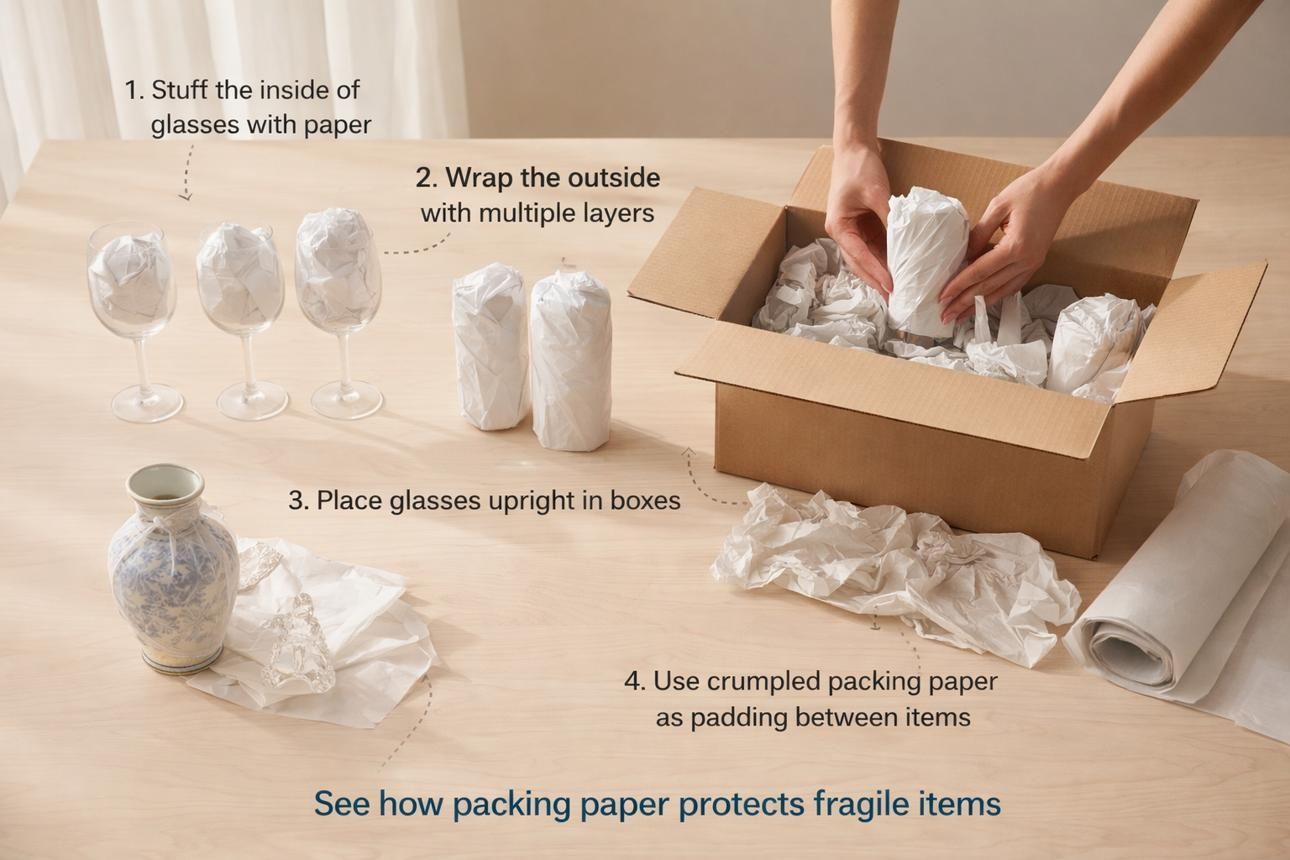
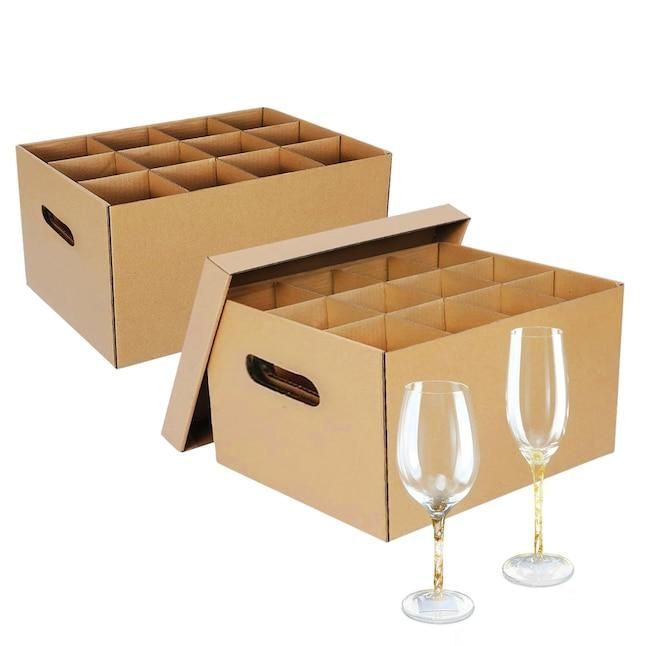
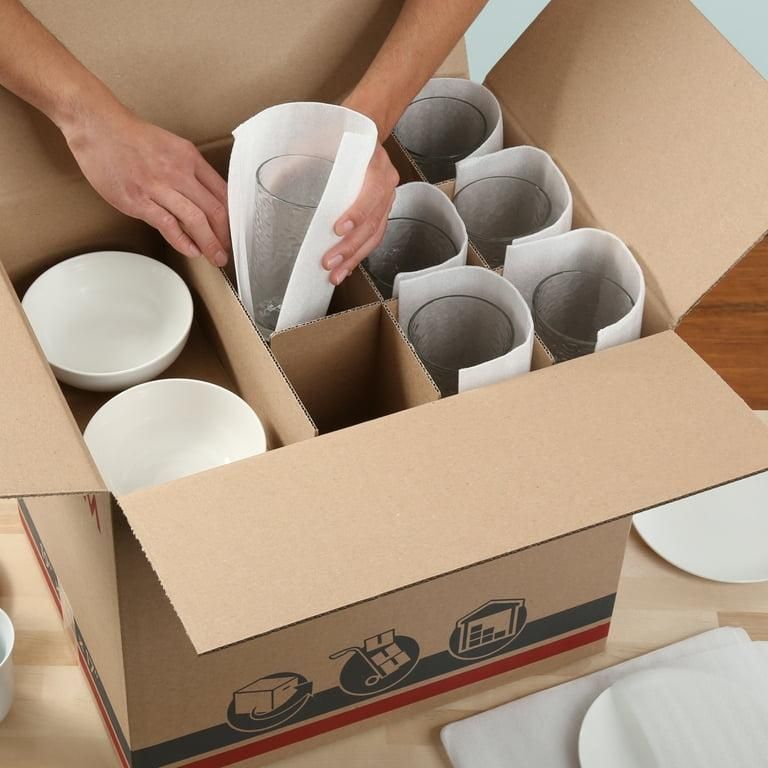
Glassware needs individual protection. One glass touching another can easily result in breakage.
How to pack drinking glasses:
1. Wrap each glass individually with clean packing paper.
2. Pay particular attention to the rim and base.
3. For especially delicate glasses, add an additional layer of bubble wrap or foam.
4. Place glasses upright in a dish pack with dividers when available.
5. Fill spaces between glasses with cushioning.
6. Make sure nothing can move when the box is gently shifted.
7. Place heavier, sturdier glasses below lighter glassware.
Wine glasses and stemware:
- Wrap the stem separately with additional paper or foam.
- Protect the bowl of the glass with extra cushioning.
- Never allow stems to press against other glasses.
- Use divided glassware cartons whenever possible.
Coffee mugs:
- Wrap each mug individually.
- Protect handles with extra padding.
- Place mugs upright and prevent handles from contacting neighboring items.
Never:
- Put unwrapped glasses inside one another.
- Pack glassware loosely in a box.
- Place heavy objects on top of glassware.
5. Pots, Pans, Baking Dishes & Kitchen Appliances
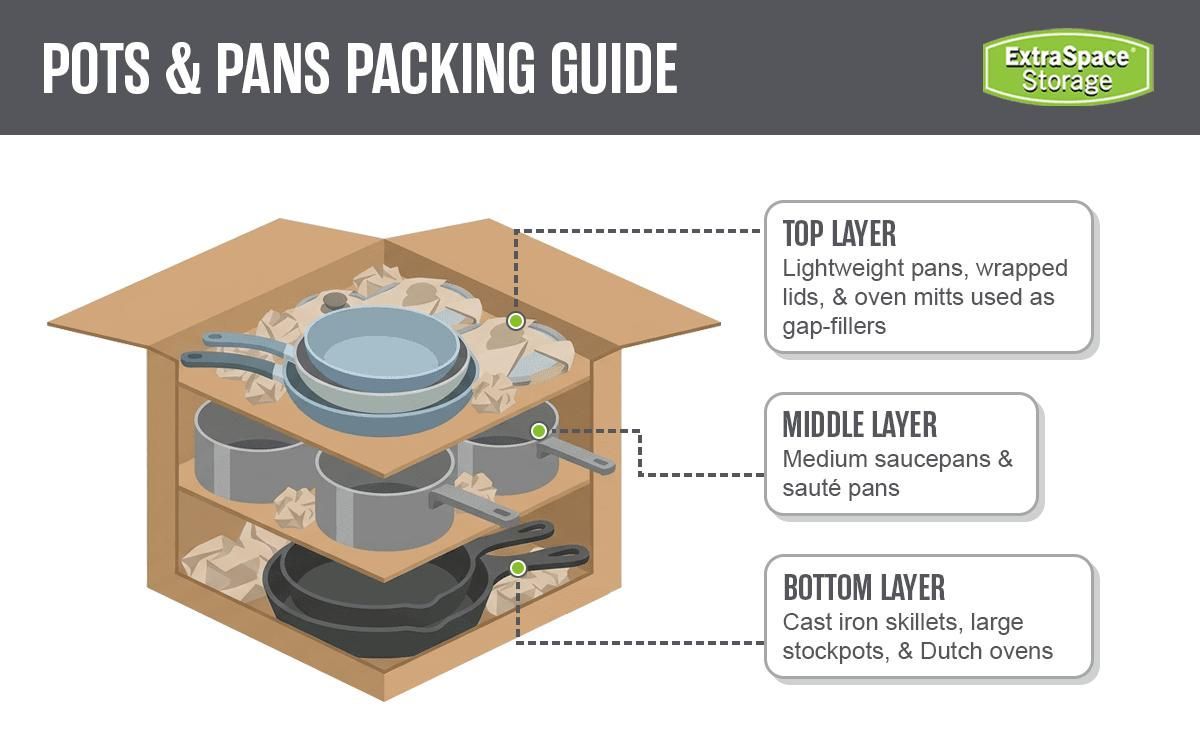
Pots and pans:
1. Clean and completely dry everything.
2. Remove detachable handles when possible.
3. Wrap nonstick cookware individually to protect its coating.
4. Nest pots and pans by size with protective paper or foam between each piece.
5. Wrap glass lids separately.
6. Keep lids from rubbing against cookware.
7. Pack heavy cookware in small or medium boxes.
Baking dishes and casserole dishes:
- Wrap each dish individually.
- Add extra protection to handles and corners.
- Use cardboard dividers where practical.
- Never place heavy cookware on top of glass baking dishes.
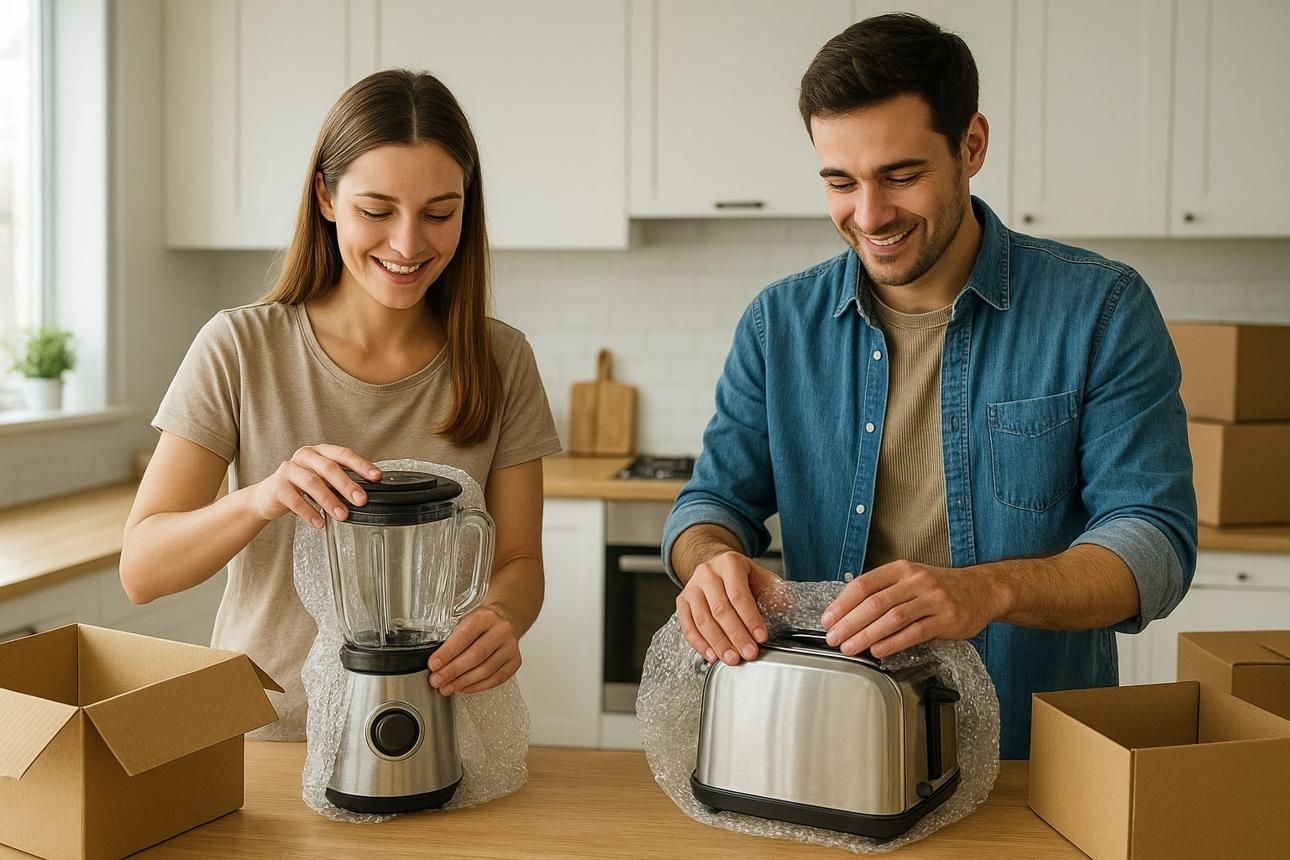
Small kitchen appliances:
- Clean and dry appliances.
- Remove detachable accessories.
- Wrap cords separately and secure them without bending or pinching.
- Protect glass components and removable trays.
- Pack each appliance in an appropriately sized box with cushioning.
Examples include:
- Toasters
- Coffee makers
- Blenders
- Air fryers
- Stand mixers
- Food processors
- Slow cookers
- Microwaves
Keep manuals, accessories, and removable components together in clearly labeled bags.
6. Televisions & Flat-Screen Monitors
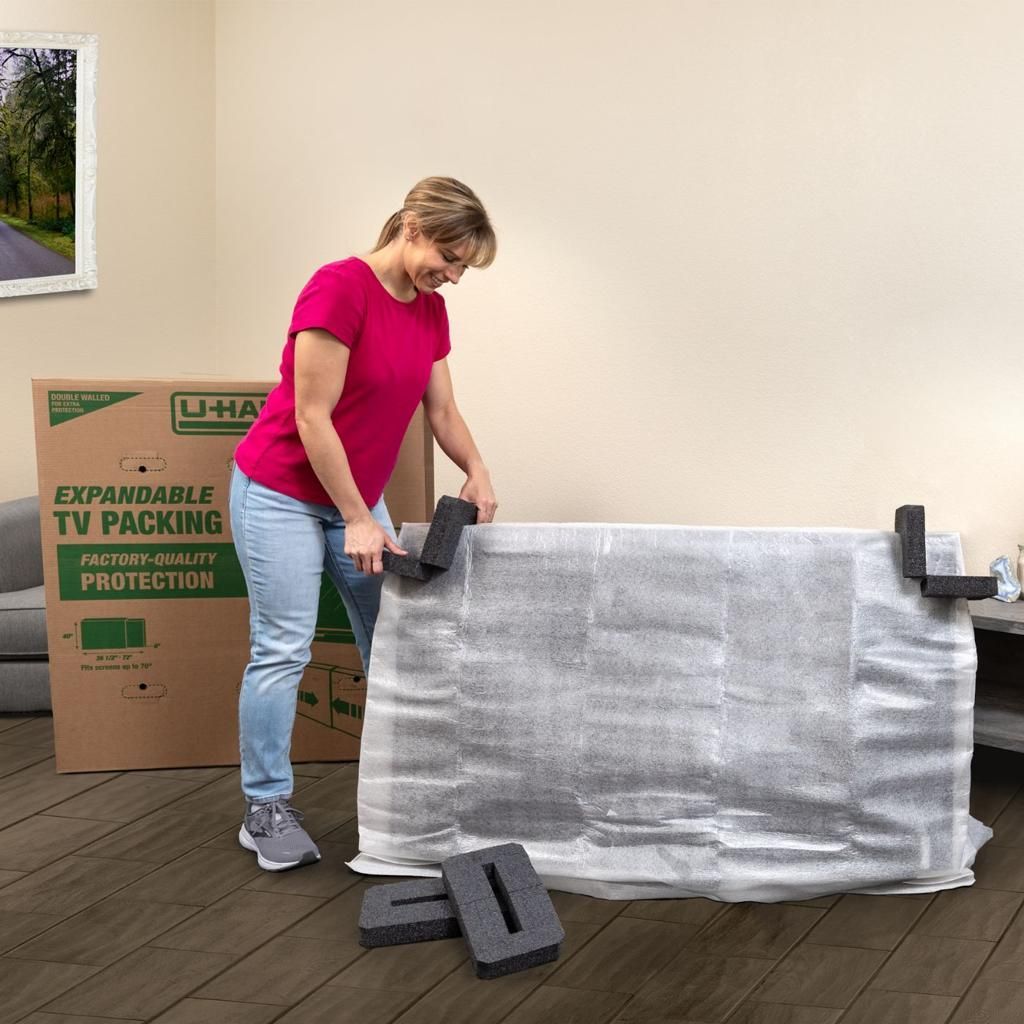
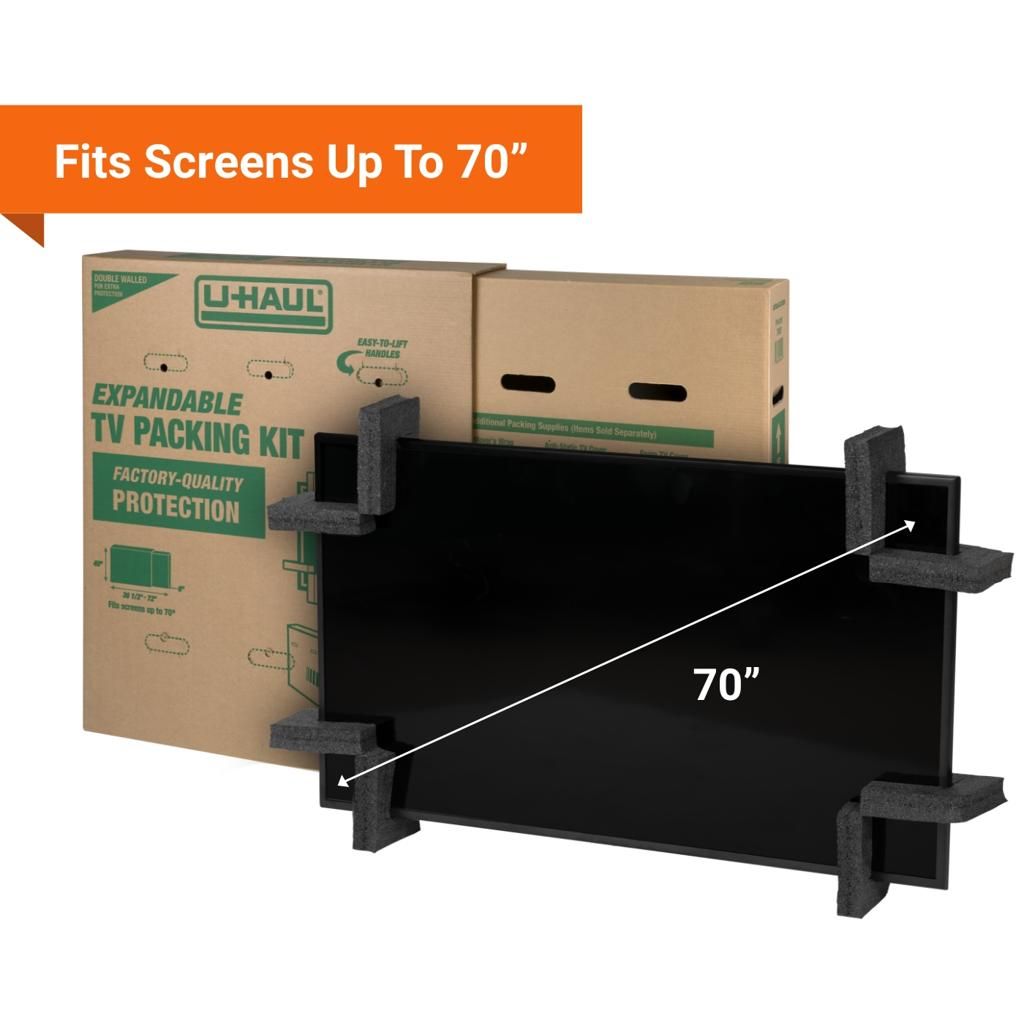
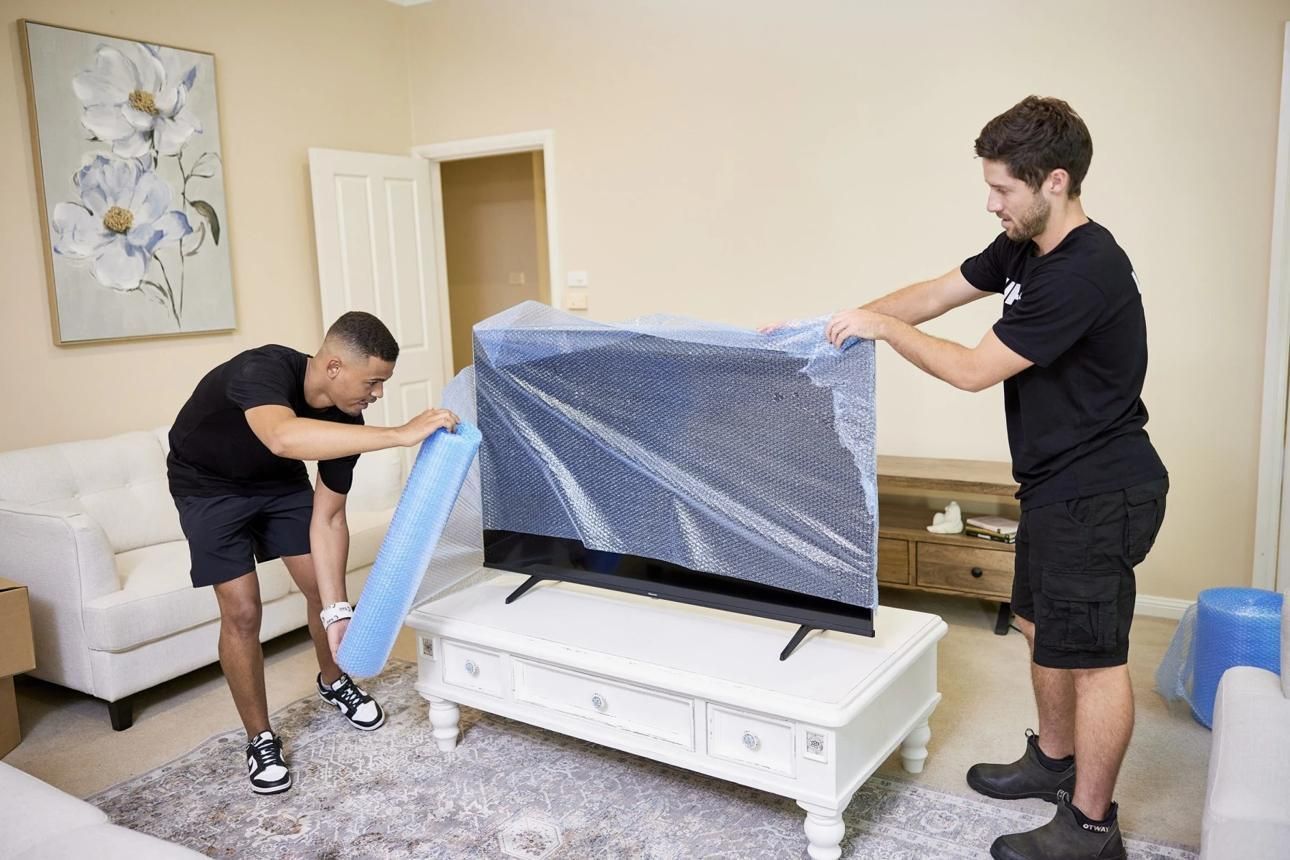
Televisions are expensive and particularly vulnerable to pressure, impact, and improper handling.
How to prepare a television:
1. Take pictures of the TV's connections before unplugging anything.
2. Disconnect HDMI cables, power cords, soundbars, and other accessories.
3. Label cables so you know where they belong.
4. Remove the TV stand or detachable legs, if possible.
5. Place screws and mounting hardware in a labeled resealable bag.
6. Protect the screen with an appropriate screen protector or soft, nonabrasive covering.
7. Use the original manufacturer's packaging whenever available.
8. Otherwise, use a properly sized TV moving carton with protective foam.
9. Protect all four corners and edges.
10. Keep the television upright during handling and transportation.
Important tips:
- Never lay a large flat-screen TV flat unless the manufacturer specifically permits it.
- Never place pressure on the screen.
- Never wrap the screen directly with stretch wrap.
- Never place objects on top of a television.
- Allow electronics to adjust to room temperature before powering them on after a significant temperature change, following manufacturer guidance.
LIFE Moving Co. Tip: If you have an expensive television, OLED display, oversized screen, or complicated entertainment system, consider professional packing. The cost of proper protection is small compared to replacing a damaged television.
7. Computers, Electronics & Home Office Equipment
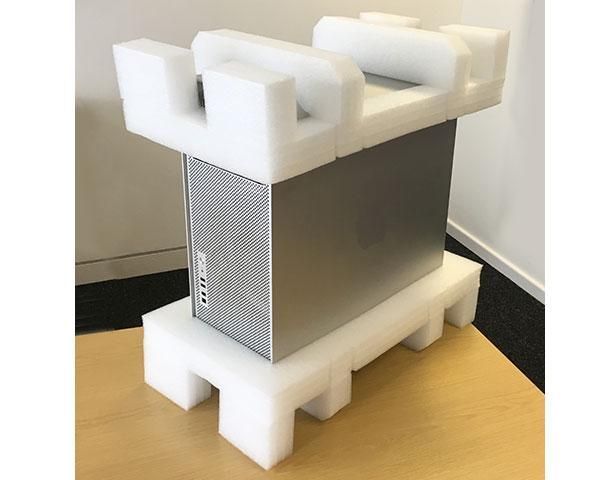
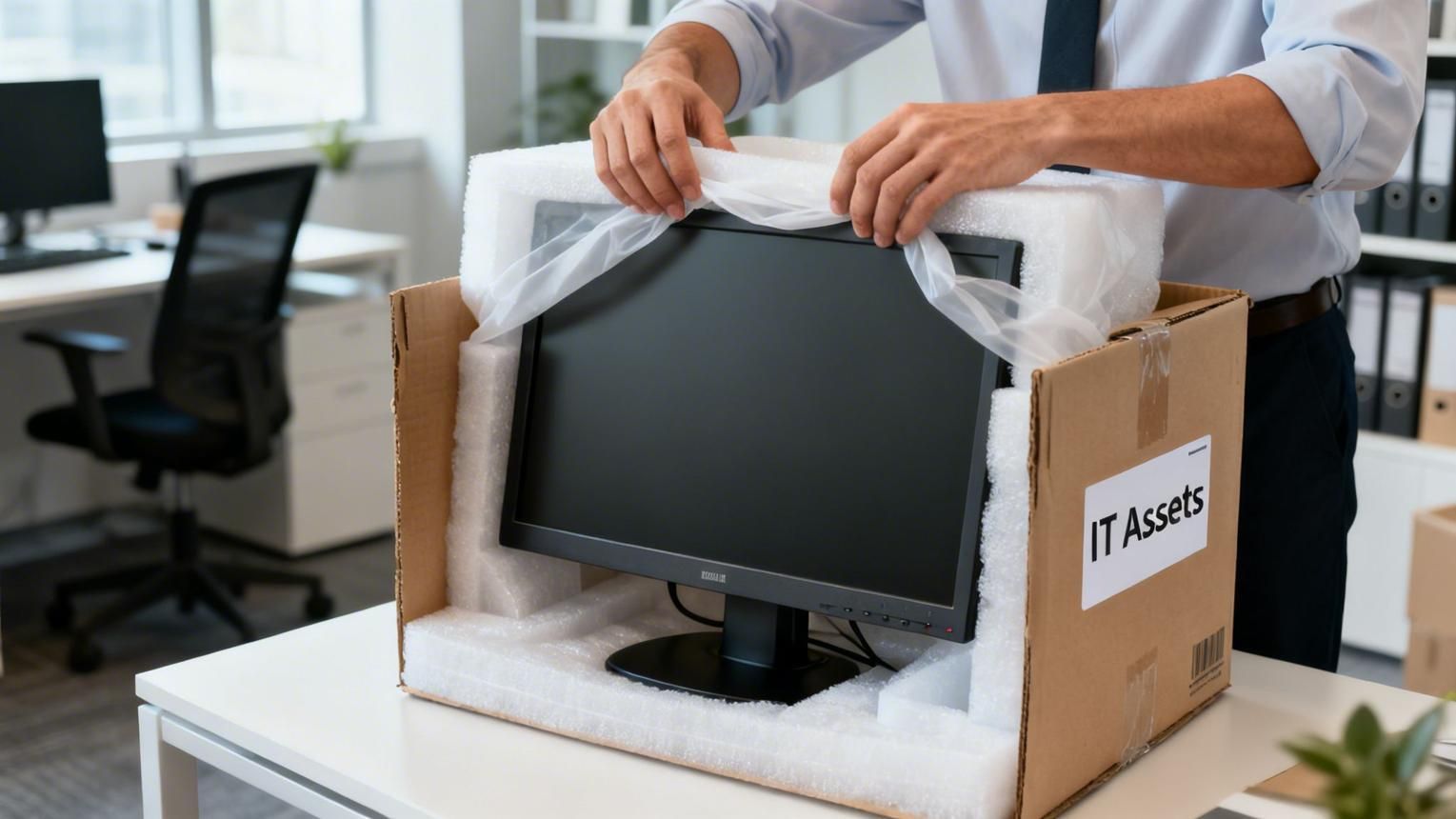
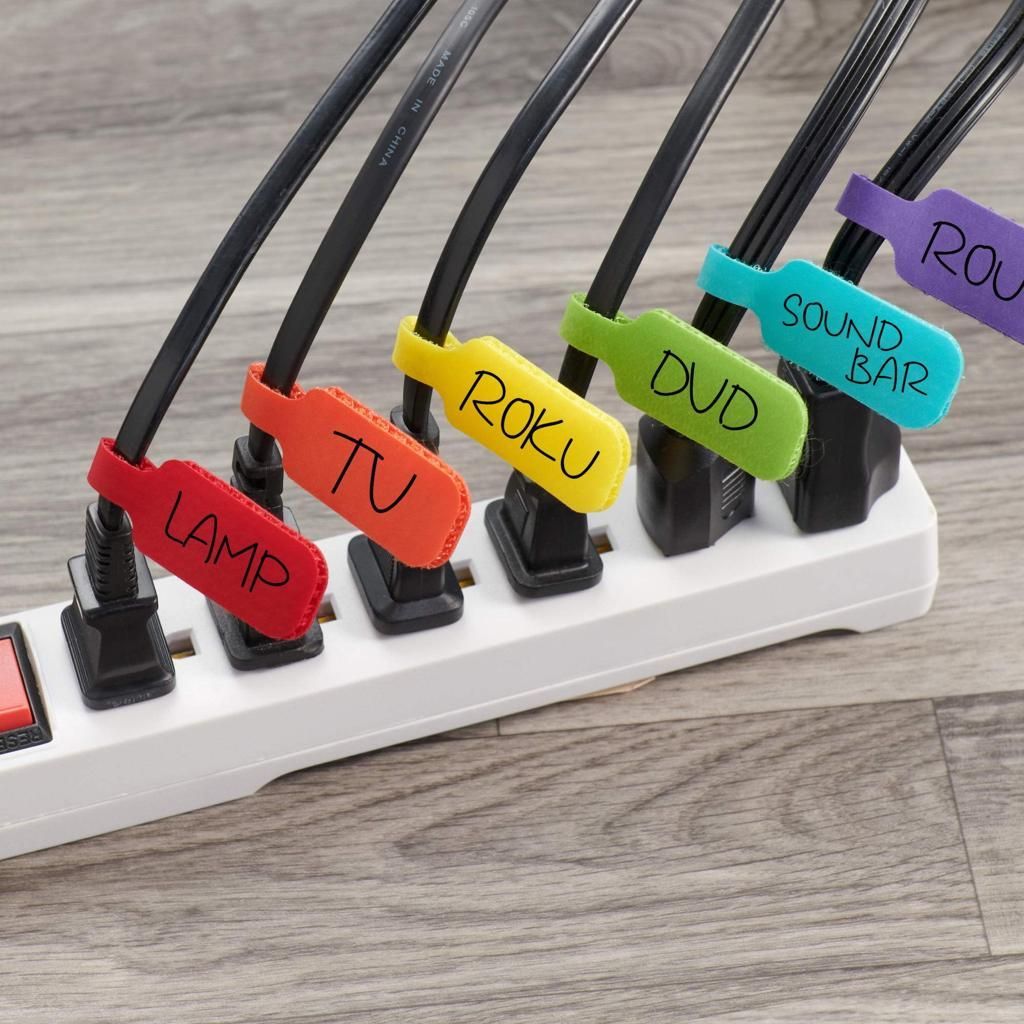
Electronics require careful preparation because of delicate internal components, screens, connectors, and accessories.
Desktop computers:
1. Back up important files before moving.
2. Shut down the computer completely.
3. Disconnect all cables and photograph the setup.
4. Label each cable.
5. Remove external accessories.
6. Protect the computer tower with cushioning on all sides.
7. Use original packaging when available.
8. Pack monitors separately.
9. Keep accessories together in labeled bags.
10. Transport critical or irreplaceable data storage separately when practical.
Laptops:
- Shut down completely.
- Protect the screen and keyboard.
- Use a padded laptop sleeve.
- Pack chargers separately in a labeled bag.
- Keep laptops with you when possible.
Printers:
- Remove paper.
- Secure moving components according to the manufacturer's instructions.
- Follow the manufacturer's guidance for ink or toner cartridges.
- Pack removable trays and accessories separately.
- Keep the printer upright if required by the manufacturer.
Gaming systems:
- Remove game discs.
- Disconnect and label cables.
- Pack controllers separately with protective cushioning.
- Protect the console from impact and static electricity.
- Keep games in their original cases or a suitable protective container.
Other electronics:
- Routers and modems
- Speakers and subwoofers
- Stereo equipment
- Gaming monitors
- External hard drives
- Cameras and accessories
- Smart home hubs
Important: Use anti-static protection for components that require it. Avoid packing electronics in a way that allows them to slide around or allows cables and accessories to strike screens.
8. Hanging Clothes & Closets
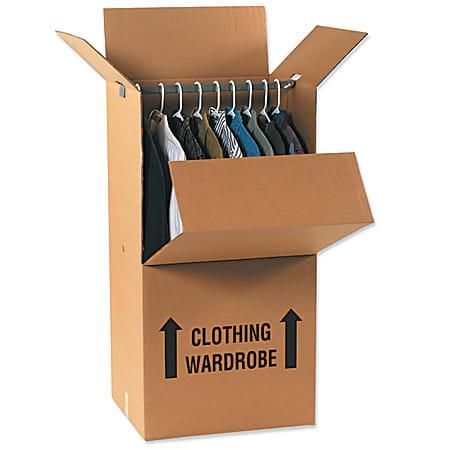
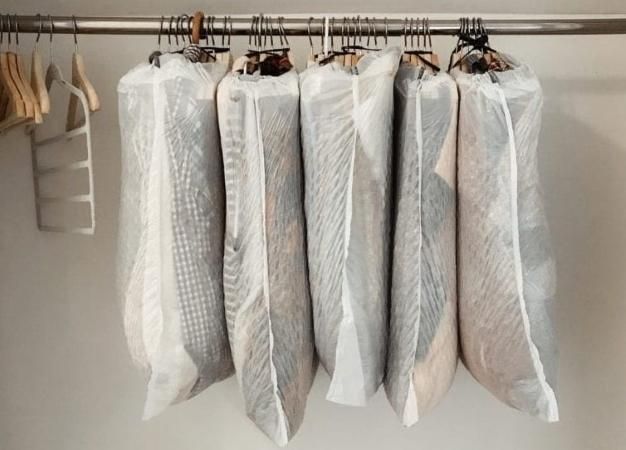
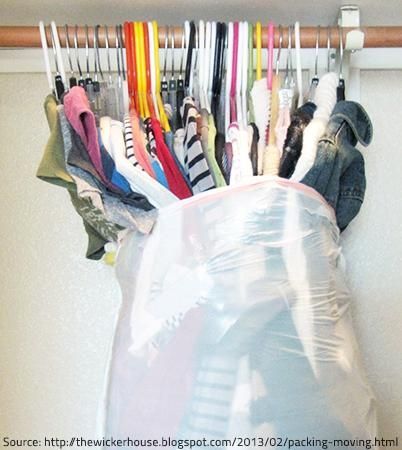
Clothing is one of the easiest household categories to pack efficiently.
The plastic bag method:
1. Group hanging clothes together by closet section.
2. Keep the hangers in place.
3. Pull a large, clean plastic bag over the bottom of a group of garments.
4. Bring the bottom of the bag upward toward the hanger hooks.
5. Gather the bag around the hangers and secure it loosely with a tie or rubber band.
6. Keep the hanger hooks accessible for carrying.
7. Label the bags by bedroom or closet.
This method keeps clothing together and protects it from dirt and dust.
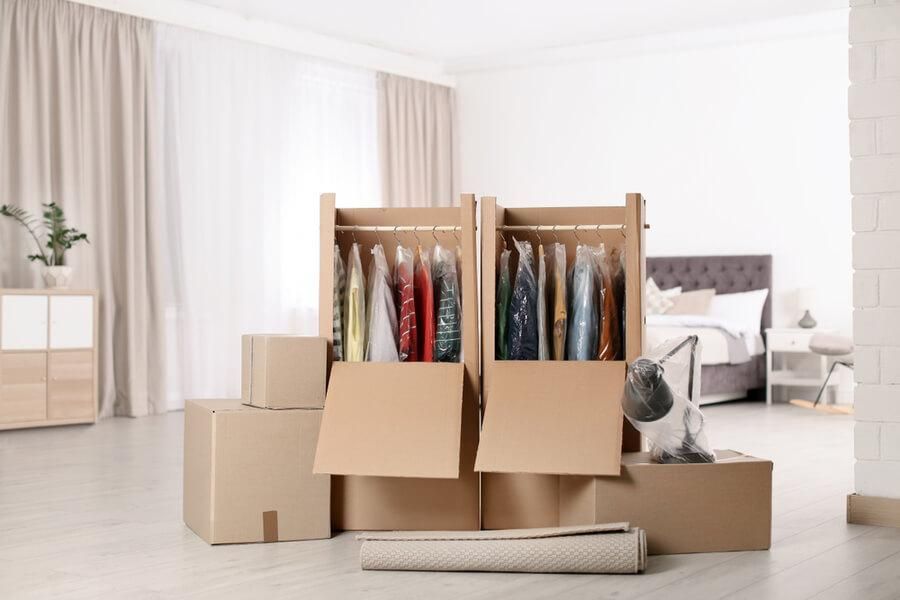
The wardrobe box method:
1. Assemble a wardrobe carton.
2. Install the hanging bar.
3. Transfer clothing directly from the closet.
4. Leave enough space so garments aren't crushed.
5. Place lightweight shoes or accessories at the bottom only if the box design allows it.
Additional tips:
- Use suitcases for folded clothes.
- Use small boxes for shoes.
- Wrap shoes separately or place them in shoe boxes.
- Keep expensive suits, dresses, and delicate garments in garment bags.
- Pack seasonal clothing first.
- Keep a few outfits accessible for the moving period.
9. Dressers, Drawers & Bedroom Furniture
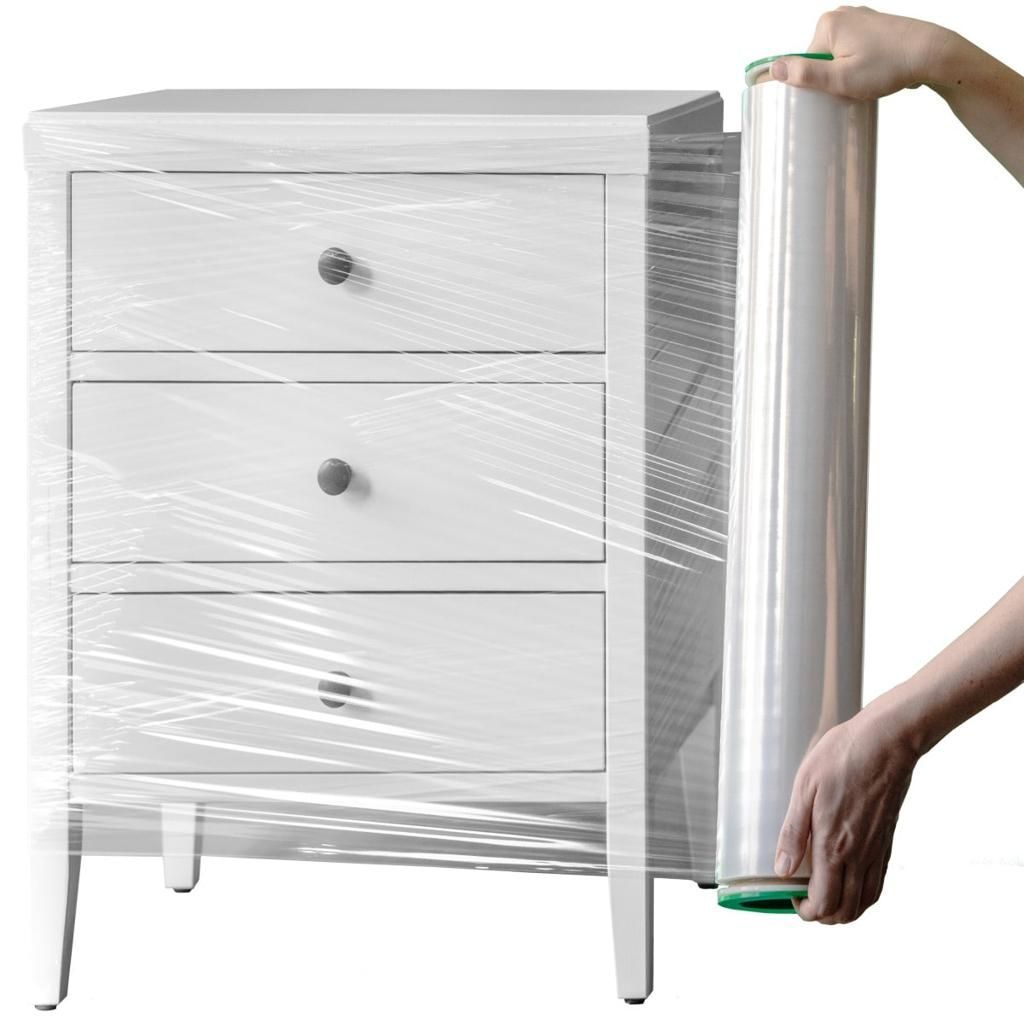
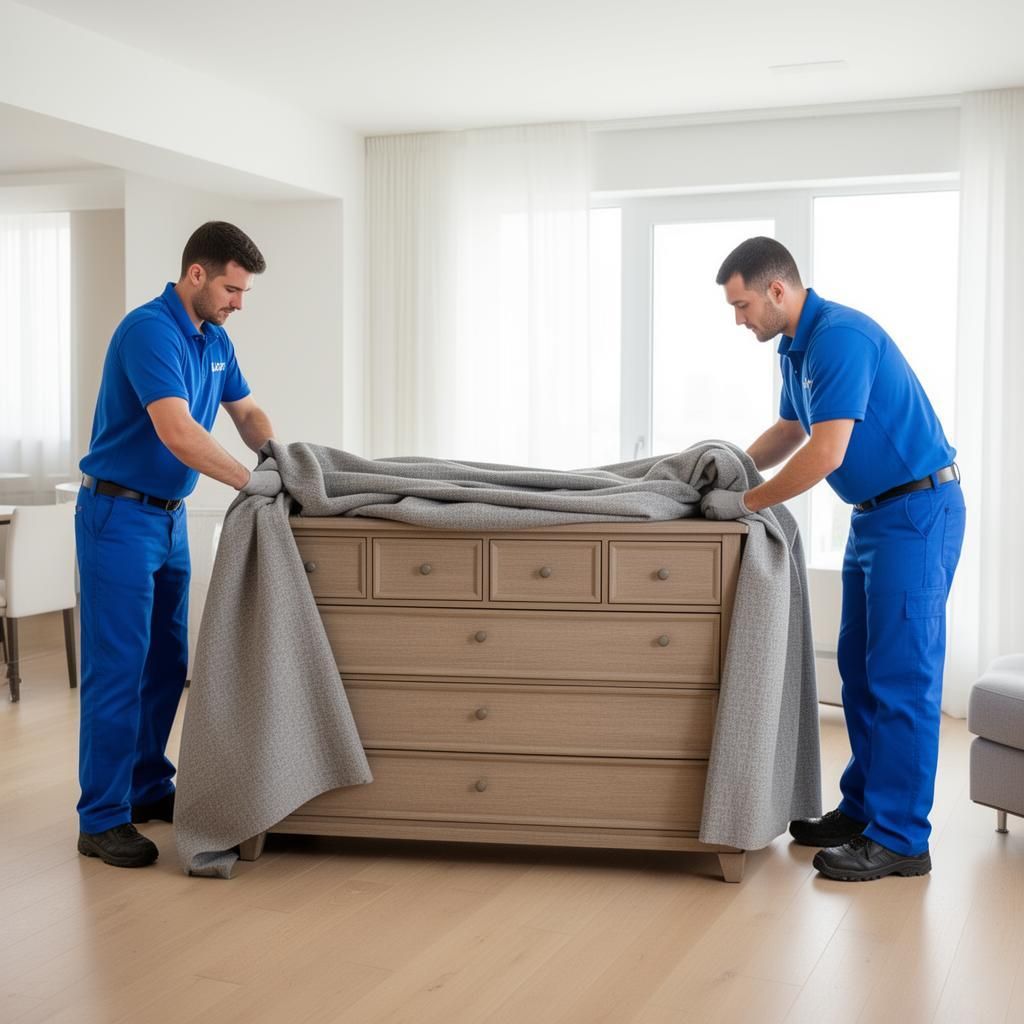
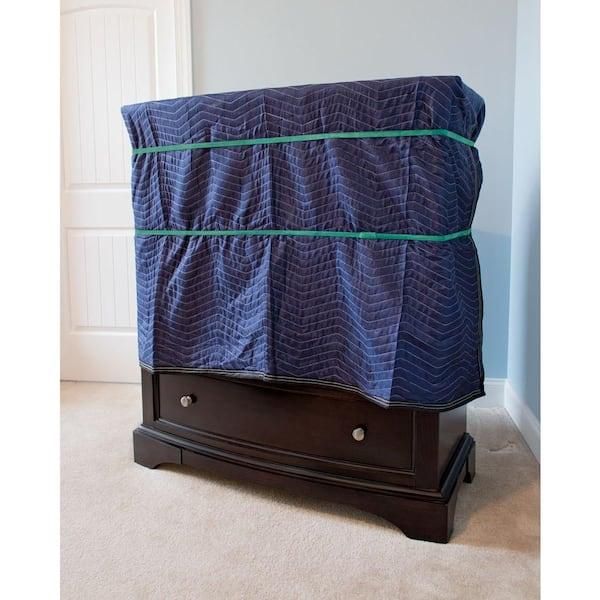
Dressers can be difficult to move when drawers are full or unsecured.
How to prepare dressers:
1. Remove fragile, heavy, or loose contents.
2. Remove drawers if necessary and if your movers recommend it.
3. If lightweight clothing remains inside, confirm with your moving company whether the drawers may stay loaded.
4. Secure removable drawers and doors appropriately.
5. Protect the dresser with furniture pads or moving blankets.
6. Secure protective materials with stretch wrap where appropriate.
7. Keep hardware and removable components together.
Important:
- Don't assume a full dresser can be safely moved with drawers inside.
- Never use adhesive tape directly on finished wood.
- Don't leave jewelry, valuables, or breakable items in drawers.
- Confirm with your moving company before leaving anything inside furniture.
10. Beds, Bed Frames, Headboards & Mattresses
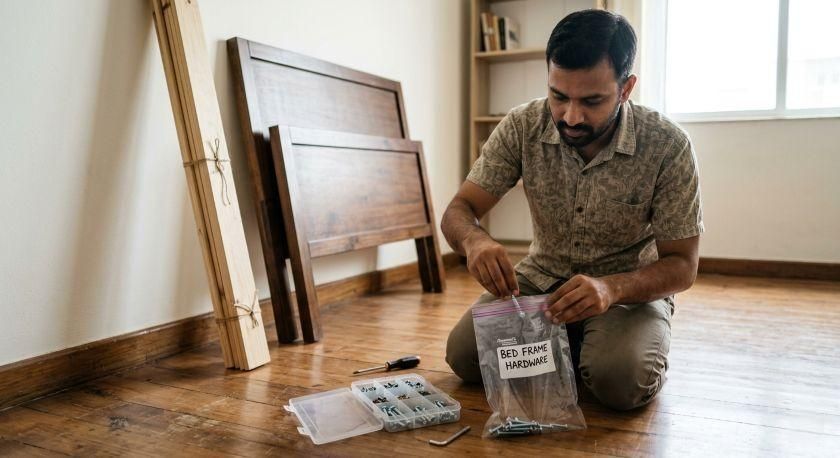
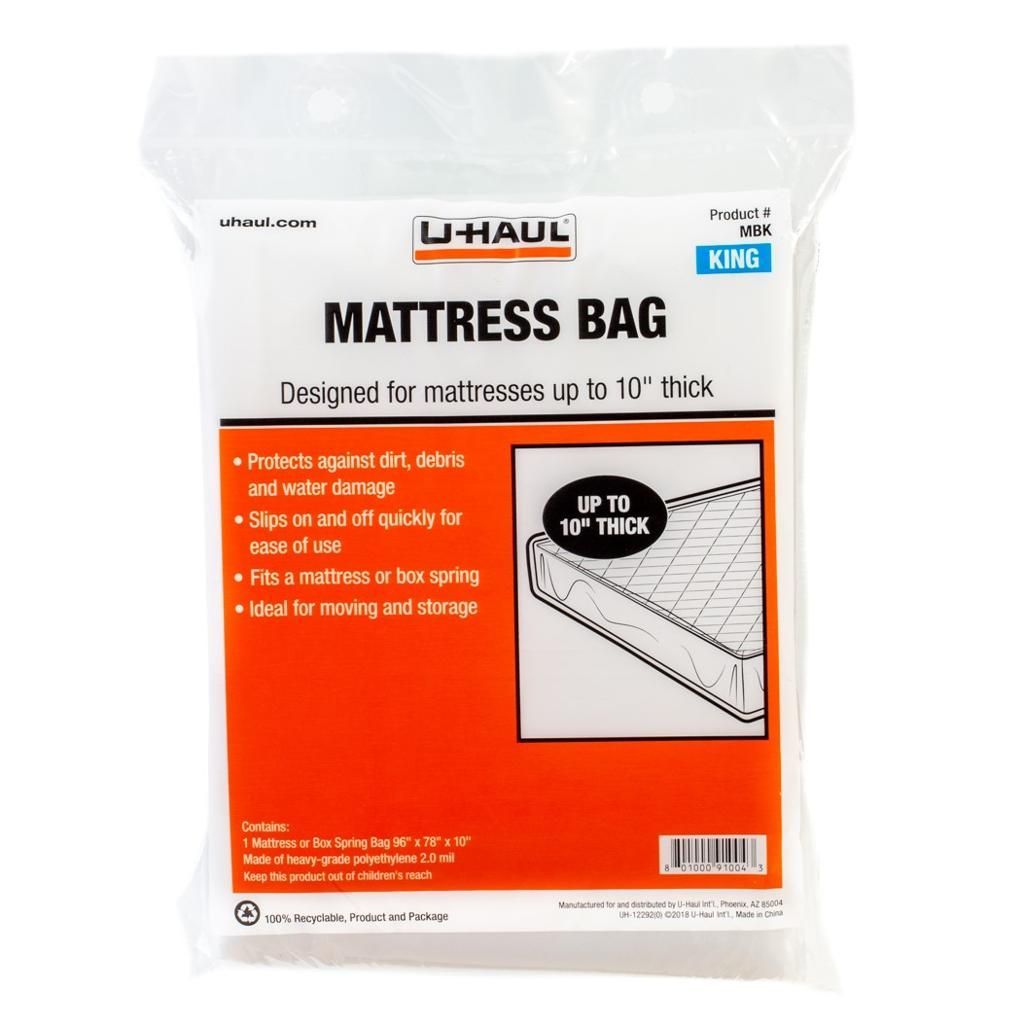
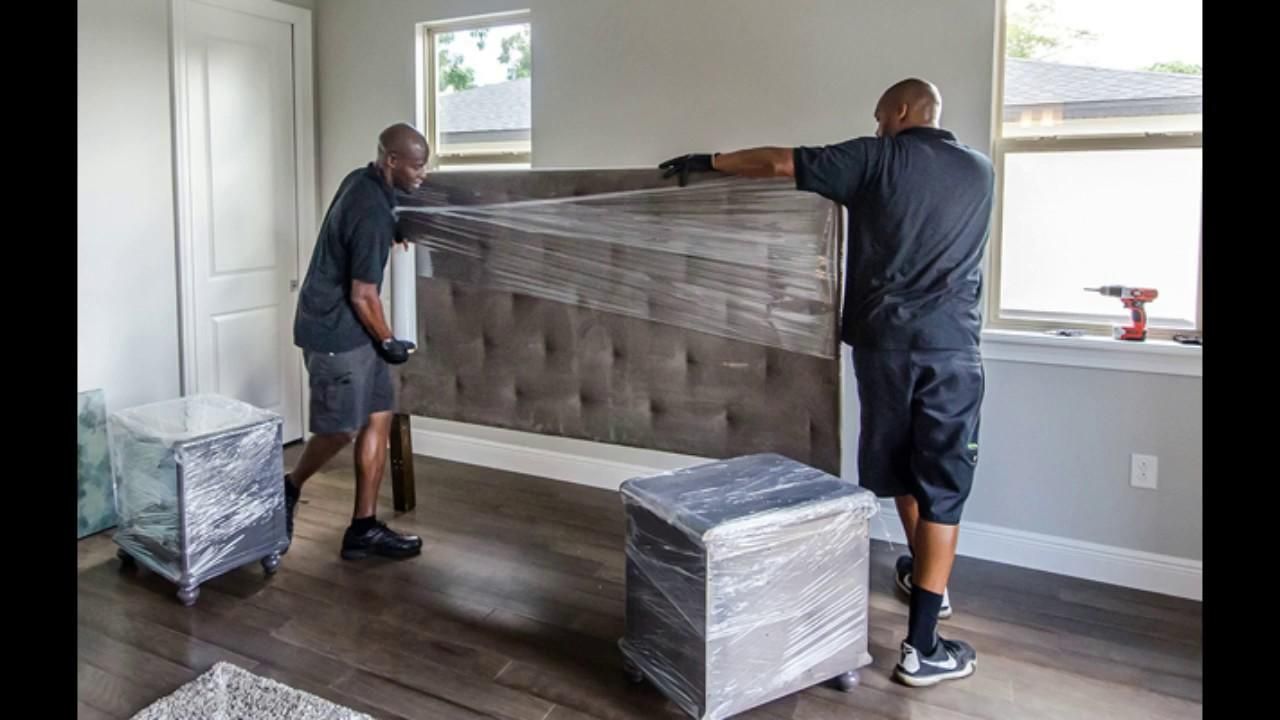
How to prepare a bed:
1. Remove all bedding, pillows, and linens.
2. Strip the mattress completely.
3. Disassemble the bed frame as needed.
4. Photograph the assembly before taking it apart.
5. Keep all bolts, screws, washers, and brackets in a labeled bag.
6. Attach the hardware bag to the appropriate bed component when practical.
7. Wrap the headboard and footboard in furniture pads.
8. Place the mattress in a properly sized mattress bag.
9. Protect box springs separately.
10. Keep bed slats and rails bundled together.
Important tips:
- Never transport an unprotected mattress if it can be avoided.
- Keep mattresses clean and dry.
- Don't bend a mattress unless the manufacturer specifically permits it.
- Keep all bed hardware together.
11. Mirrors, Glass Tabletops & Glass Shelving
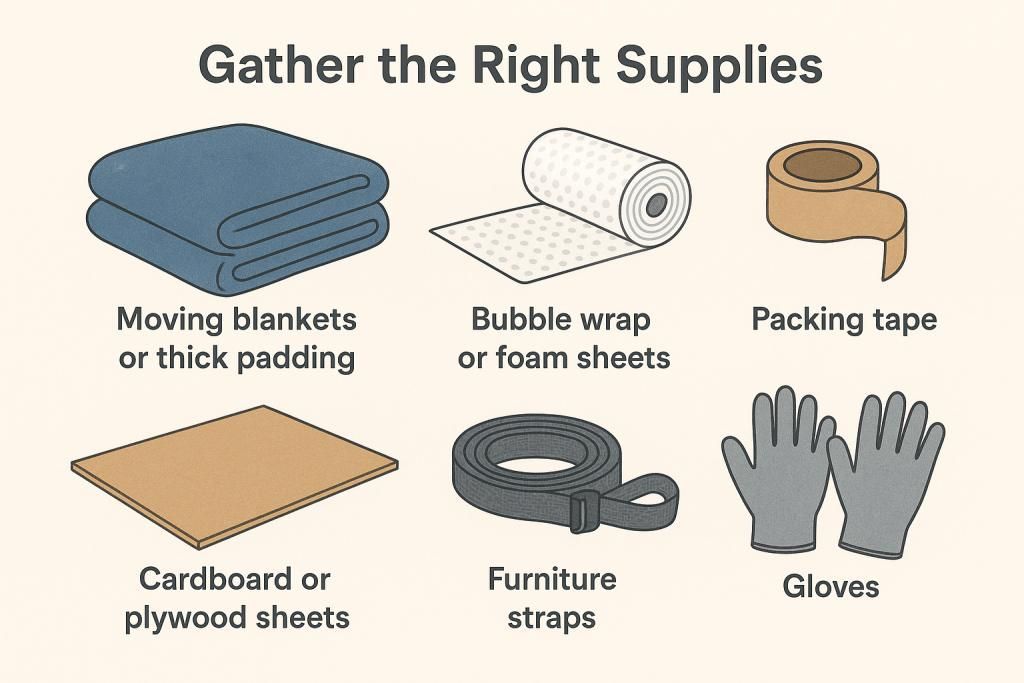
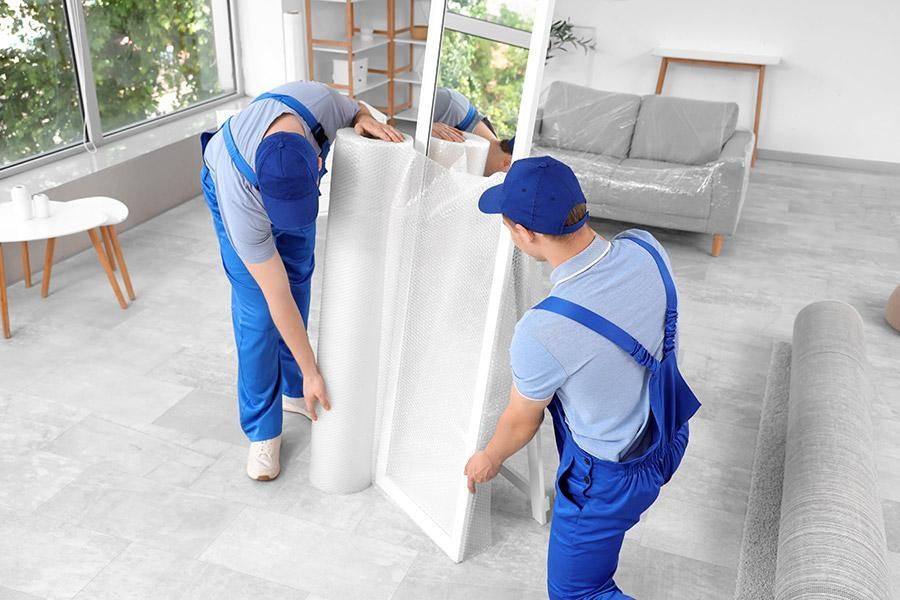
Large glass items require special attention.
How to prepare them:
1. Remove glass shelves and detachable glass components when possible.
2. Photograph how components fit together.
3. Place protective foam or cardboard over glass surfaces.
4. Wrap each piece individually.
5. Protect corners and edges with foam corner protectors.
6. Use specialty mirror cartons or appropriately sized protective packaging.
7. Keep large glass items upright when designed to be transported that way.
8. Clearly label all sides FRAGILE – GLASS.
Never:
- Stack unprotected glass.
- Place heavy items on top of glass.
- Allow glass edges to rest directly against hard surfaces.
- Assume a blanket alone is sufficient protection for large glass.
Large mirrors, custom glass, and oversized tabletops are best handled by professionals.
12. Books, Magazines & Documents
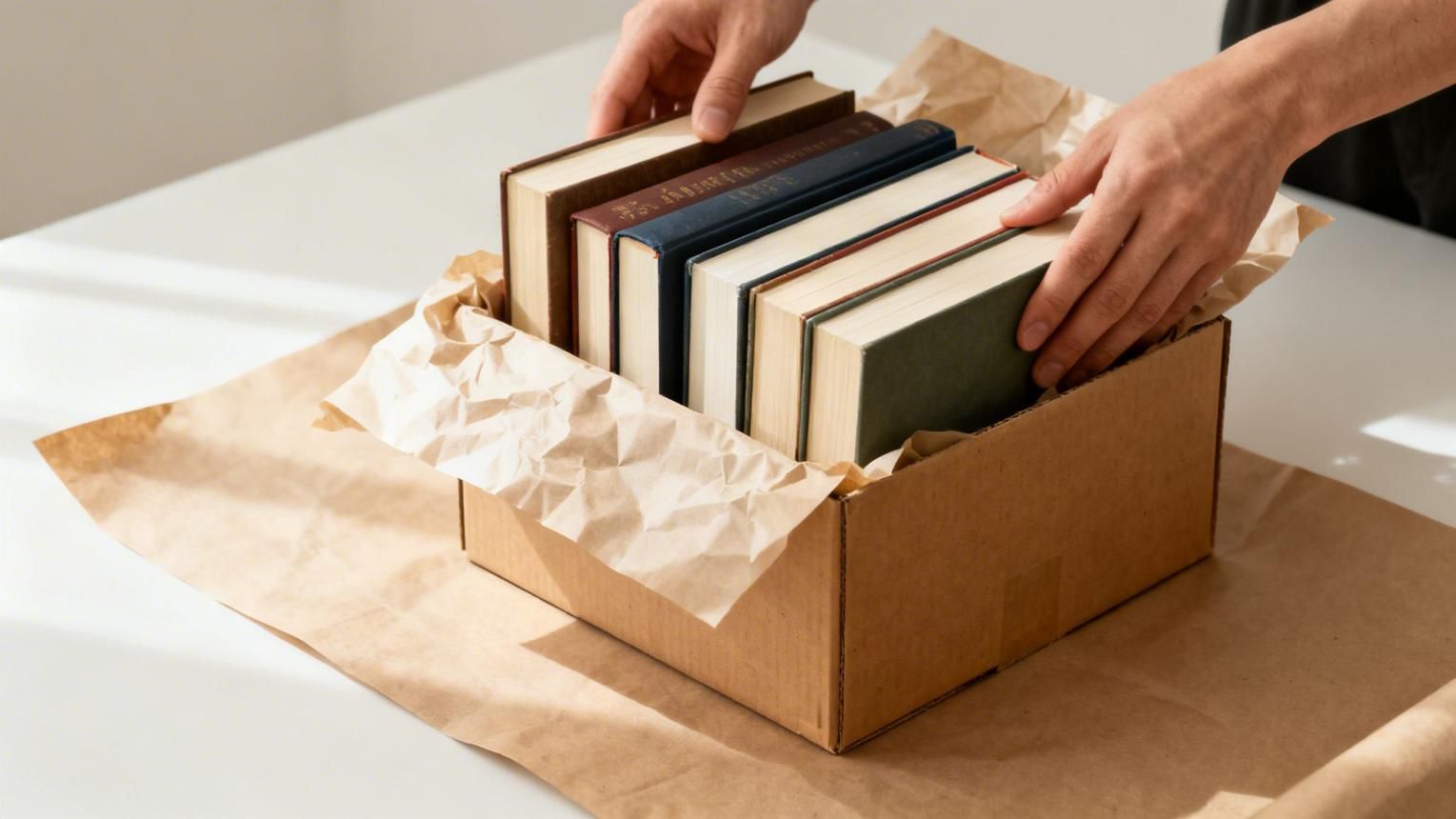
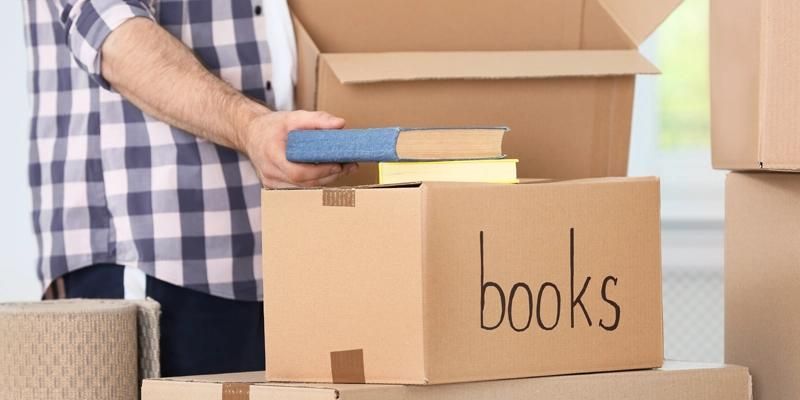
Books are deceptively heavy!
How to pack books:
1. Use small, sturdy boxes.
2. Pack books flat or upright with their spines protected.
3. Avoid placing books with pages facing downward in a way that could damage their bindings.
4. Fill empty spaces so books cannot slide.
5. Don't overfill boxes.
6. Keep each box at a manageable lifting weight.
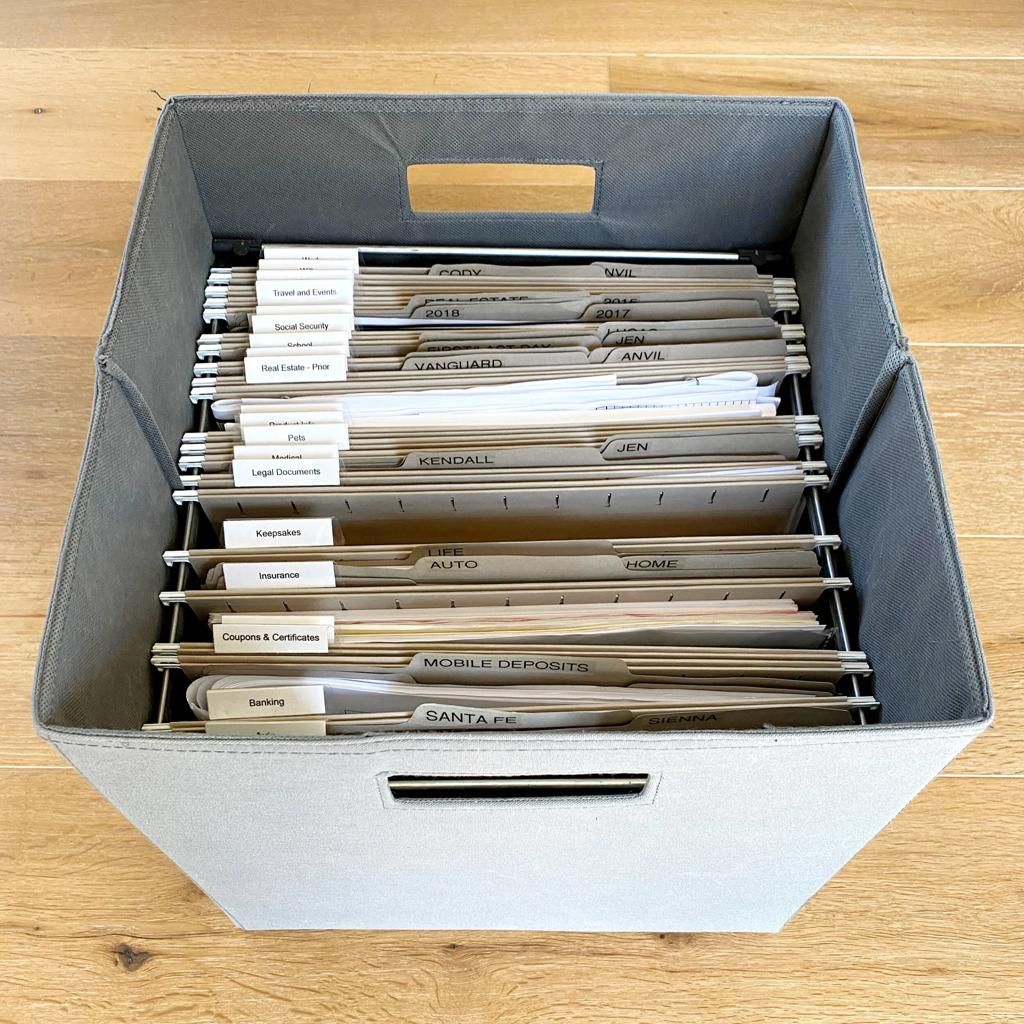
Documents:
- Organize paperwork before packing.
- Use file boxes or document containers.
- Keep important legal, financial, medical, and personal documents with you.
- Do not place irreplaceable records in the general moving shipment.
13. Toys, Games & Children's Belongings
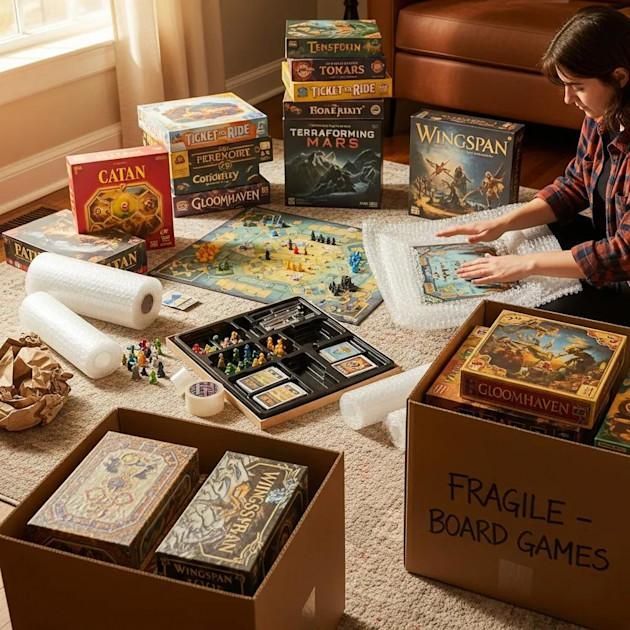
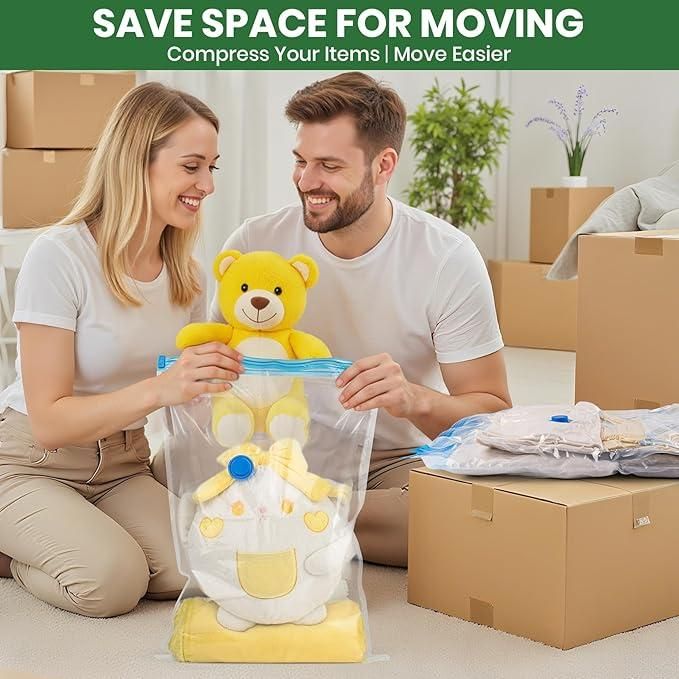
How to pack:
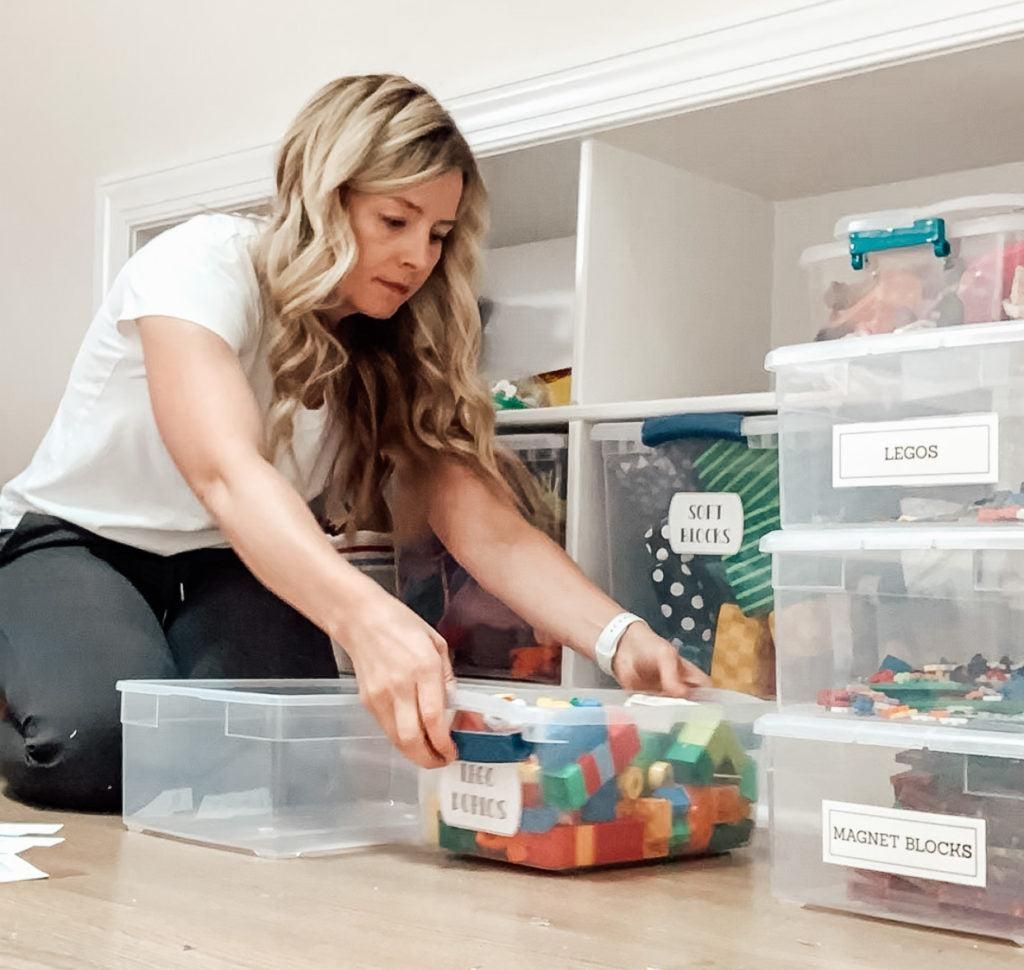
- Group toys by type and destination room.
- Use small boxes for building blocks, action figures, and small toys.
- Place small pieces in resealable bags.
- Tape game boxes closed gently or secure them inside a larger box.
- Keep board games stacked flat.
- Wrap electronic toys separately.
- Use clean bags or larger cartons for stuffed animals.
- Keep favorite bedtime toys accessible.
Important: Do not mix small toy components loosely with other household belongings. Keeping pieces together saves a tremendous amount of time during unpacking.
14. Bathroom Supplies, Toiletries & Cosmetics
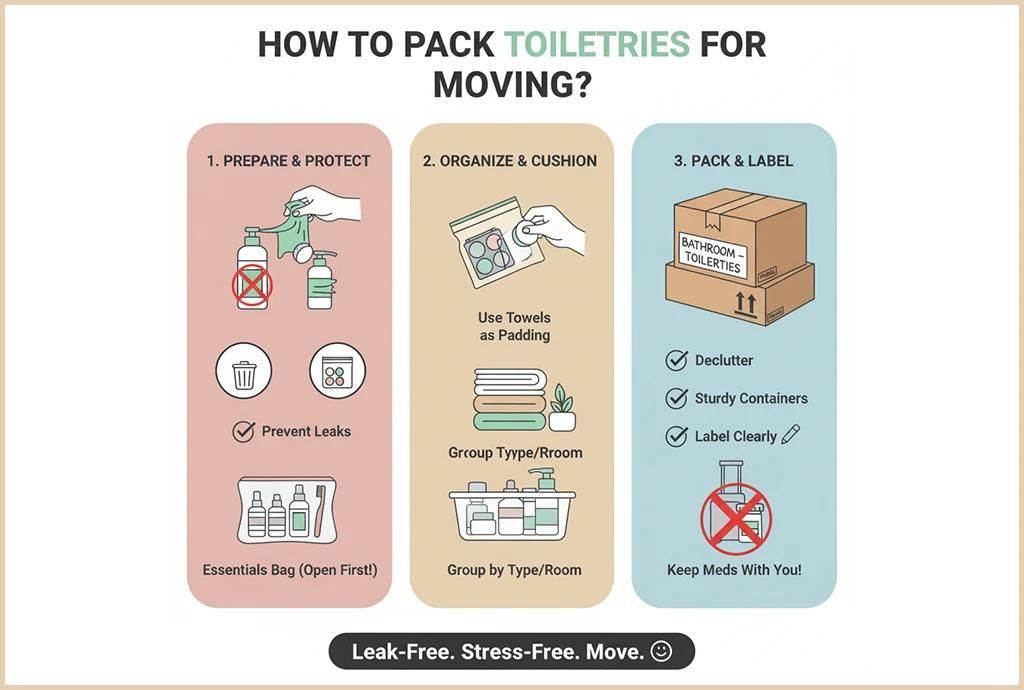
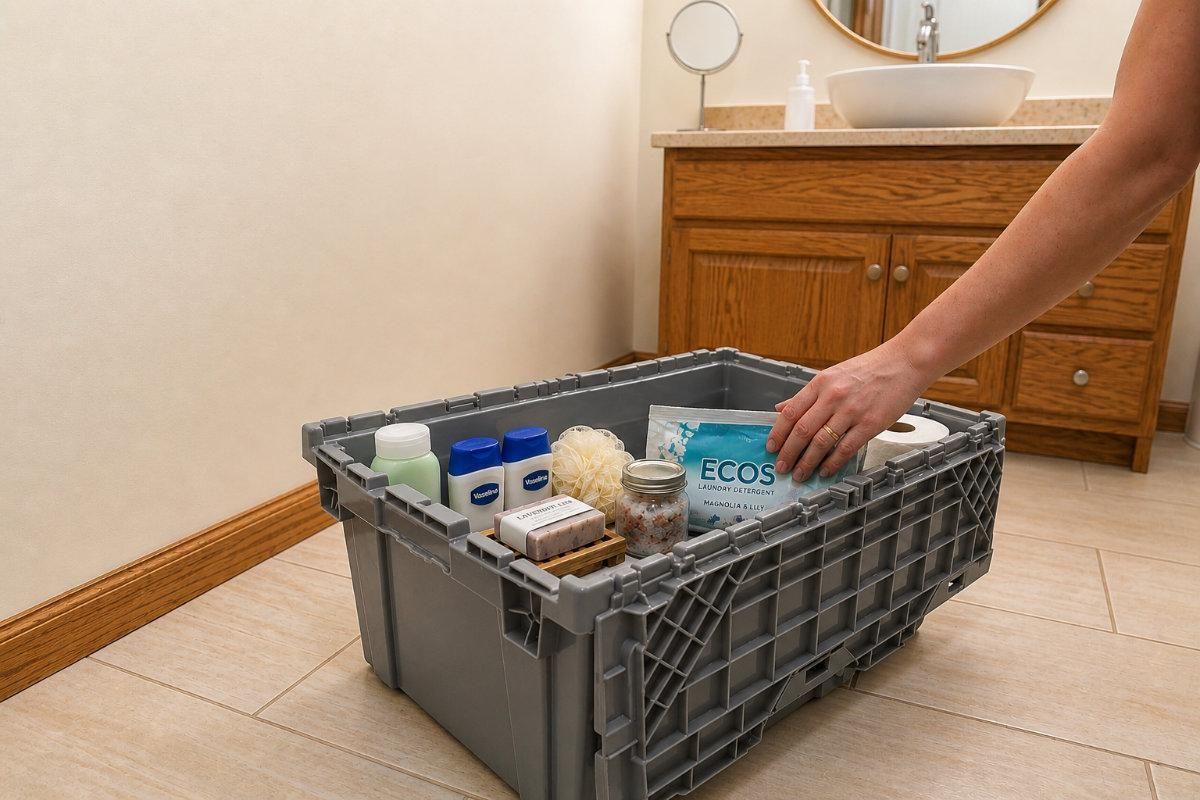
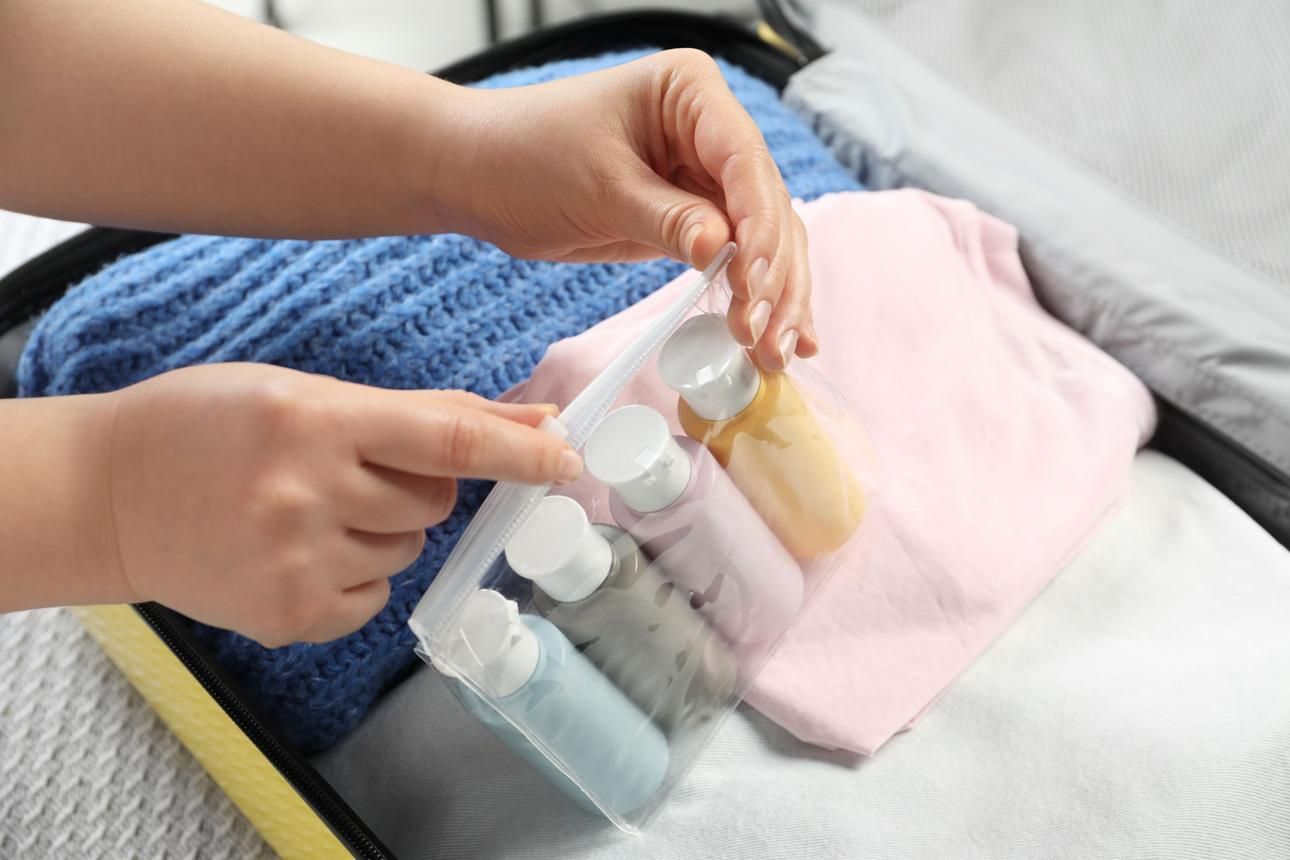
Bathrooms contain many small items that can leak or break.
How to pack:
1. Sort through medications, cosmetics, toiletries, and personal care products.
2. Dispose of expired or unwanted items.
3. Tighten all caps and lids.
4. Place liquid products in individual sealed plastic bags.
5. Protect glass perfume bottles and cosmetic containers individually.
6. Pack toiletries upright in small boxes.
7. Use towels or appropriate cushioning to fill empty spaces.
8. Keep essential medications and daily toiletries with you.
Never pack:
- Open or leaking bottles.
- Unsecured liquids.
- Hazardous or restricted chemicals without checking with your moving company.
15. Cleaning Supplies, Chemicals & Garage Products
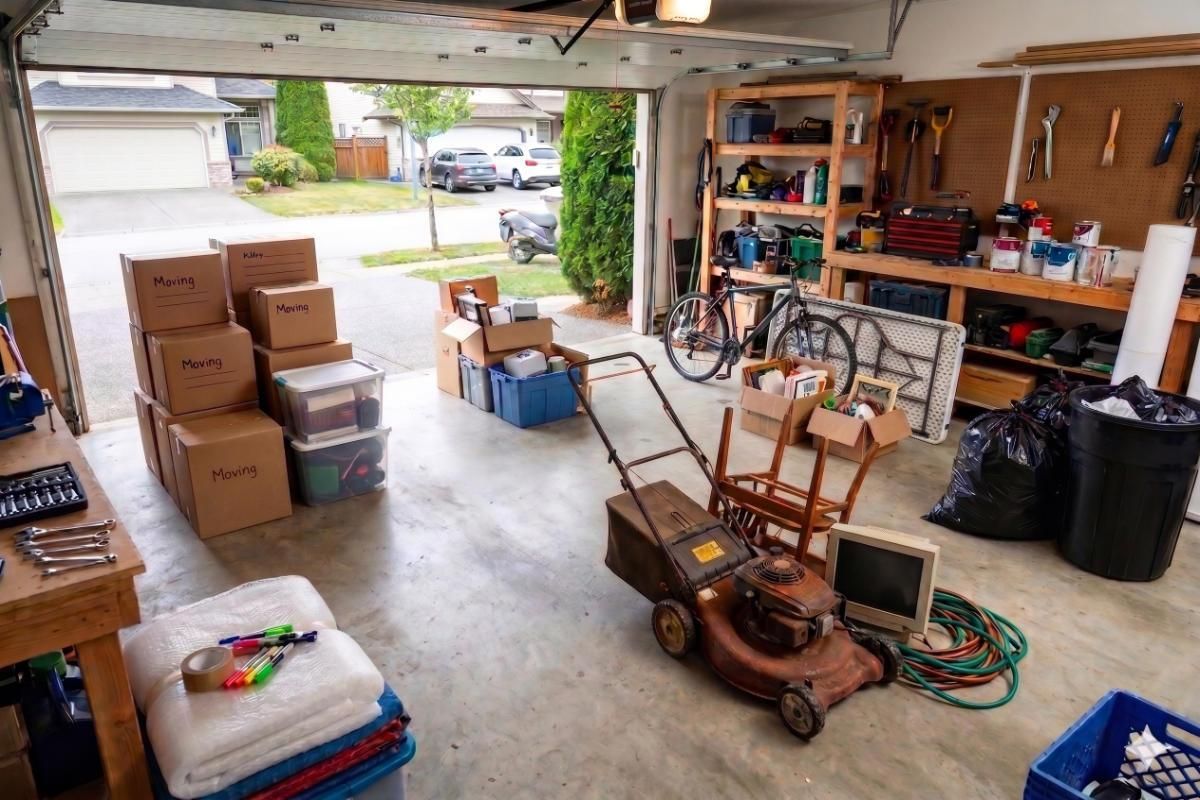
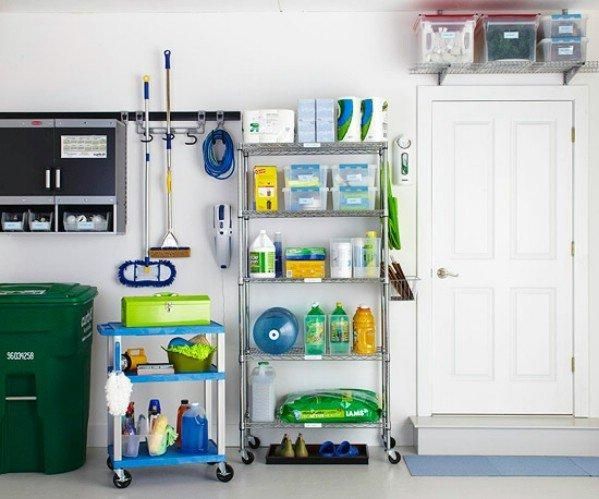
This category requires extra caution.
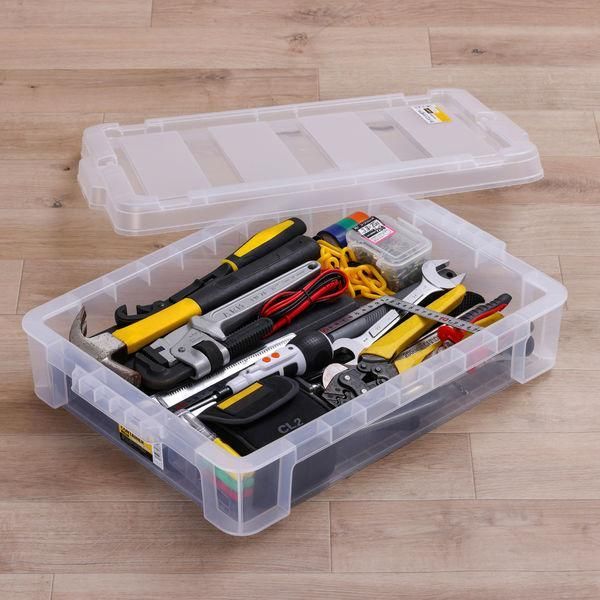
Tools:
- Clean tools before packing.
- Wrap sharp edges and points.
- Use small boxes for heavy hand tools.
- Keep tool sets together.
- Remove batteries from battery-powered tools when appropriate.
- Secure loose parts and accessories.
Cleaning products and chemicals:
Many household chemicals, fuels, pesticides, paints, aerosols, and other hazardous products may be prohibited from moving shipments or require special handling.
- Do not assume these products can go in the moving truck.
- Never pack leaking or unsealed chemical containers.
- Do not mix cleaning chemicals.
- Follow product disposal instructions.
- Ask LIFE Moving Co. before including any questionable items.
Garage items:
- Organize by category.
- Keep nails, screws, and small hardware in labeled containers.
- Pack heavy items in small boxes.
- Secure sharp objects.
- Separate items that cannot be transported.
16. Lamps, Chandeliers, Ceiling Fans & Light Fixtures
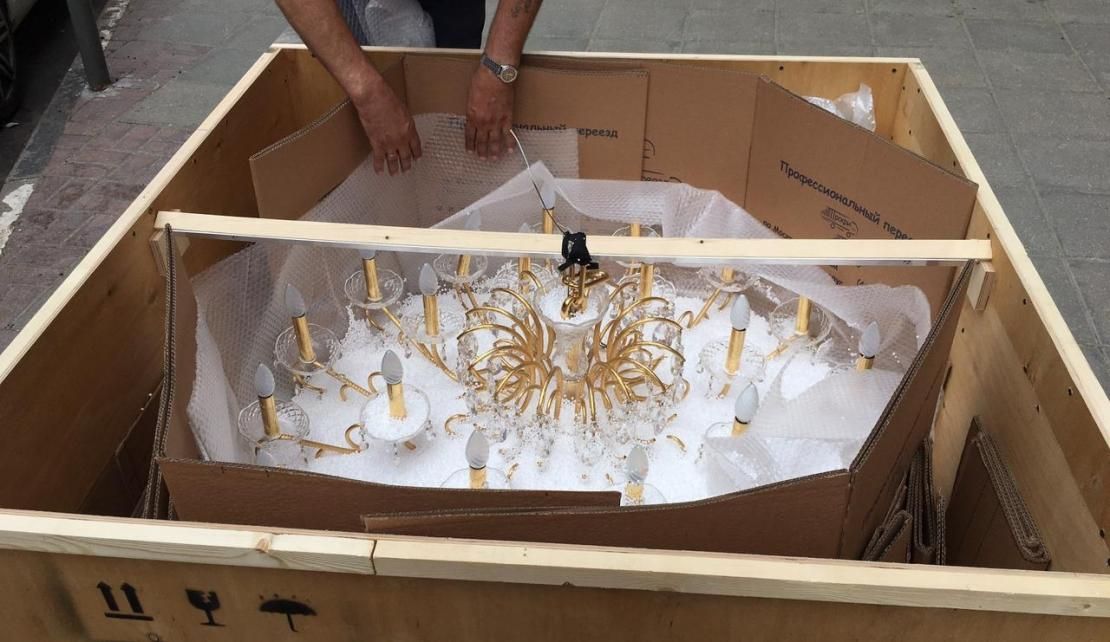
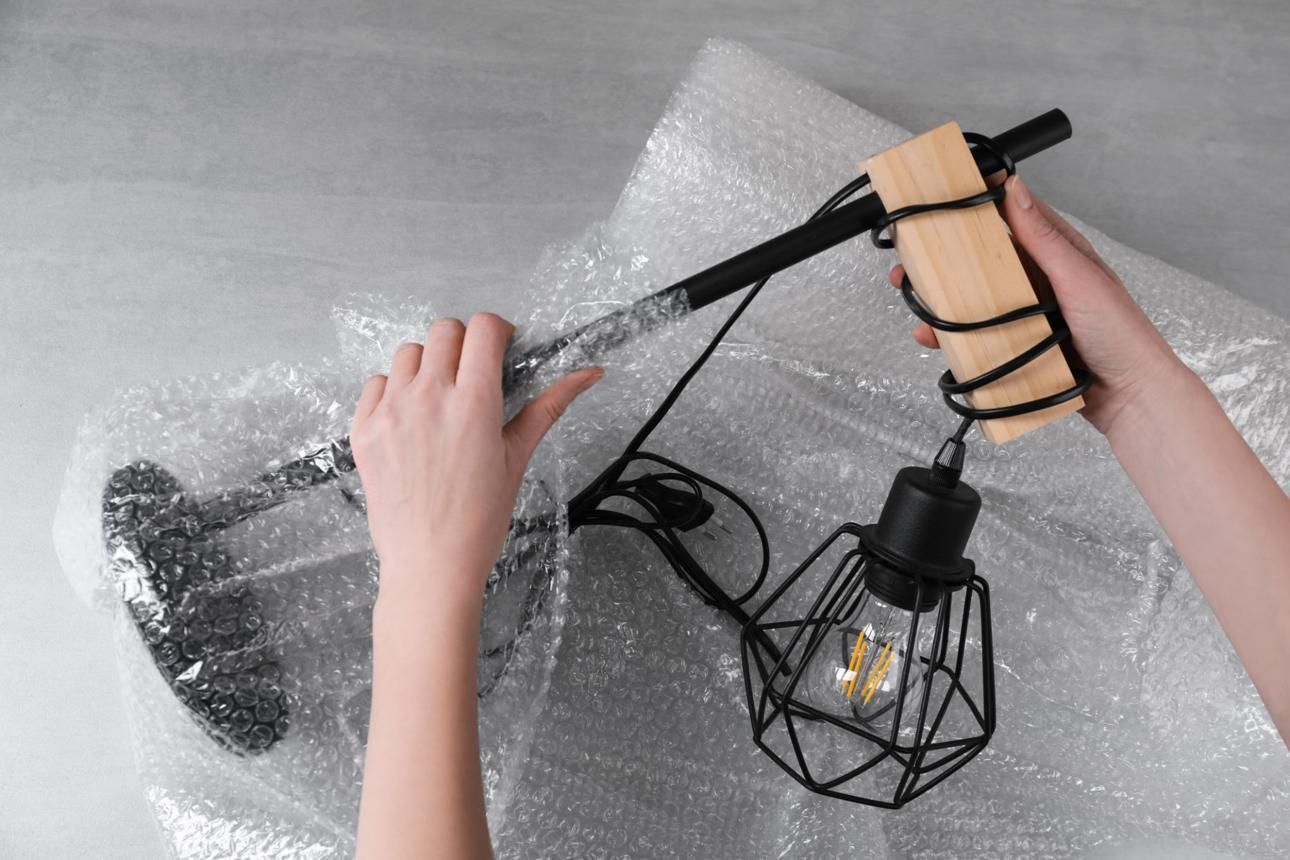
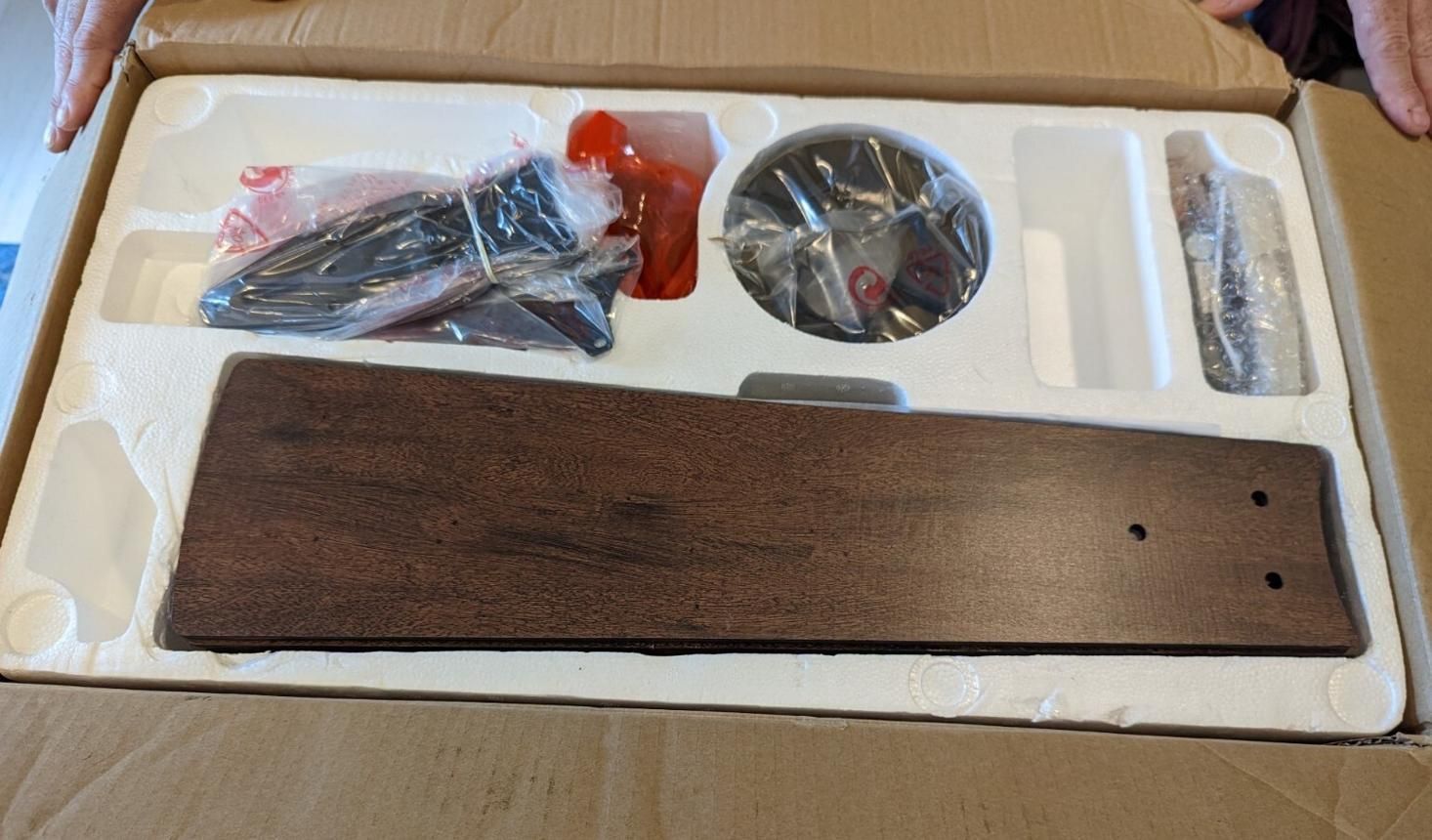
Decorative lighting can be fragile, awkward, and expensive.
How to prepare:
1. Have hardwired fixtures disconnected by a qualified professional.
2. Remove bulbs and detachable glass components.
3. Wrap glass shades individually.
4. Protect metal arms and decorative pieces.
5. Keep mounting hardware in labeled bags.
6. Pack detachable components in appropriately sized boxes.
7. Protect the main fixture with ample cushioning.
Chandeliers and oversized specialty lighting are best left to professional packers.
17. Curtains, Drapes, Blinds & Window Treatments
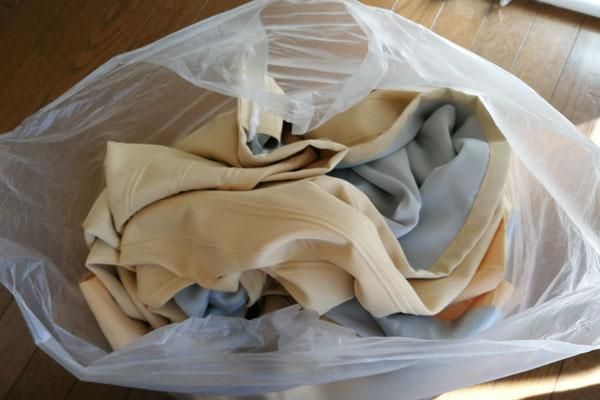
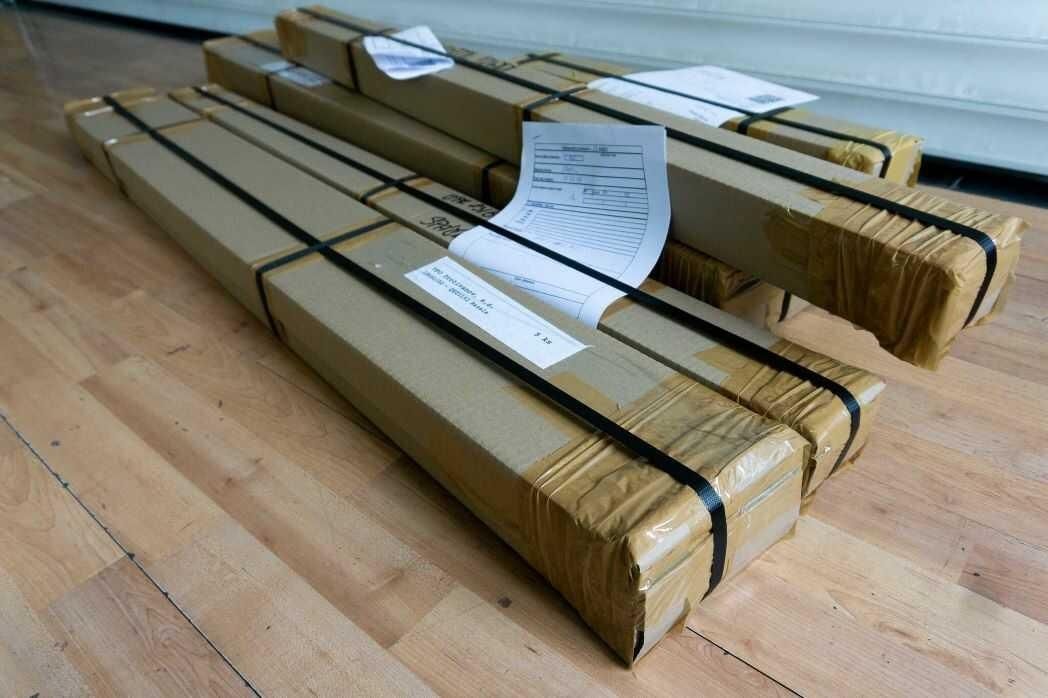
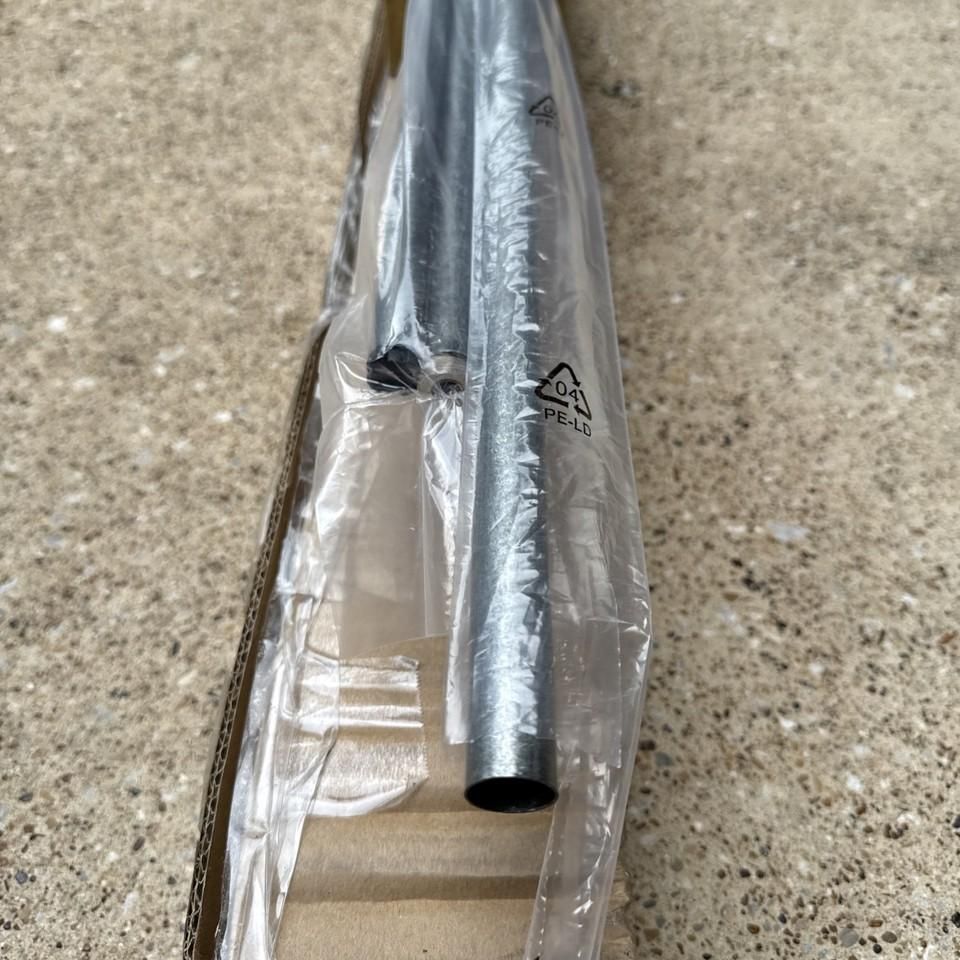
How to pack:
- Remove curtains and drapes from rods.
- Fold neatly and place in clean bags or cartons.
- Keep delicate fabrics separate.
- Wrap curtain rods individually.
- Protect decorative finials and hardware.
- Keep mounting brackets and screws in labeled bags.
- Pack blinds in appropriately sized boxes to prevent bending.
18. Rugs, Area Carpets & Floor Mats
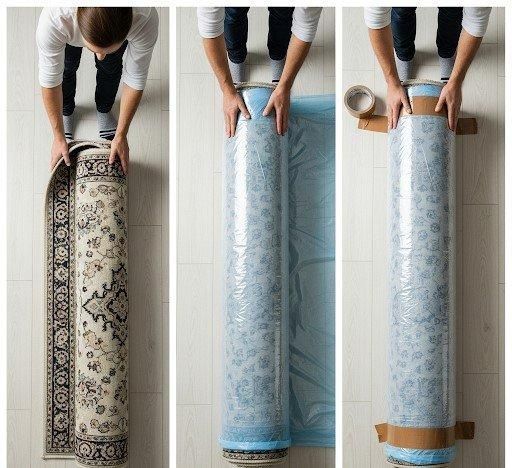
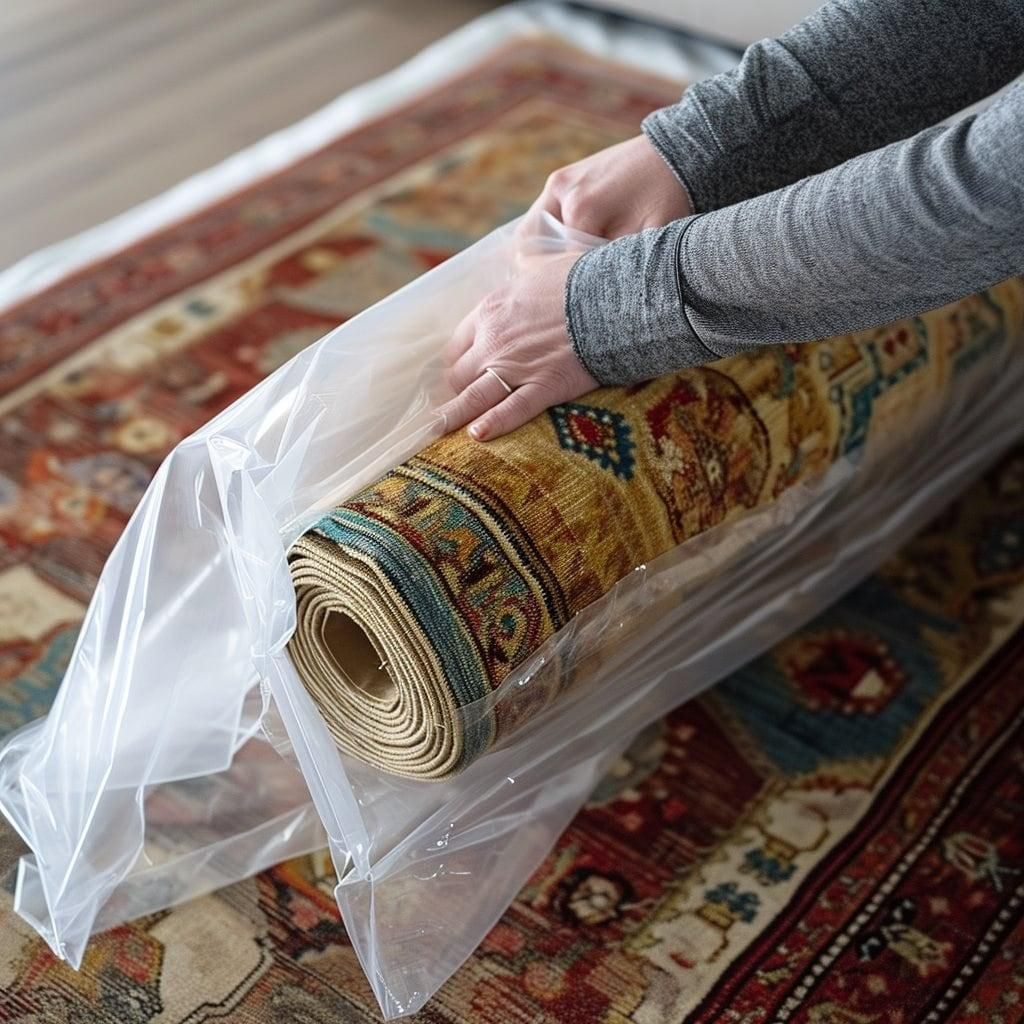
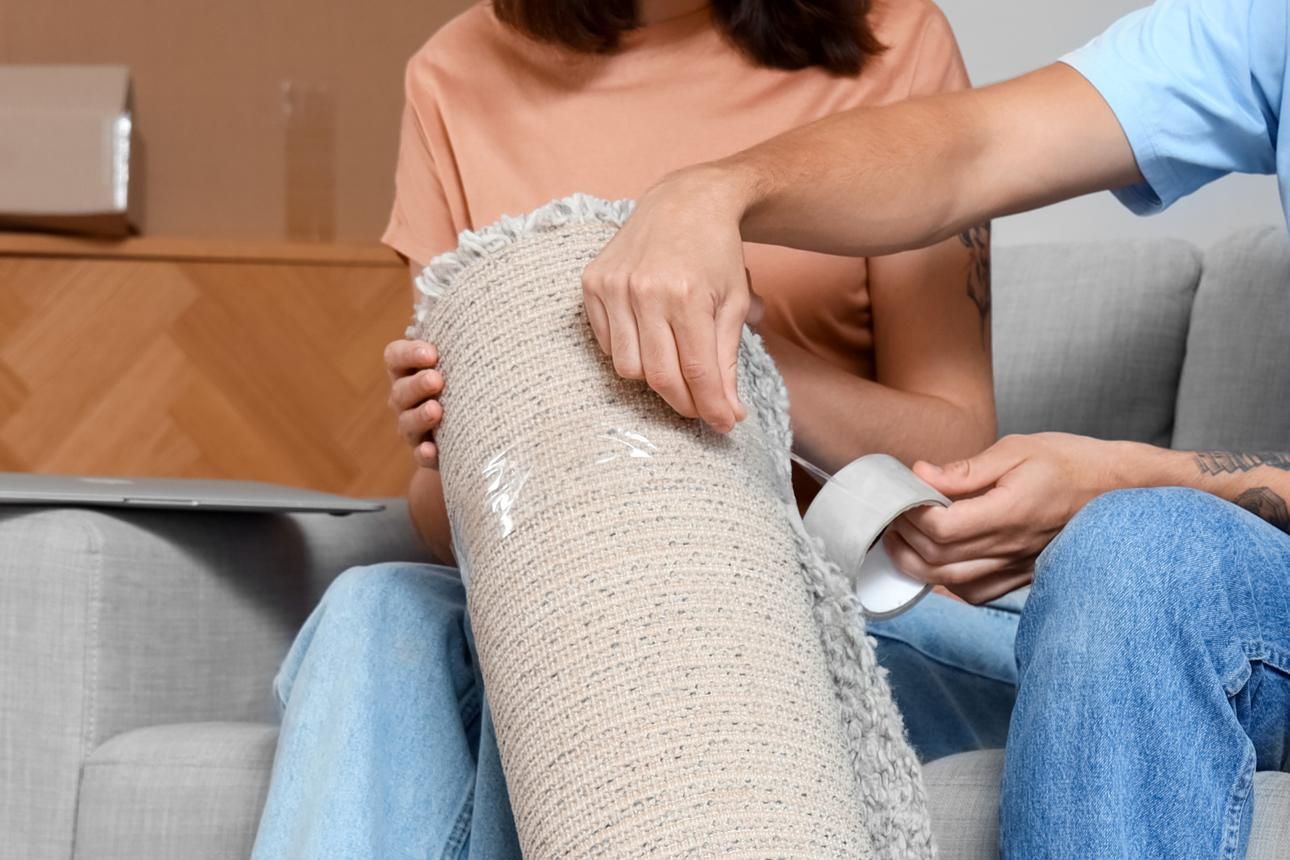
How to prepare:
1. Vacuum rugs before moving.
2. Make sure they are completely dry.
3. Roll rugs tightly rather than folding them.
4. Secure them with straps or ties.
5. Use protective wrapping to keep dirt and moisture away.
6. Label each rug by destination room.
Avoid placing heavy furniture or boxes on top of rolled rugs.
19. Holiday Decorations & Seasonal Items
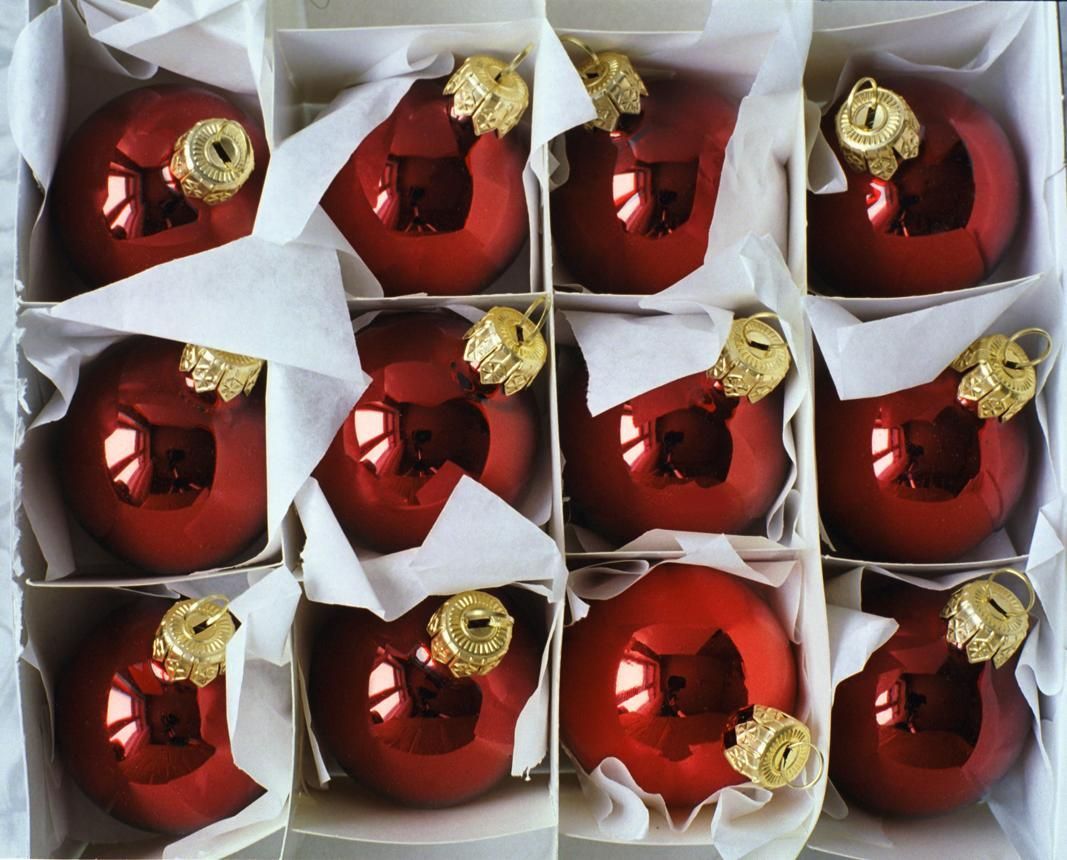
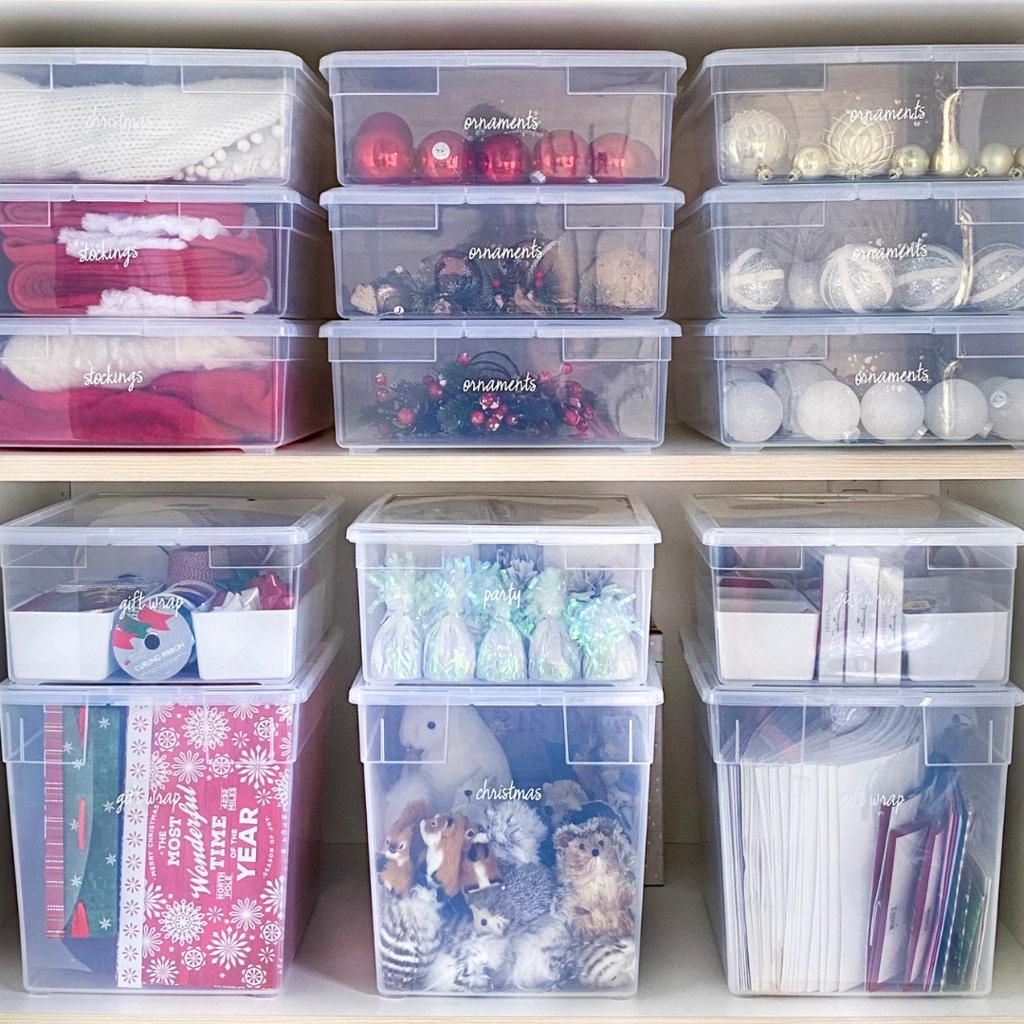
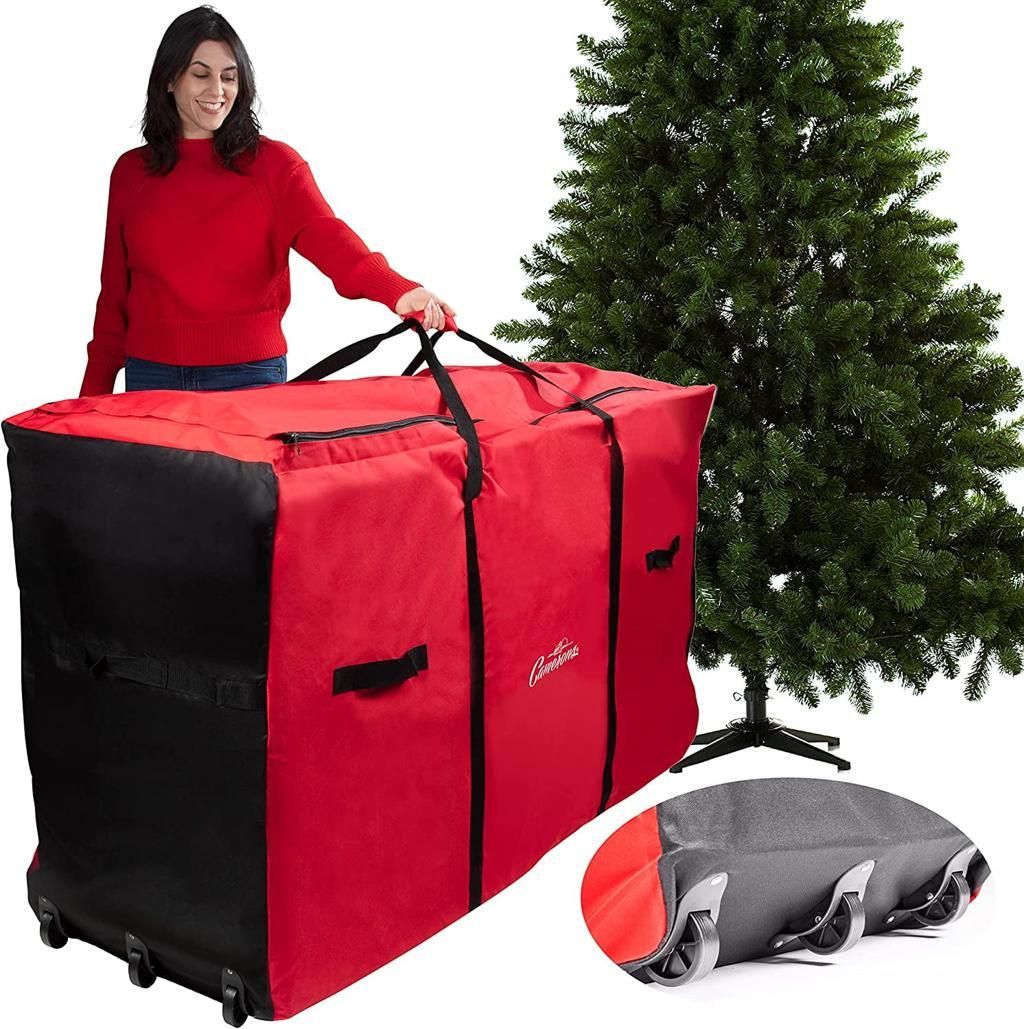
Holiday decorations often contain delicate and sentimental items.
How to pack:
- Use original ornament boxes when available.
- Wrap each glass ornament individually.
- Use divided cartons for fragile decorations.
- Keep tree lights bundled and labeled.
- Secure extension cords separately.
- Disassemble artificial trees when designed to come apart.
- Keep wreaths and garlands in appropriately sized containers.
- Label boxes by holiday or season.
Extra tip: Pack all holiday decorations together so you aren't searching through multiple boxes when the season arrives.
20. Outdoor Furniture, Patio Items & Grills
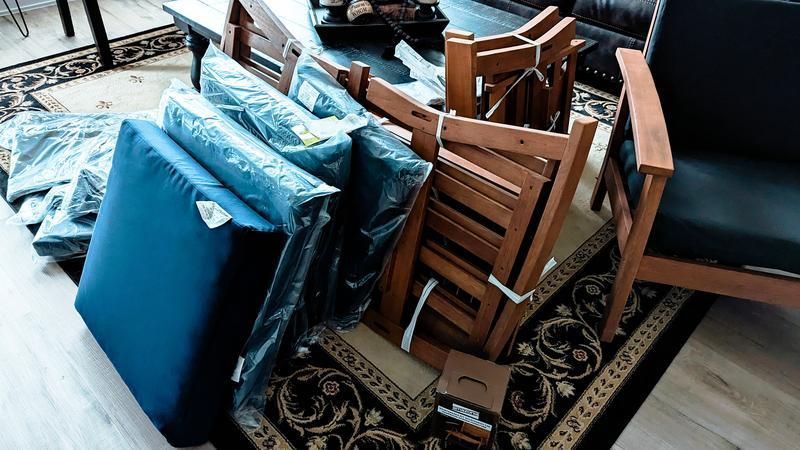
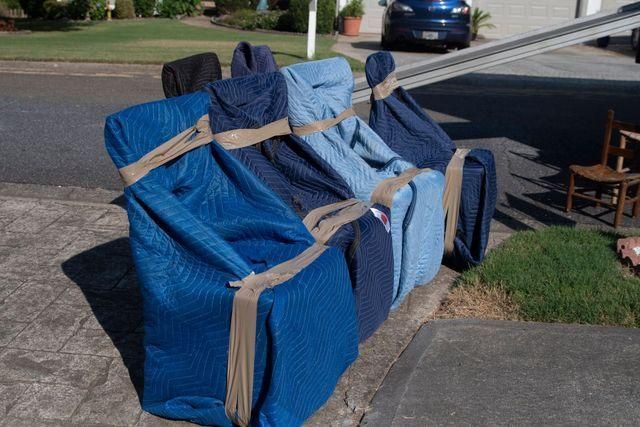
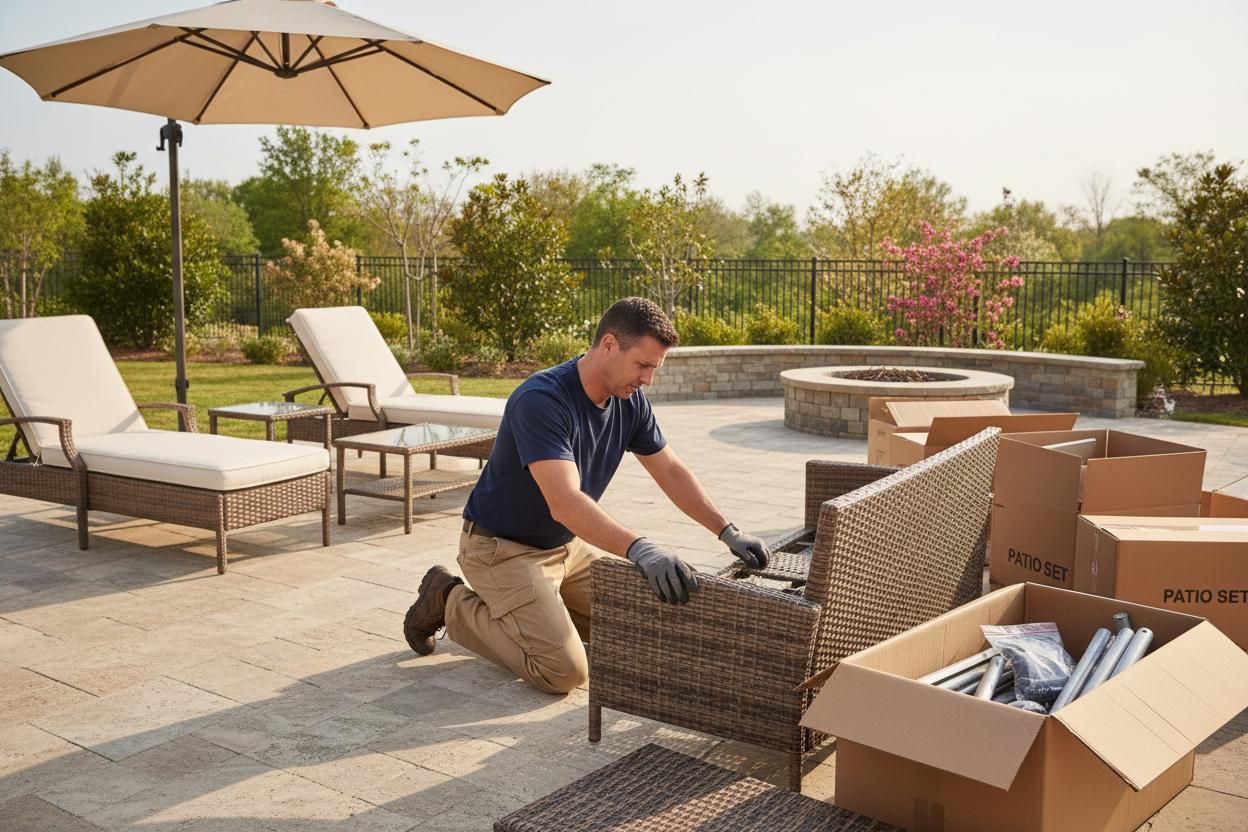
Outdoor furniture:
- Clean and dry furniture.
- Remove detachable cushions.
- Pack cushions in clean protective bags.
- Disassemble furniture when appropriate.
- Keep hardware in labeled bags.
- Protect glass tabletops separately.
Grills:
- Disconnect gas connections safely.
- Remove propane tanks. Never assume propane cylinders can be transported in a moving truck.
- Clean grease and debris.
- Remove detachable accessories.
- Check with your moving company regarding fuel, propane, and grill transportation restrictions.
Outdoor equipment:
- Drain water from hoses and equipment.
- Secure detachable components.
- Remove fuel from gas-powered equipment as directed by the manufacturer and your moving company.
- Never pack leaking fuel containers..
21. Exercise Equipment & Sporting Goods
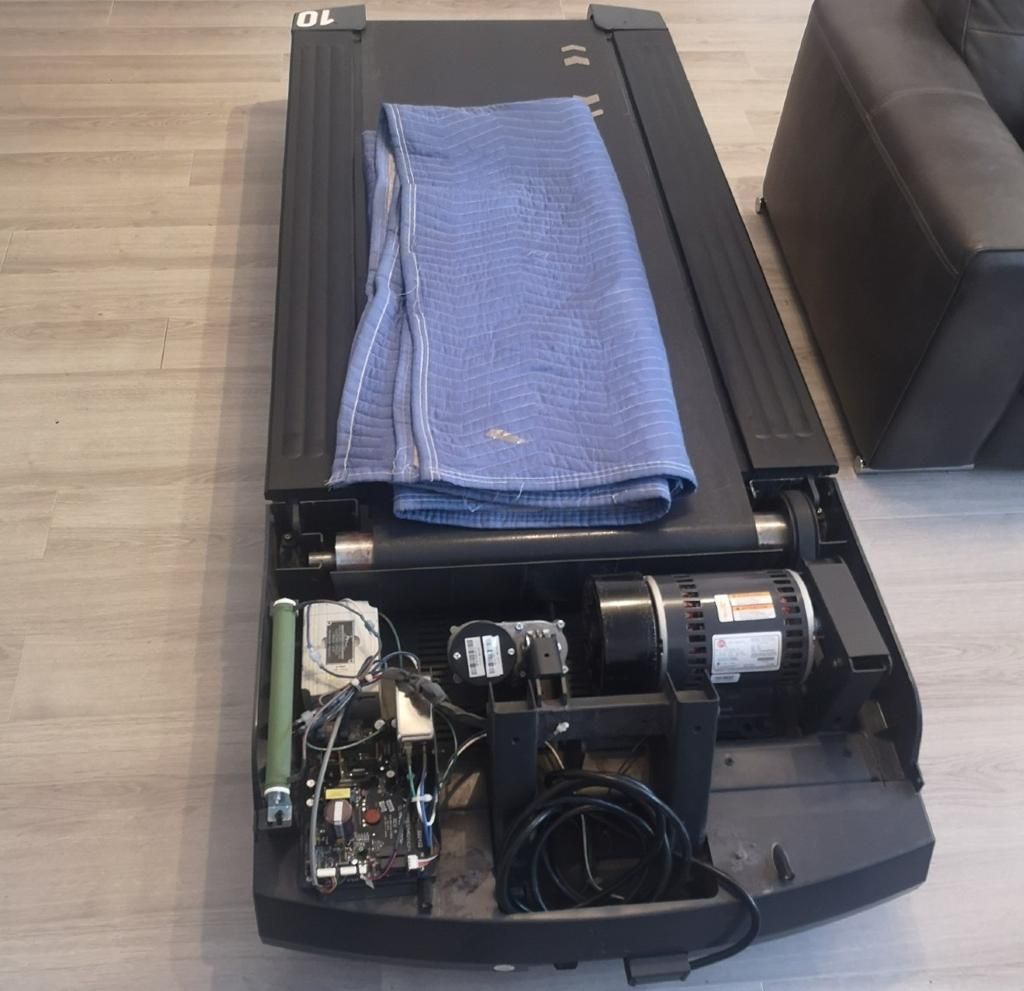
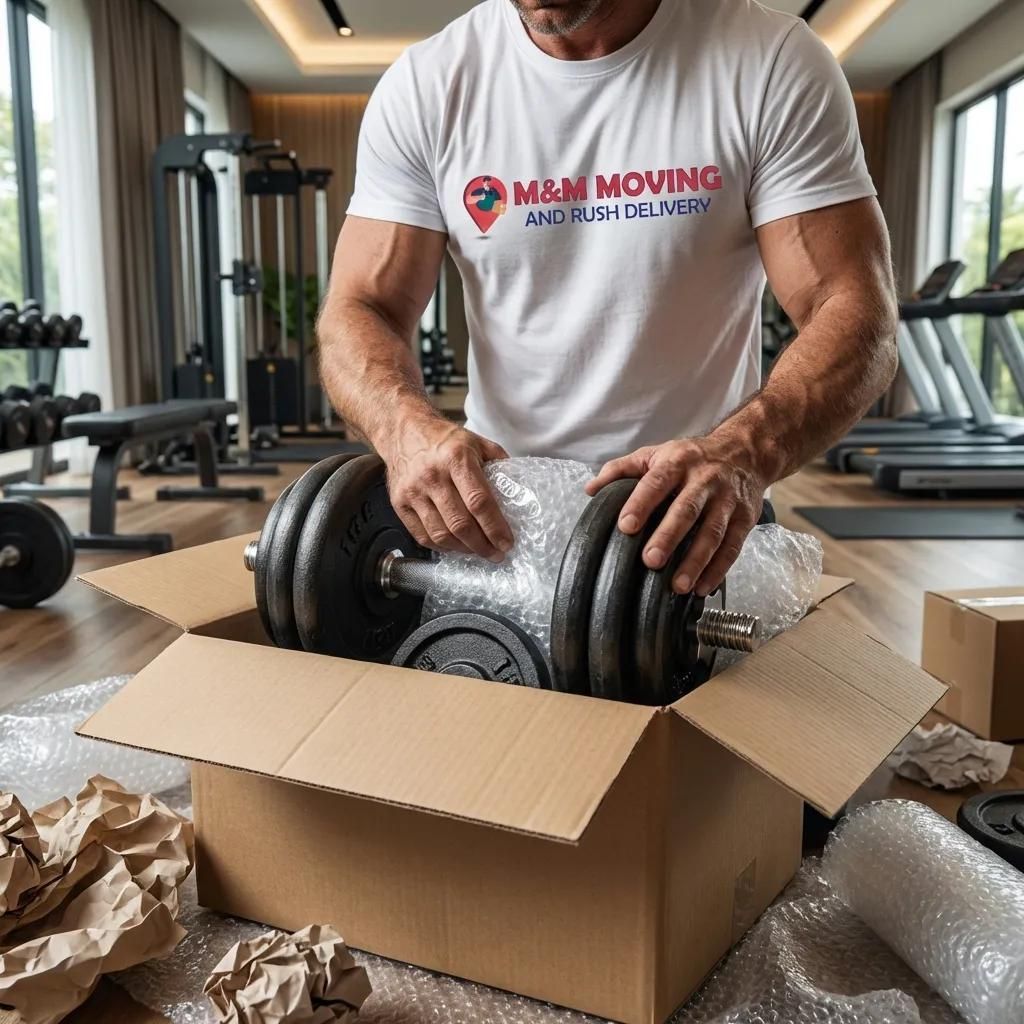
Exercise equipment:
- Photograph equipment before disassembly.
- Remove detachable accessories.
- Secure moving parts.
- Keep bolts and hardware in labeled bags.
- Protect screens and control panels.
- Use manufacturer instructions for disassembly and preparation.
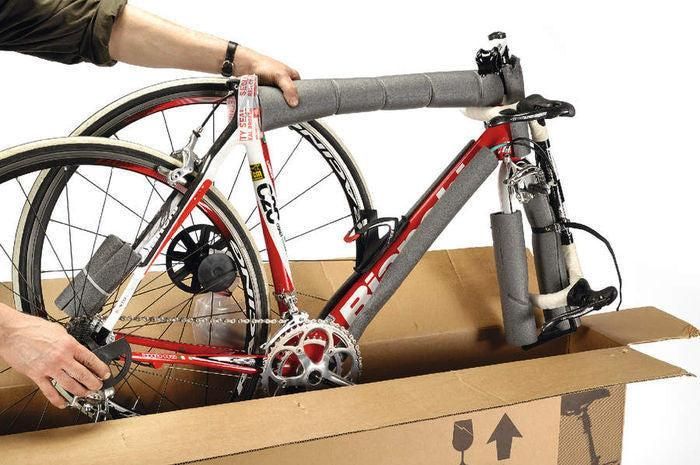
Sporting goods:
- Pack balls, gloves, and protective gear together.
- Wrap golf clubs and protect club heads.
- Secure fishing rods in protective tubes.
- Keep small accessories in labeled containers.
- Protect bicycles by securing loose components and wrapping exposed surfaces.
Heavy gym equipment and specialty fitness machines may require professional handling.
22. Jewelry, Watches, Collectibles & Valuables
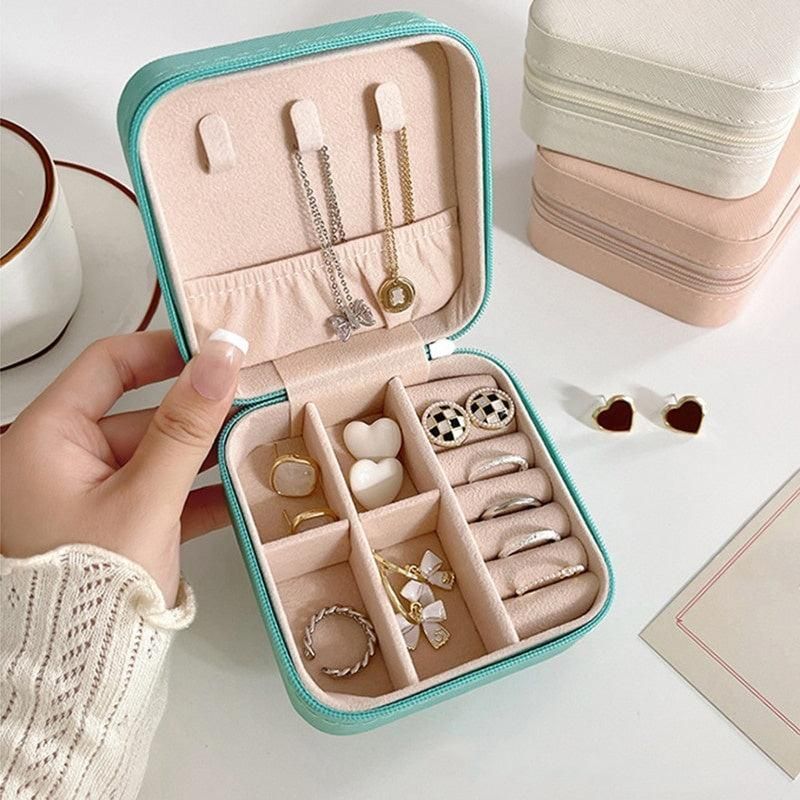
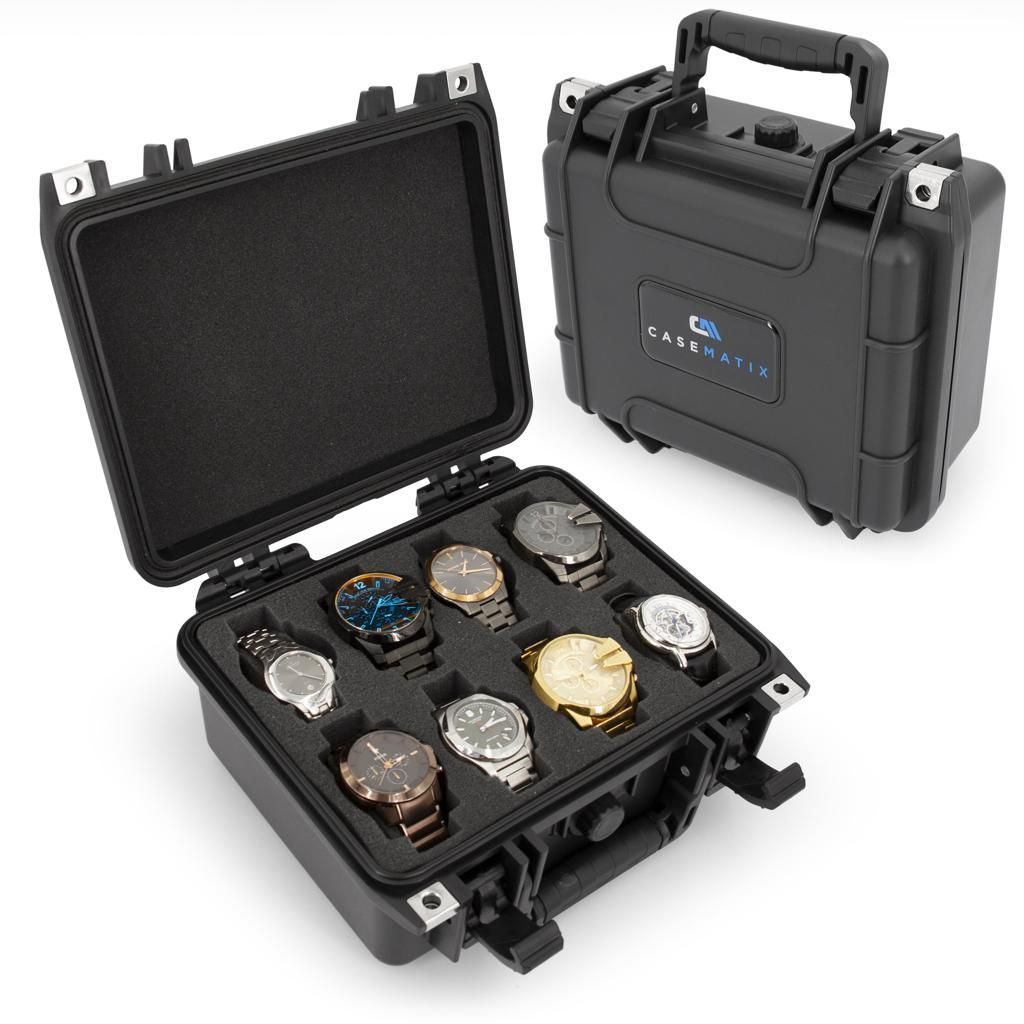
These are items you should generally transport yourself.
Jewelry and watches:
- Use individual jewelry cases.
- Keep necklaces separated to prevent tangling.
- Protect watches in their original cases when available.
- Keep valuables secured and out of sight.
- Never place jewelry in general household boxes.
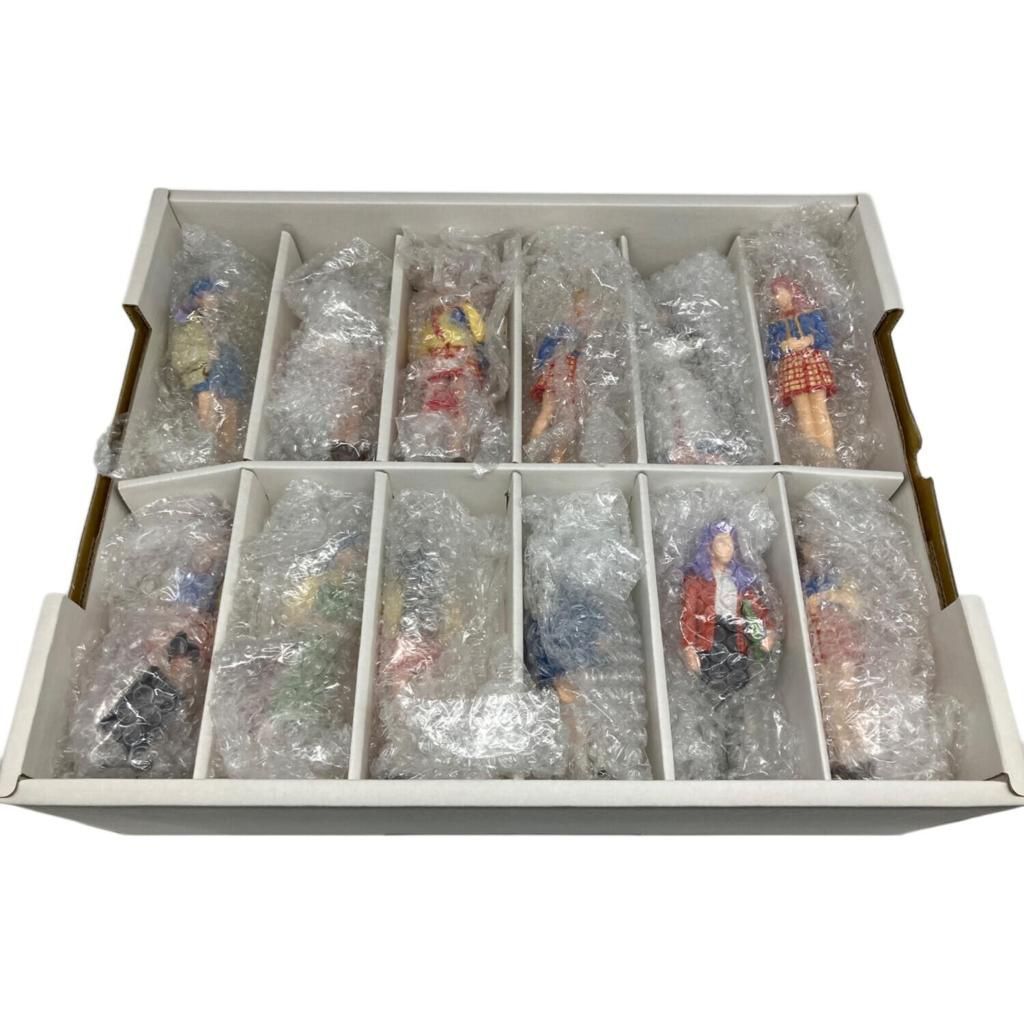
Collectibles:
- Keep original packaging when possible.
- Wrap each item individually.
- Use appropriately sized boxes with cushioning.
- Photograph valuable collections before the move.
- Consider separate transportation for irreplaceable pieces.
Important: Cash, jewelry, passports, personal documents, and irreplaceable family heirlooms should stay with you rather than being placed in the moving shipment.
23. Refrigerators, Freezers & Large Appliances
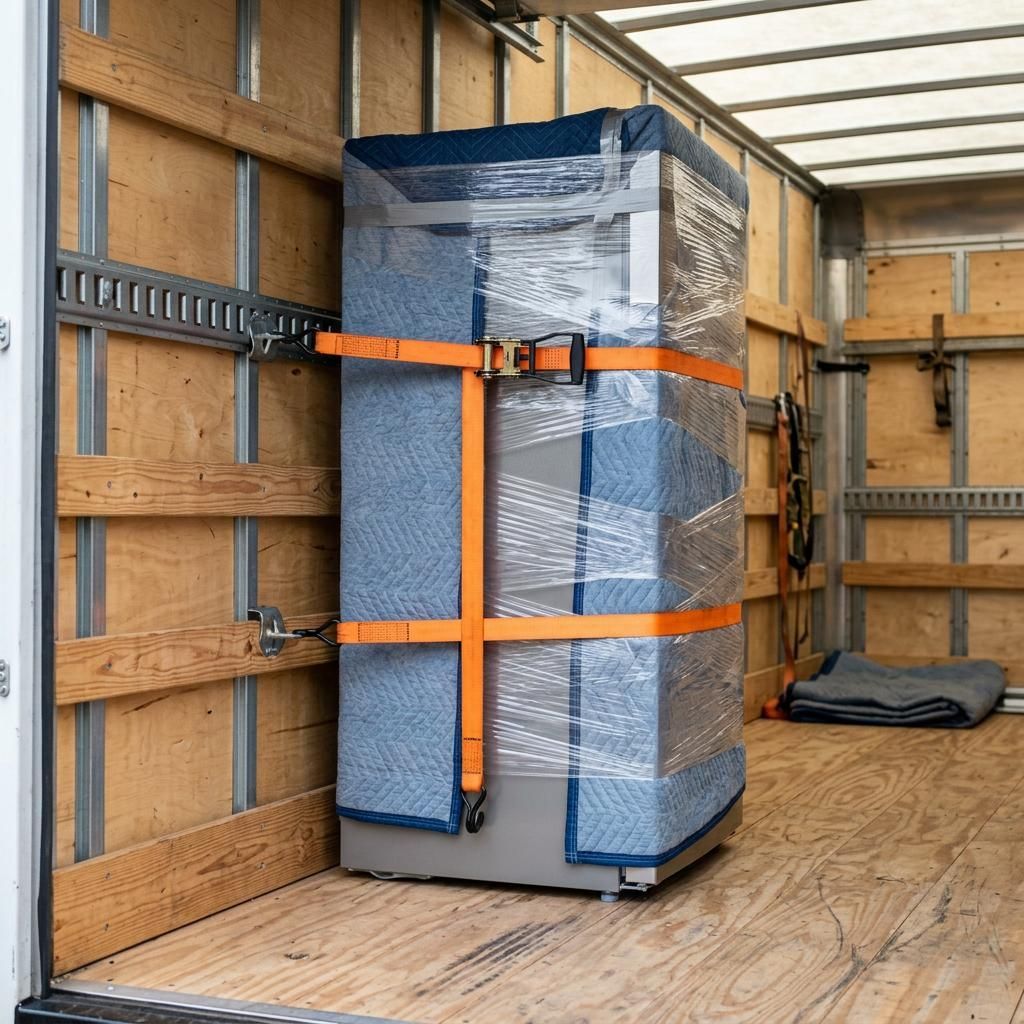
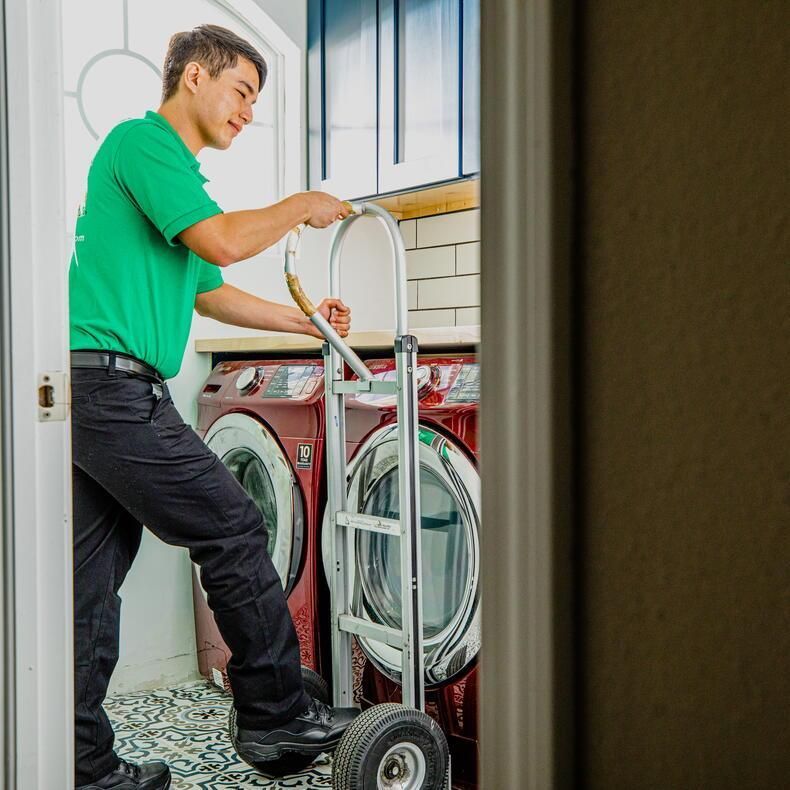
Large appliances need preparation before moving day.
Refrigerators and freezers:
1. Empty all food.
2. Dispose of perishables.
3. Defrost if necessary, following the manufacturer's instructions.
4. Clean and dry the interior.
5. Remove loose shelves and drawers or secure them as directed.
6. Secure doors appropriately without damaging seals.
7. Keep the refrigerator upright unless the manufacturer specifies otherwise.
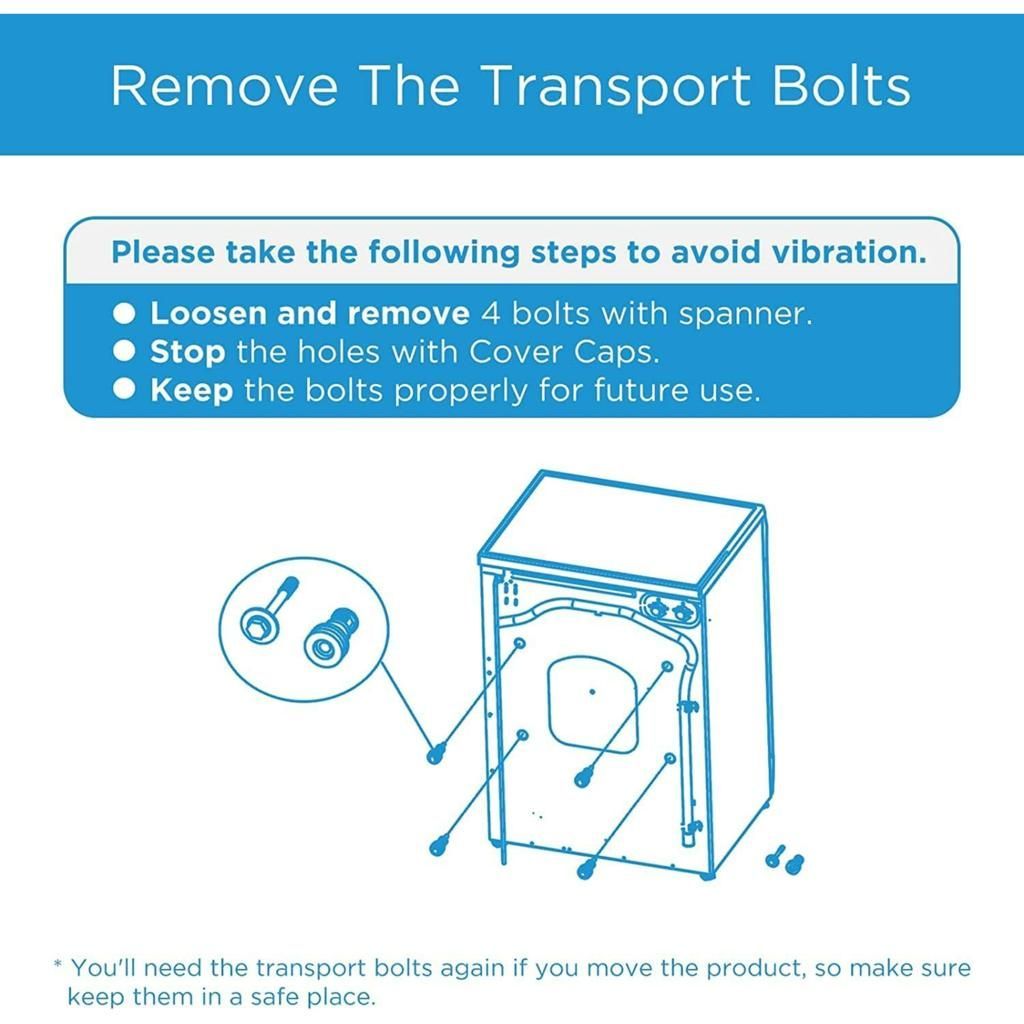
Washing machines:
- Disconnect water and power.
- Drain hoses and internal water as directed.
- Secure hoses and cords.
- Install shipping bolts if required by the manufacturer.
- Protect the exterior.
Dryers:
- Disconnect power or gas safely.
- Clean the lint trap.
- Secure hoses and cords.
- Protect control panels and doors.
Dishwashers:
- Disconnect water and power safely.
- Drain remaining water.
- Secure racks and removable accessories.
- Protect the door and control panel.
Important: Gas, electrical, and water connections should be handled by qualified professionals when required. Always follow the appliance manufacturer's preparation instructions.
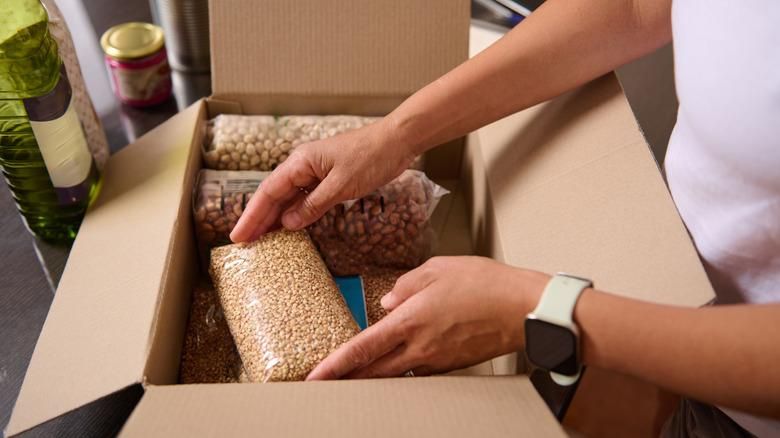
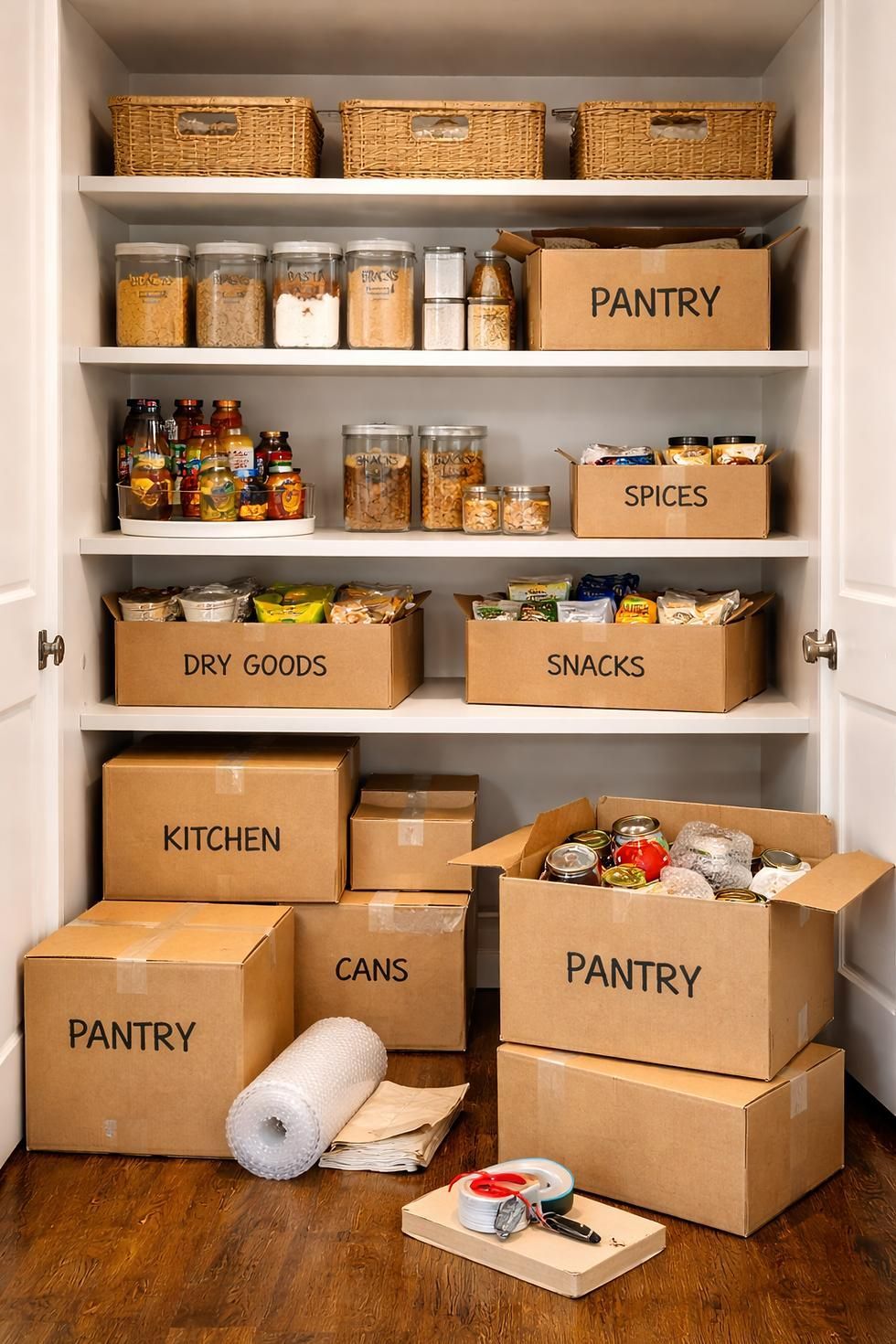
24. Food, Pantry Items & Spices
Pantry items:
- Sort through food before packing.
- Dispose of expired products.
- Pack only shelf-stable, sealed foods that your mover permits.
- Place small items in smaller boxes.
- Secure spice lids.
- Keep canned goods in small, manageable cartons.
- Pack glass food containers separately with cushioning.
Do not pack:
- Perishable food.
- Open containers that can spill.
- Refrigerated or frozen food without an approved transportation arrangement.
- Items prohibited by your moving company.
For long-distance moves, it's usually best to consume, donate, or discard most pantry items rather than transport them.
25. Plants, Potted Flowers & Garden Items
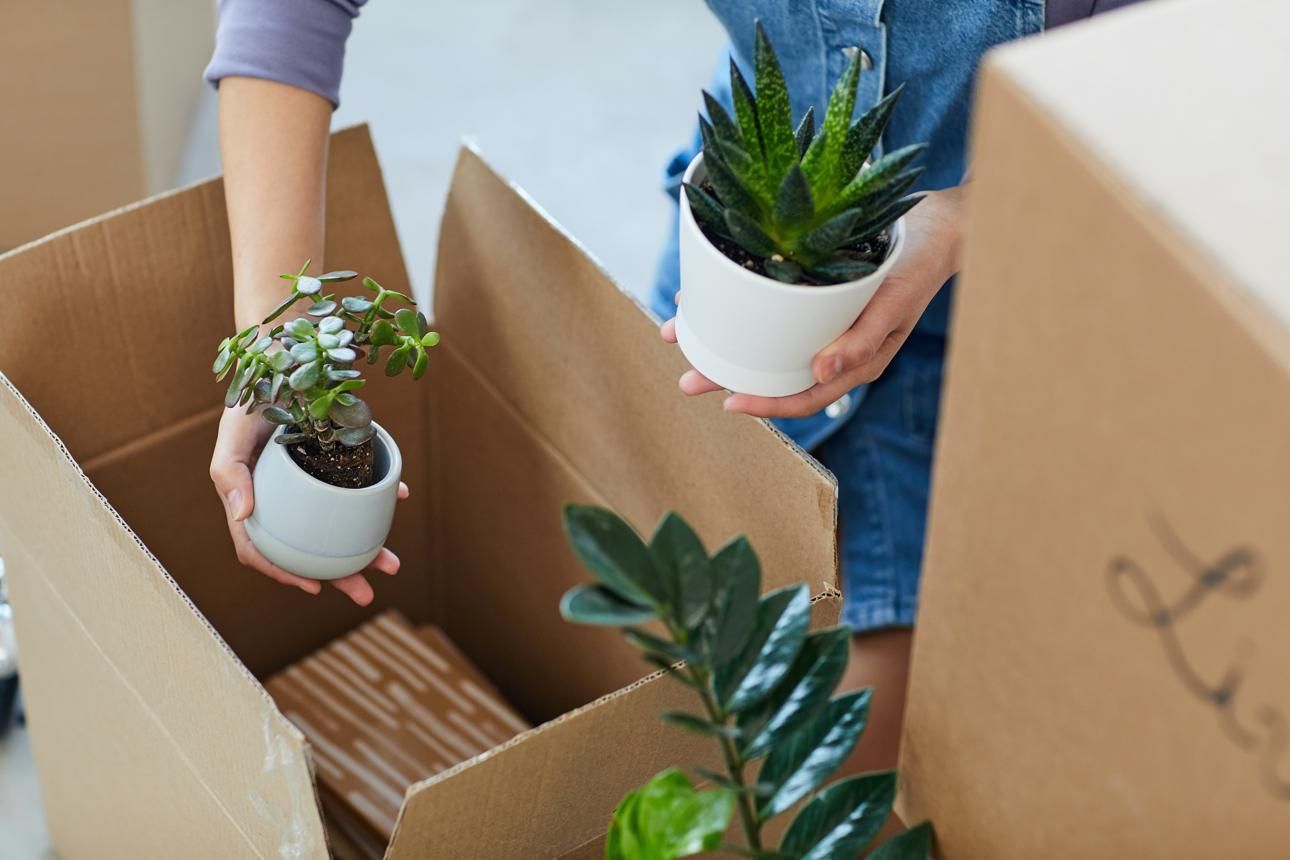
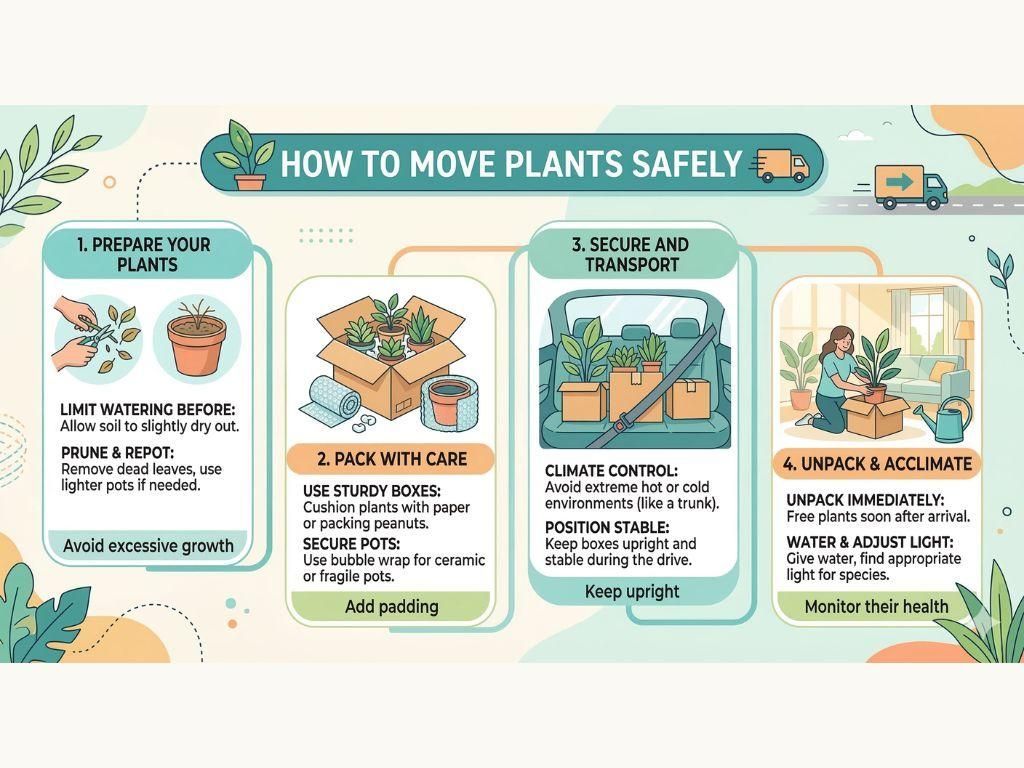
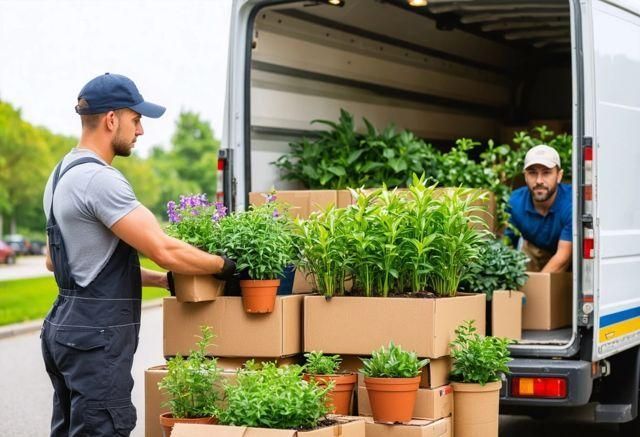
Plants need special consideration, particularly during long-distance moves.
- Check with your moving company before planning to transport plants.
- Check applicable state and destination restrictions.
- Water plants appropriately before moving, without leaving pots soggy.
- Protect branches and leaves.
- Use sturdy containers for small plants.
- Keep plants upright and protected from extreme temperatures.
- Transport plants yourself when possible and permitted.
Large plants and delicate tropical plants may be difficult to transport safely in a moving truck.
26. Pet Supplies & Children's Essentials
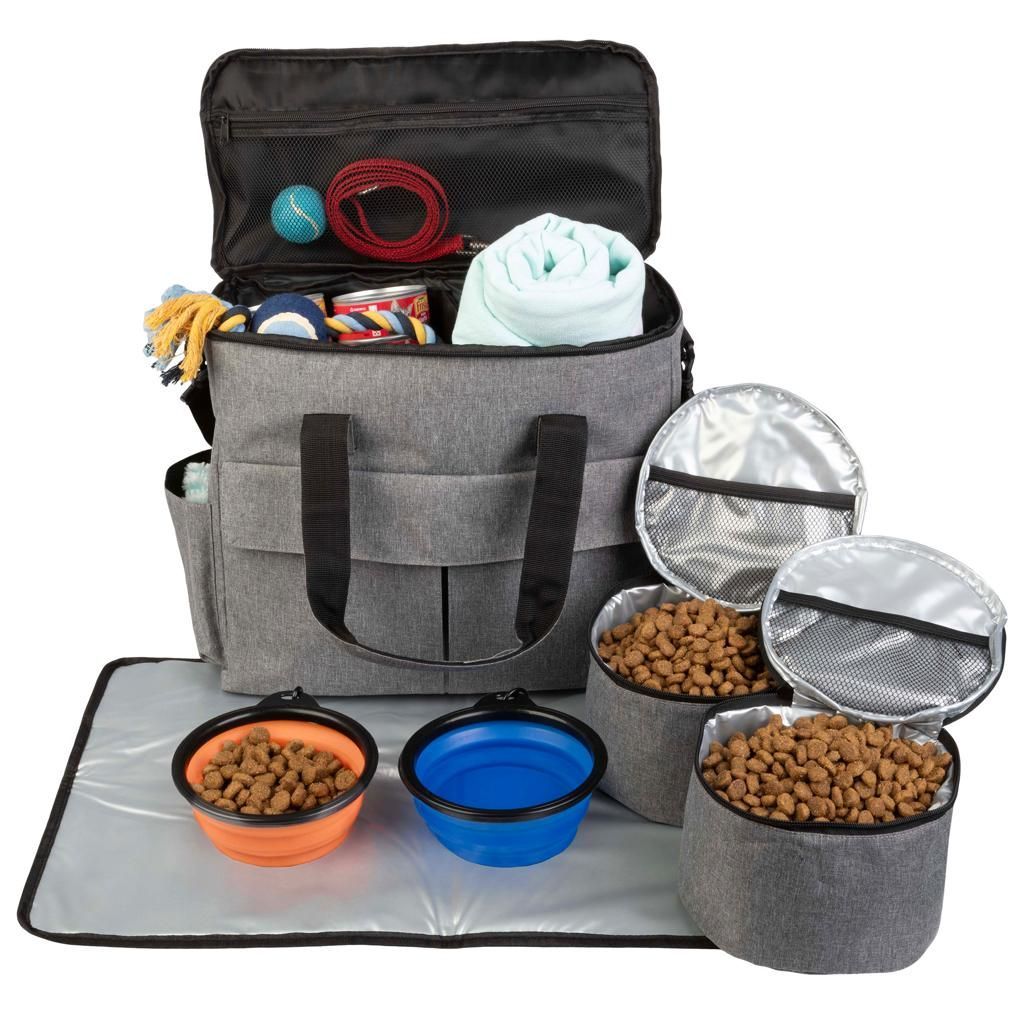
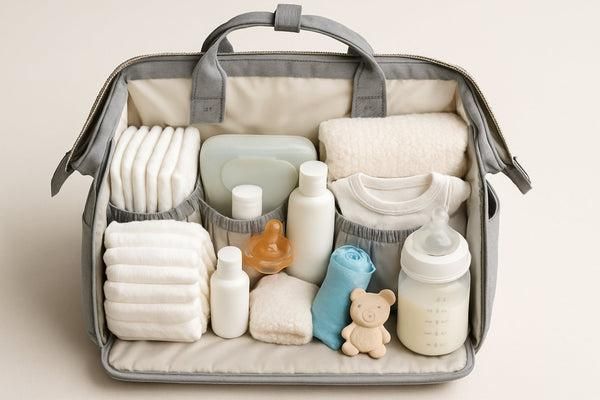
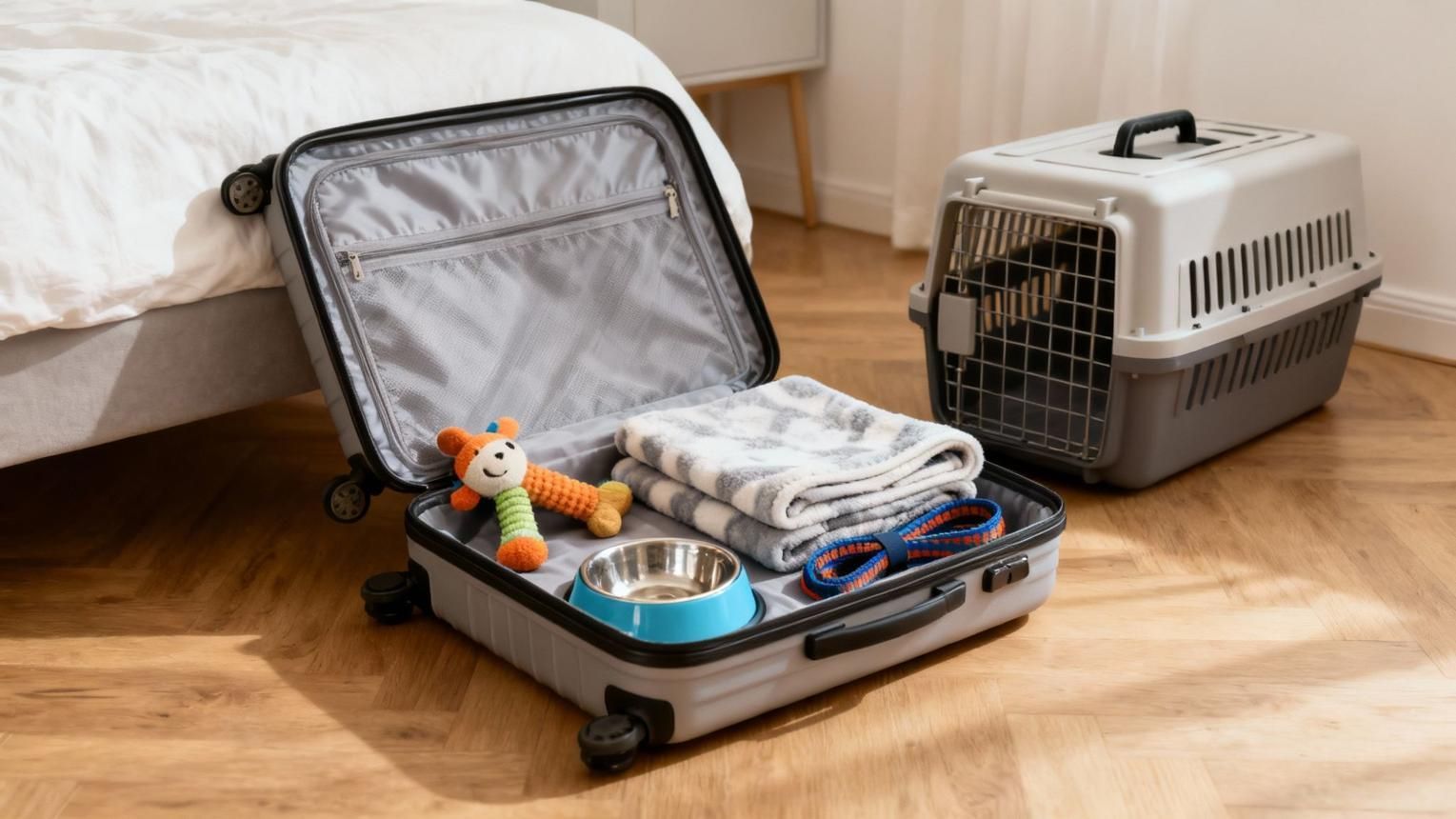
Keep your household's immediate necessities accessible.
Pet supplies:
- Food and treats.
- Leashes and collars.
- Medication.
- Water and food bowls.
- Waste bags and litter supplies.
- Favorite toys and bedding.
Children's supplies:
- Diapers and wipes.
- Formula and feeding supplies.
- Clothing and pajamas.
- Favorite toys and comfort items.
- Medication and personal care items.
- Important school or childcare supplies.
Keep these items in your personal vehicle whenever possible so they're readily accessible during the move..
Special Packing Techniques That Make a Big Difference
Some of the best packing tricks aren't about individual items. They're about keeping the entire move organized.
27. Create a Designated Parts Box
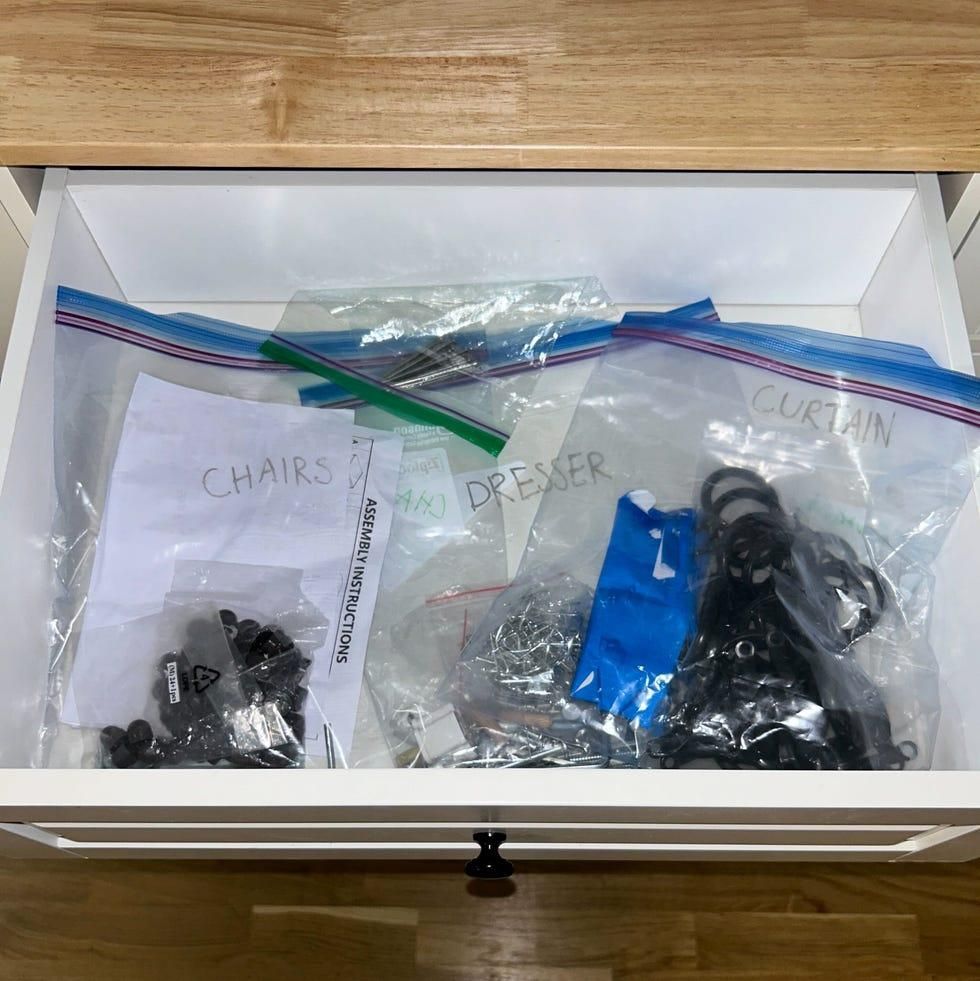
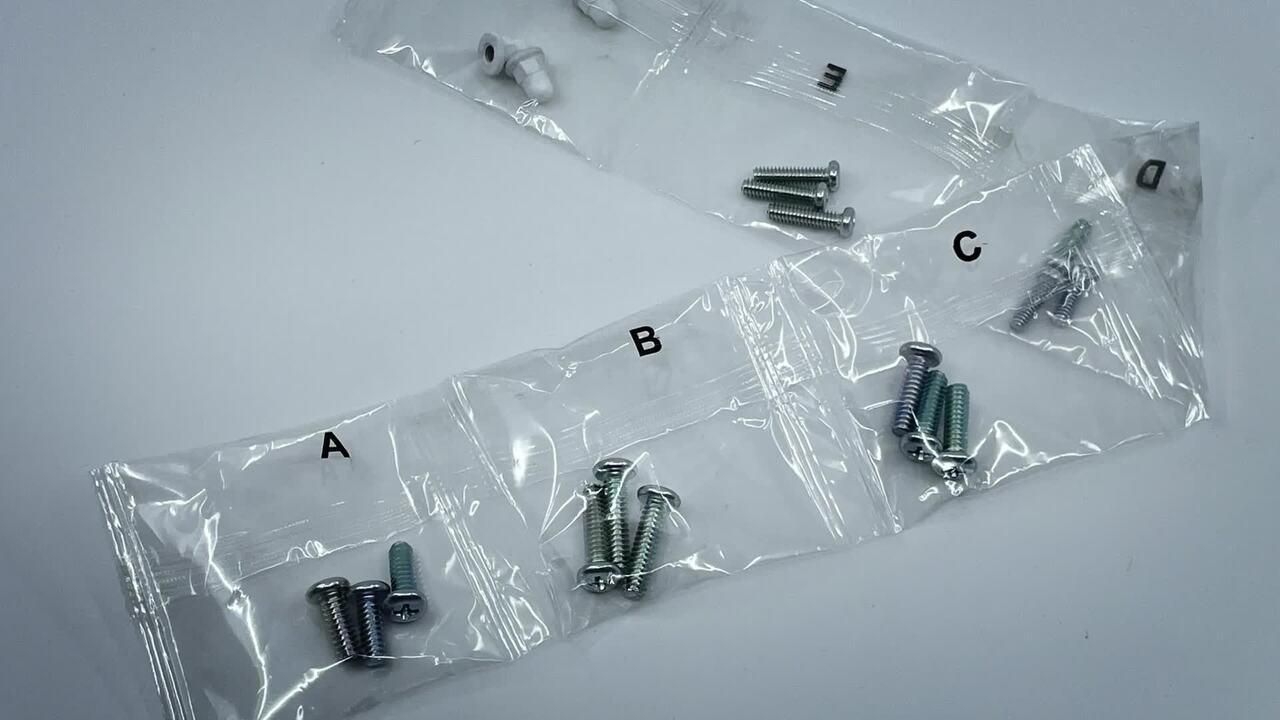
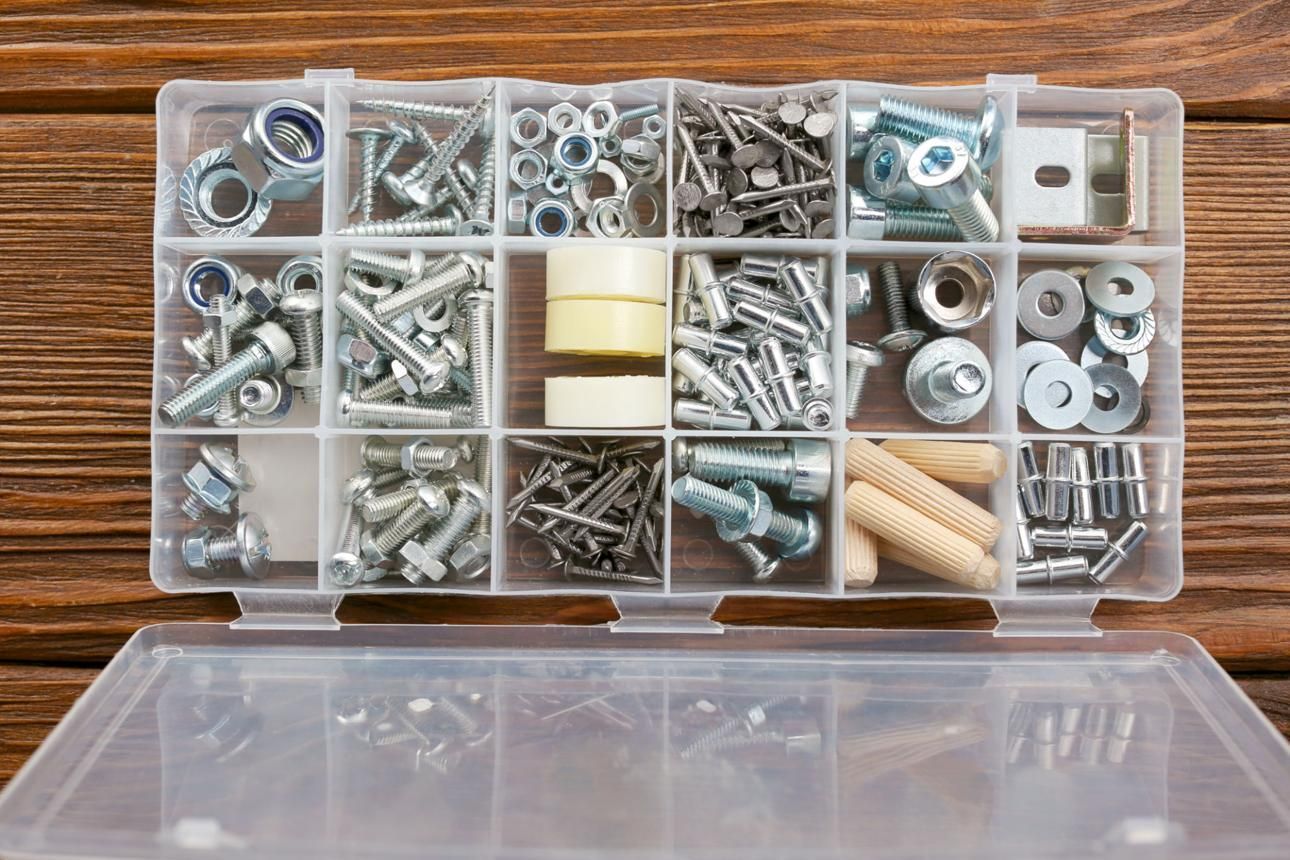
One of the biggest headaches after a move is discovering that you have a bed frame, dining table, entertainment center, or shelving unit but can't find the hardware needed to put it back together.
Create one designated PARTS BOX.
Here's how:
1. Collect small resealable bags.
2. As furniture is disassembled, put its screws, bolts, washers, brackets, and other hardware into a separate bag.
3. Label each bag with the corresponding furniture item.
4. Include a photograph of the assembled furniture when helpful.
5. Place all hardware bags inside one clearly marked parts box.
6. Keep the parts box accessible and make sure it is not accidentally discarded.
Examples:
- Master bedroom bed frame.
- Guest bedroom bed frame.
- Dining table hardware.
- Entertainment center brackets.
- Desk assembly hardware.
- Shelving unit screws.
- TV wall mount hardware.
- Crib hardware.
The golden rule: Never put loose screws, bolts, or hardware in a random box!
28. Take Pictures Before Disconnecting or Disassembling Anything
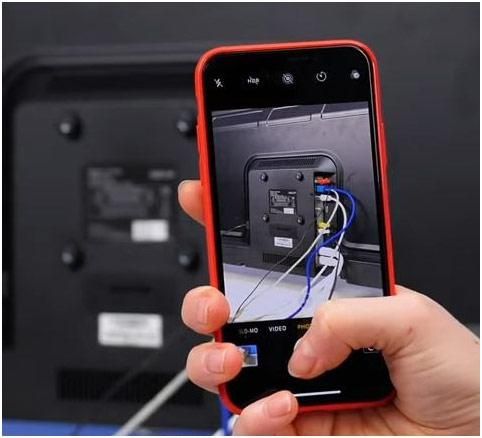
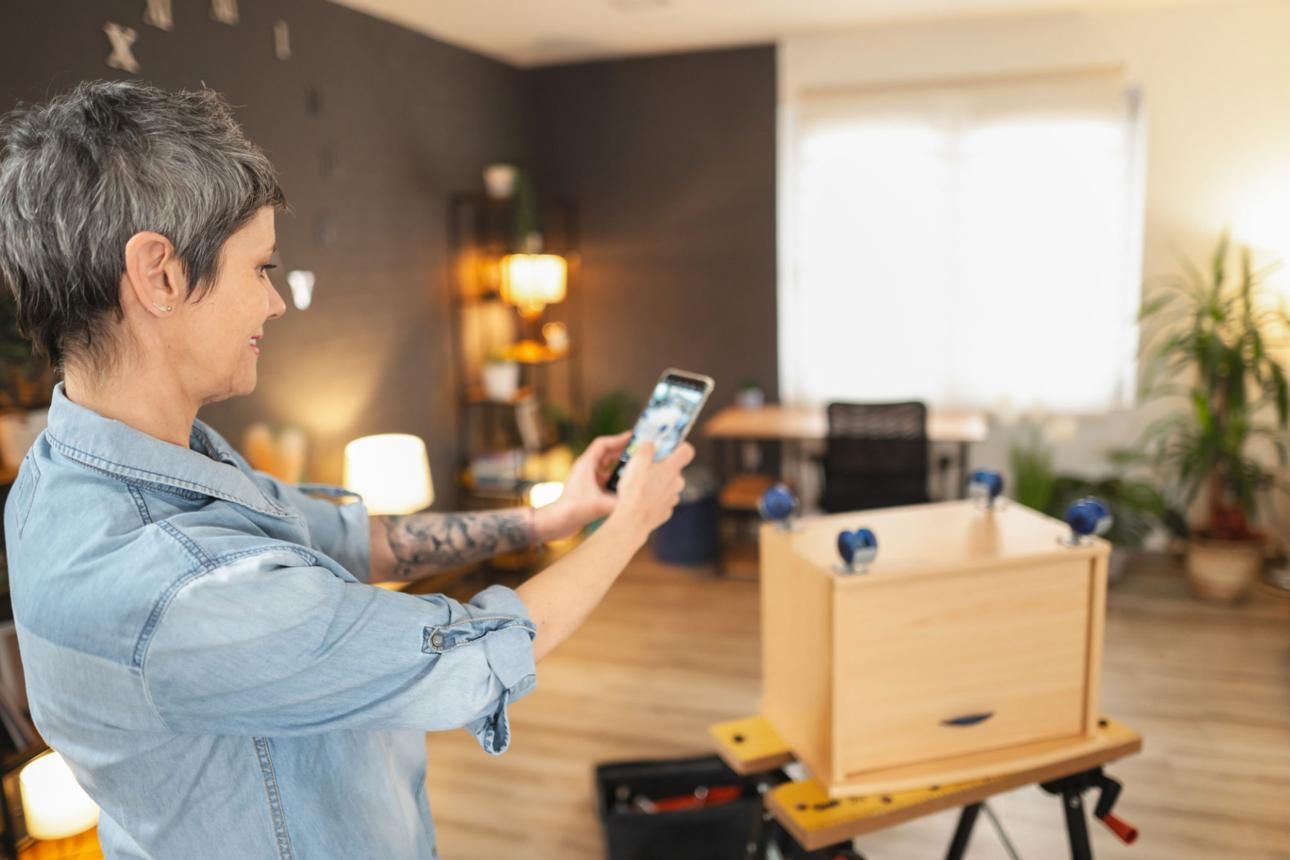
Your smartphone is one of the most useful packing tools you own.
Take pictures of:
- The back of your television and its cable connections.
- Entertainment center wiring.
- Computer connections.
- Home theater systems.
- Complicated appliances.
- Furniture before disassembly.
- Shelving configurations.
- Wall-mounted equipment.
- Custom installations.
Extra tip: Take a picture of the hardware and the location where it belongs before taking anything apart. This can save considerable time when reassembling everything.
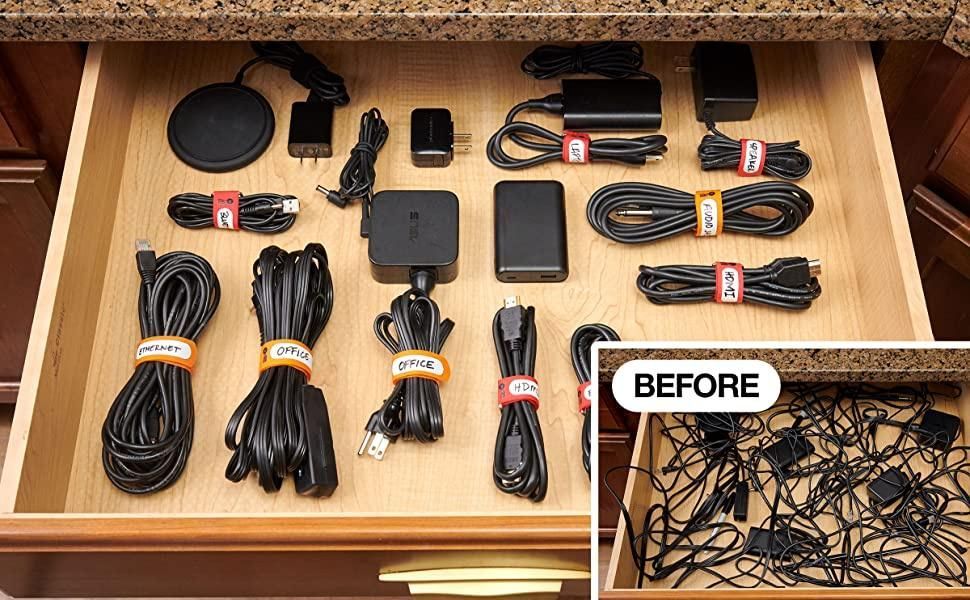
29. Bagging Up Cords, Cables & Remotes
Nothing is more frustrating than unpacking a television or electronic device and not knowing which cord belongs to which item.
Use this system:
1. Disconnect cords and cables.
2. Label each cable.
3. Bundle each set with a reusable tie.
4. Place related cables and small accessories in a resealable bag.
5. Label the bag with the device name.
6. Keep remotes with their corresponding electronics.
7. Place everything together in a clearly labeled accessory box.
Examples:
- Living Room TV Cables.
- Master Bedroom TV Cables.
- Office Computer Accessories.
- Internet Router and Modem.
- Gaming System Accessories.
Never place loose cables in a large miscellaneous box.
30. Use Suitcases, Laundry Baskets & Storage Containers
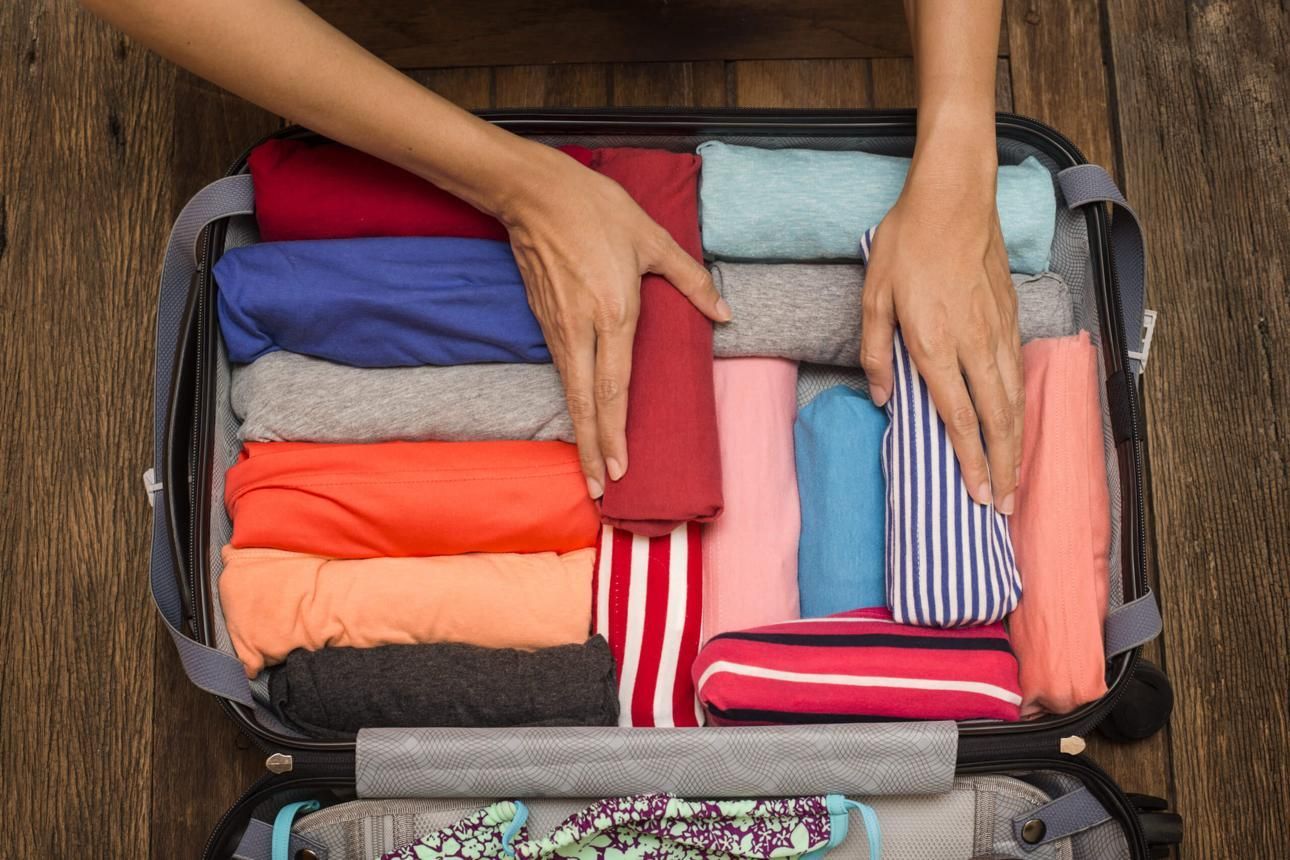
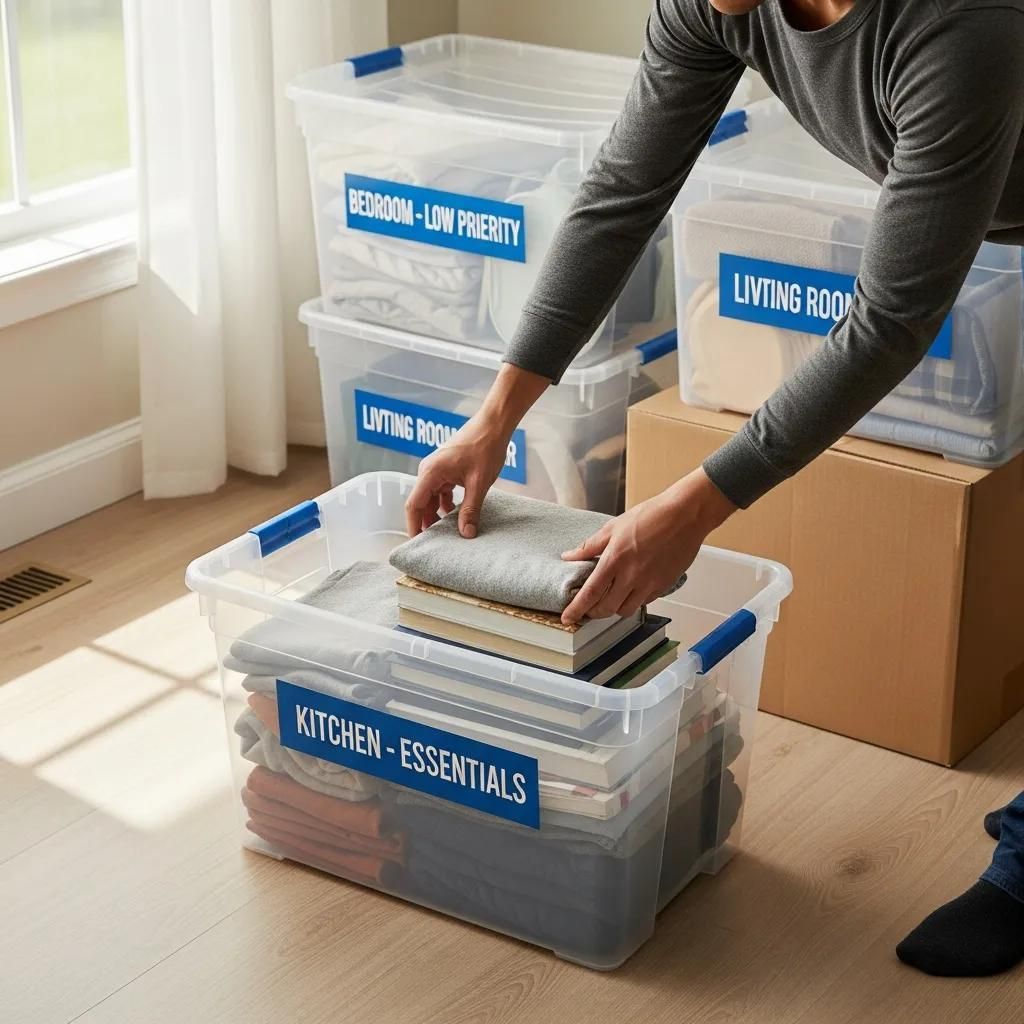
Don't overlook the storage containers you already own!
- Use suitcases for clothing, shoes, and linens.
- Use laundry baskets for lightweight household items.
- Use plastic storage bins for appropriate household goods.
- Use small containers for toiletries and bathroom accessories.
- Keep fragile items in purpose-designed cartons rather than ordinary plastic tubs.
Important: Make sure all containers are secure, appropriately weighted, and suitable for stacking and transport. Don't assume that a plastic storage bin is automatically strong enough for a long-distance move.
31. Pack a Designated First-Night Box
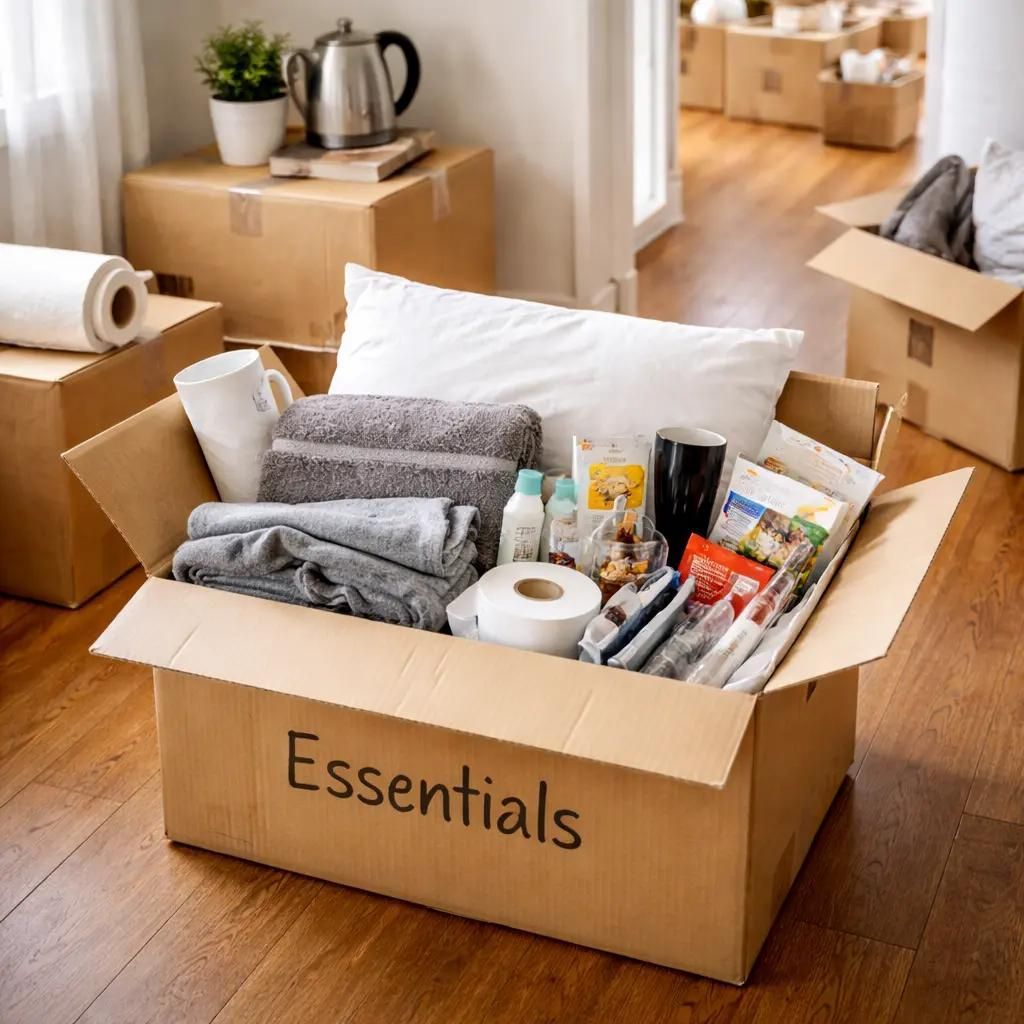
This is one of the most important boxes you'll pack!
After a long day of moving, the last thing you want to do is search through dozens of boxes for a toothbrush, toilet paper, phone charger, or clean bedsheets.
Create a box or several bags labeled:
OPEN FIRST
Recommended contents:
| Category | Items |
|---|---|
| Bathroom | Toilet paper, soap, towels, toothbrushes, toothpaste |
| Bedroom | Sheets, pillows, blankets, pajamas |
| Kitchen | Paper plates, cups, utensils, napkins |
| Cleaning | Paper towels, trash bags, disinfecting wipes |
| Electronics | Phone chargers, extension cords, basic cables |
| Personal | Change of clothes, medications, toiletries |
| Children | Favorite toys, diapers, wipes, essentials |
| Pets | Food, bowls, leash, medication |
| Tools | Scissors, box cutter, screwdriver, flashlight |
Keep this box separate from the general moving shipment if possible.
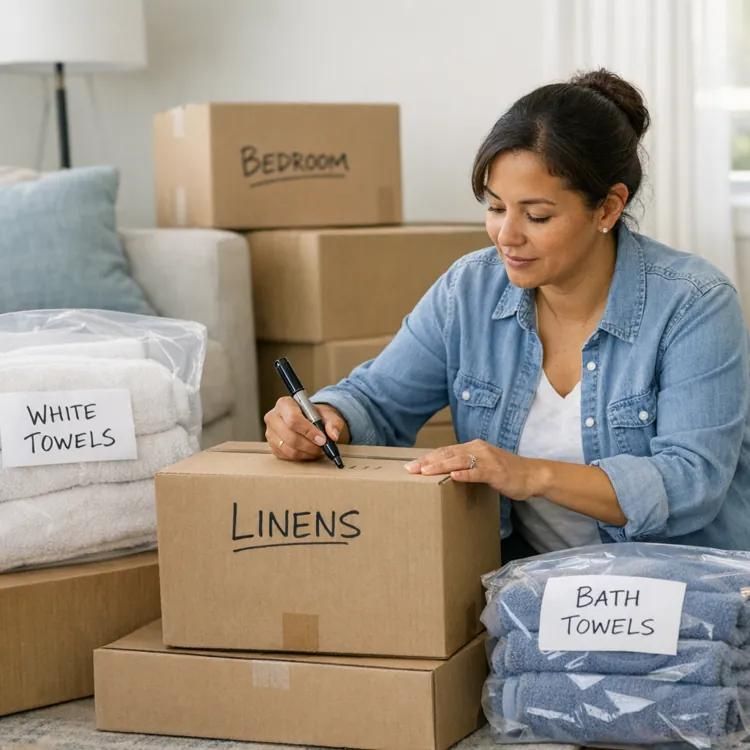
32. Use a Color-Coded Labeling System
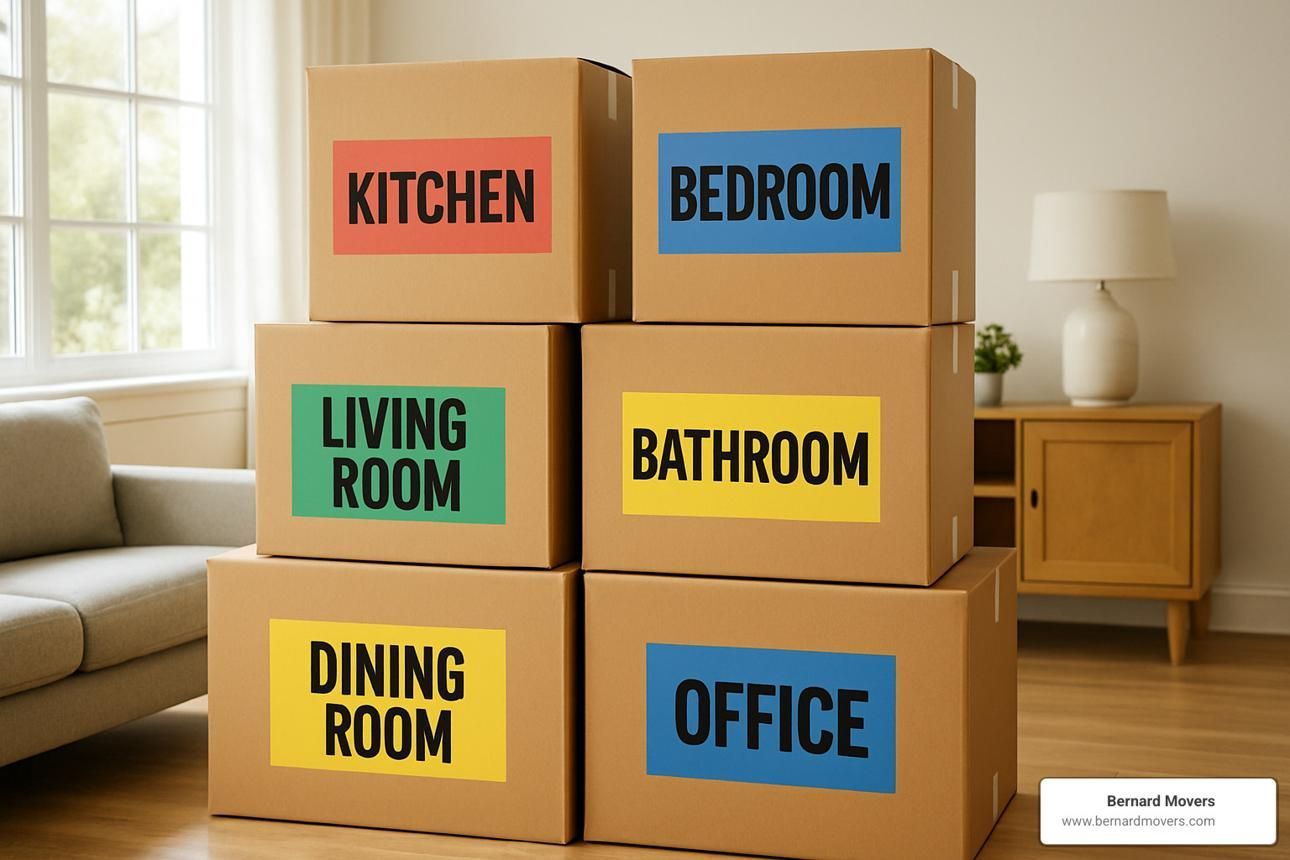
Color coding makes unloading and unpacking much easier.
Assign a color to each room:
| Room | Suggested color |
|---|---|
| Kitchen | Red |
| Master Bedroom | Blue |
| Living Room | Green |
| Bathroom | Yellow |
| Office | Orange |
| Guest Bedroom | Purple |
| Garage | Gray |
Use colored labels or colored tape on each box.
Put matching colored signs on the doors of the corresponding rooms at the new home.
Every box should have:
- Destination room.
- General description of contents.
- Fragile designation, if applicable.
- Box number, if using an inventory system.
Write on at least two sides of each box so the label remains visible when boxes are stacked.
Room-by-Room Packing Strategy
One of the best ways to avoid becoming overwhelmed is to work through your home in a specific order.
Rather than packing everything at once, concentrate on one room or category at a time.
Start with guest bedrooms and storage areas
Pack seasonal items, extra bedding, decorations, unused clothing, books, and items you rarely use.
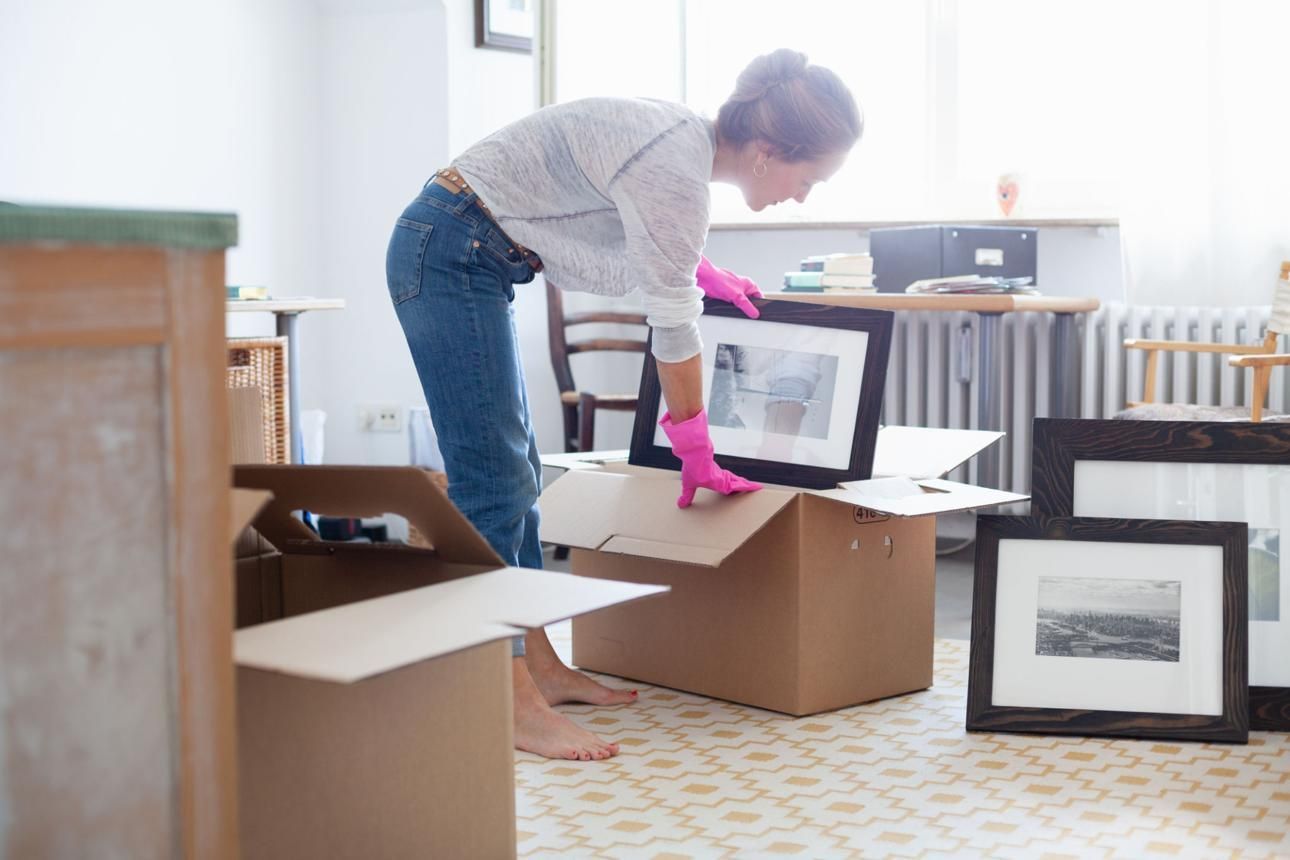
Next, pack living areas
Pack wall decorations, books, collectibles, entertainment accessories, extra electronics, and decorative items.
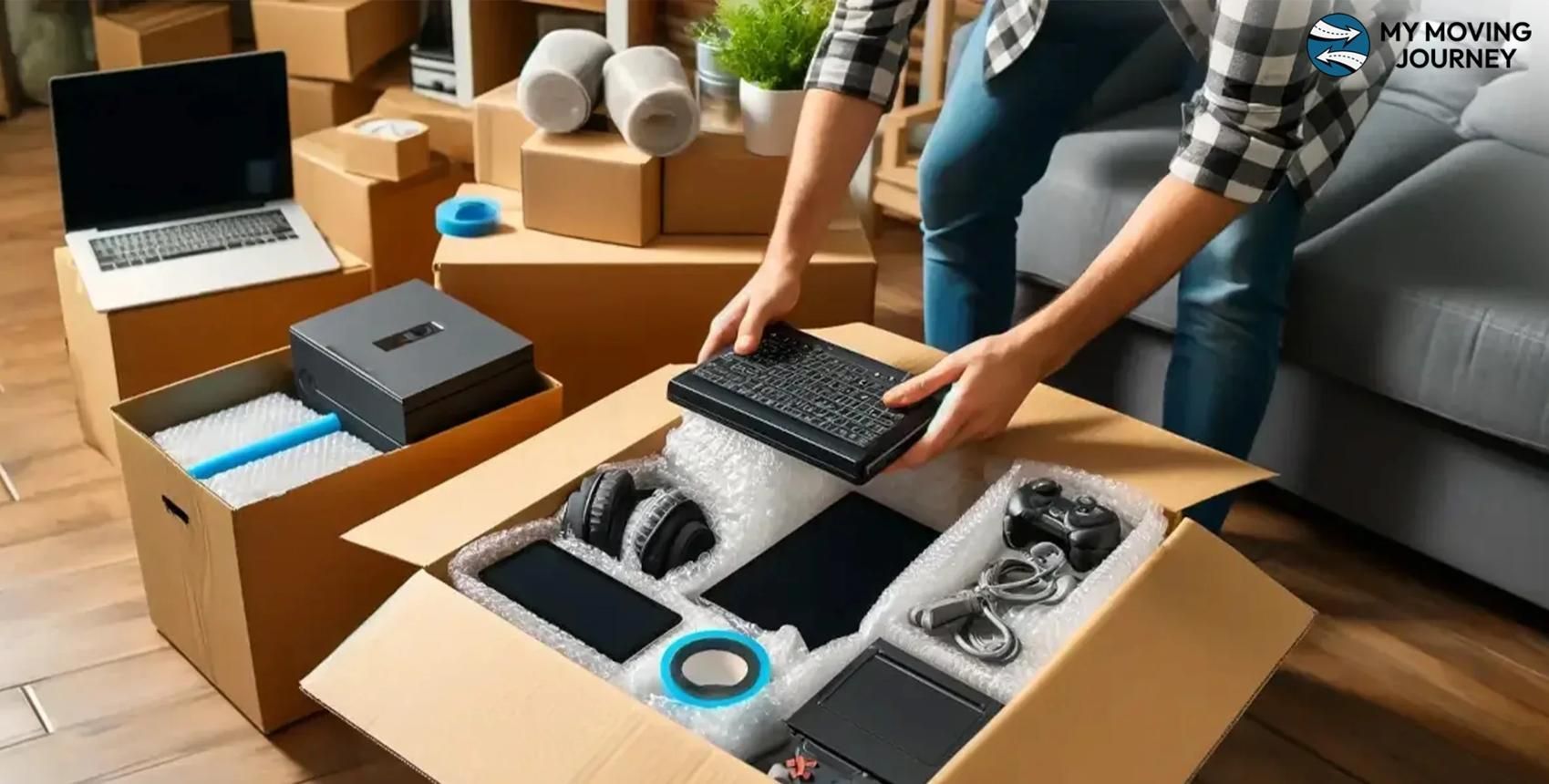
Pack the office
Pack extra office supplies, books, filing materials, printers, and electronics you won't need immediately.
Pack the kitchen
Start with specialty cookware, extra dishes, serving pieces, appliances, and pantry items you won't need before moving.
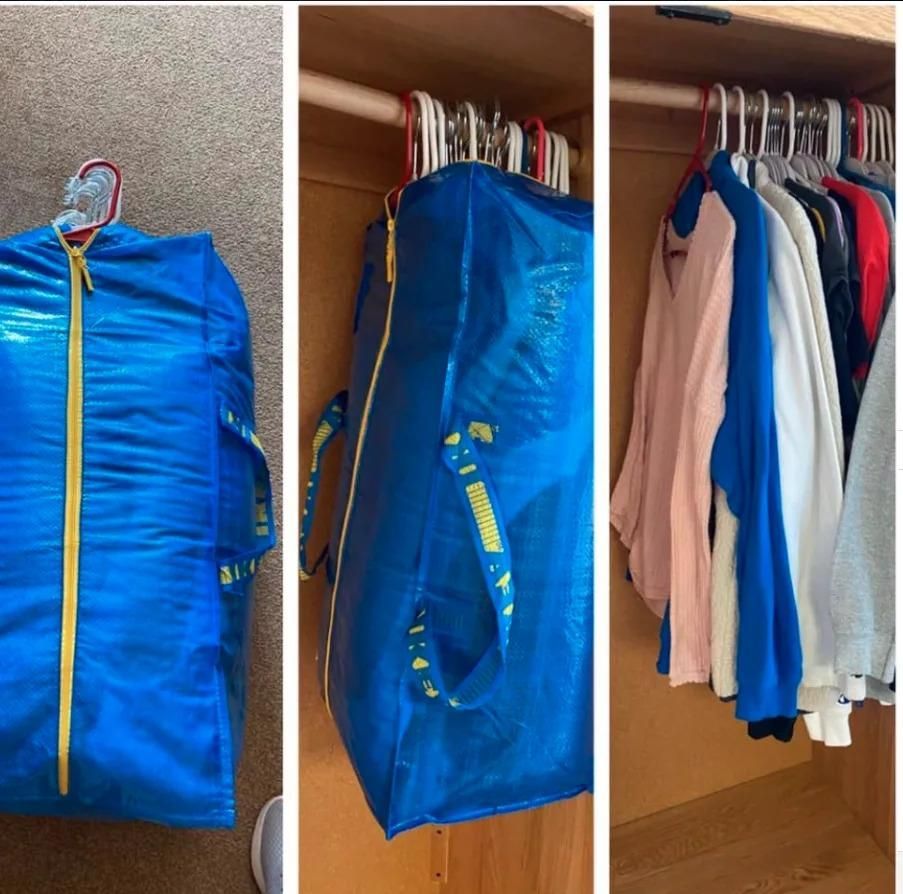
Pack bedrooms and closets
Pack seasonal clothing, shoes, accessories, extra linens, and items that aren't part of your daily routine.
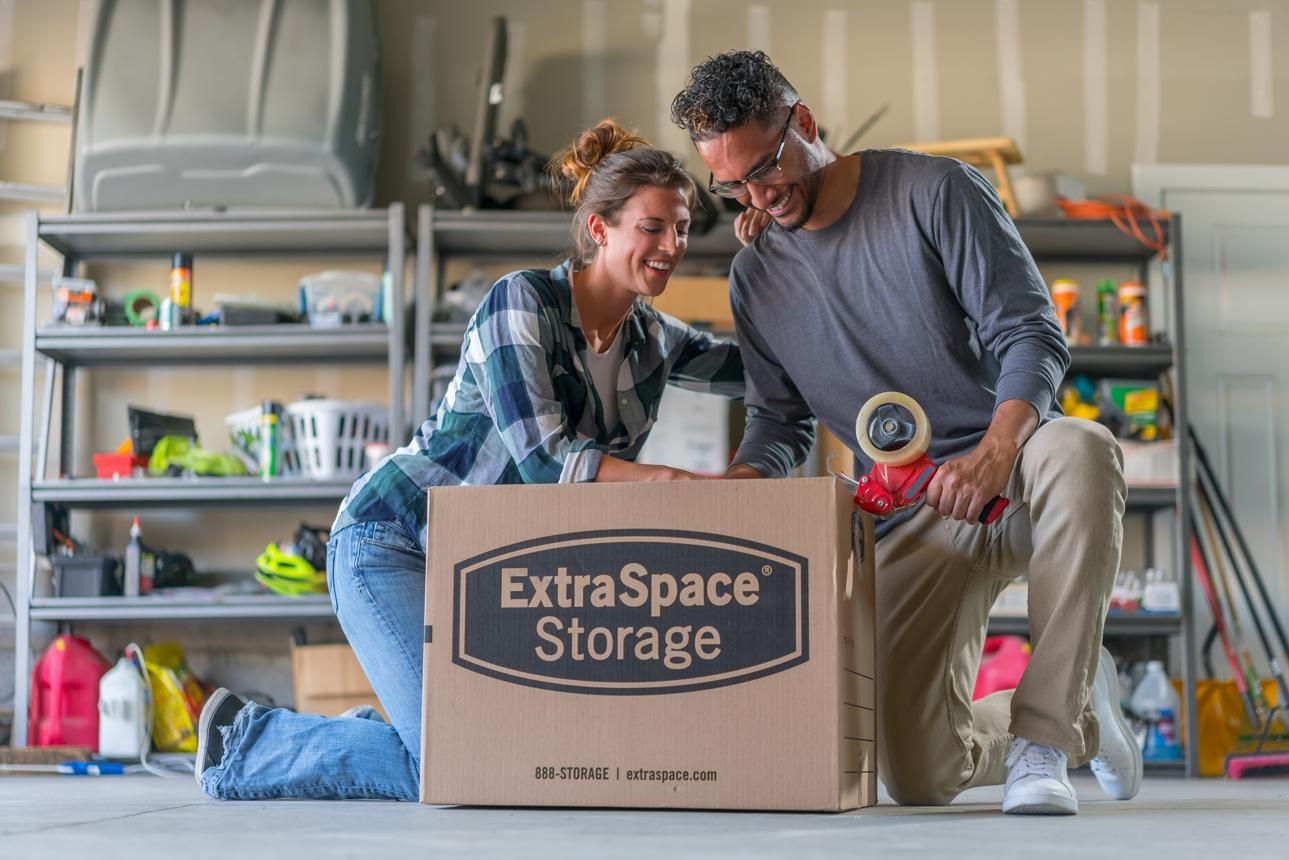
Finish garages, patios, and storage areas
Sort tools, sporting goods, outdoor furniture, decorations, and remaining household items. Separate prohibited or hazardous materials.
Remember: Leave everyday necessities accessible until the final stages of packing. You still need to live in your home while preparing to move!
Packing Mistakes to Avoid
Even people who have moved several times can make simple packing mistakes. Avoid these common problems:
1. Using oversized boxes for heavy items. Large boxes filled with books, dishes, or tools become difficult to lift and can fail.
2. Using weak boxes. Grocery boxes and previously damaged cartons may not withstand stacking or long-distance transportation.
3. Leaving items loose. Loose belongings can shift, fall, or become separated.
4. Putting too many different rooms in one box. This makes unpacking unnecessarily difficult.
5. Forgetting to label boxes. A mystery box is no fun when you're unpacking.
6. Packing fragile items without individual wrapping. Items should never be allowed to collide with one another.
7. Using towels and blankets without enough protection. Household fabrics can help cushion some items, but they are not always a substitute for proper packing materials.
8. Putting heavy items on top of delicate belongings. A fragile box should never become a shelf.
9. Forgetting furniture hardware. Unlabeled screws and bolts can become nearly impossible to identify.
10. Leaving liquids unsecured. A leaking bottle can ruin an entire box.
11. Packing things that should not go in the moving truck. Fuel, hazardous chemicals, certain batteries, perishables, and other restricted items need special consideration.
12. Packing too late. Last-minute packing creates unnecessary stress and can delay the loading process.
13. Failing to protect furniture. Wood, leather, glass, and upholstered furniture can be damaged by scratches, dirt, moisture, and improper handling.
14. Forgetting to empty trash cans. Empty and clean them before the move.
15. Leaving items in closets, cabinets, and drawers. Check every storage space before the movers leave.
What Should You Keep With You Instead of Packing?
Some belongings are better kept in your personal vehicle rather than included in the moving shipment.
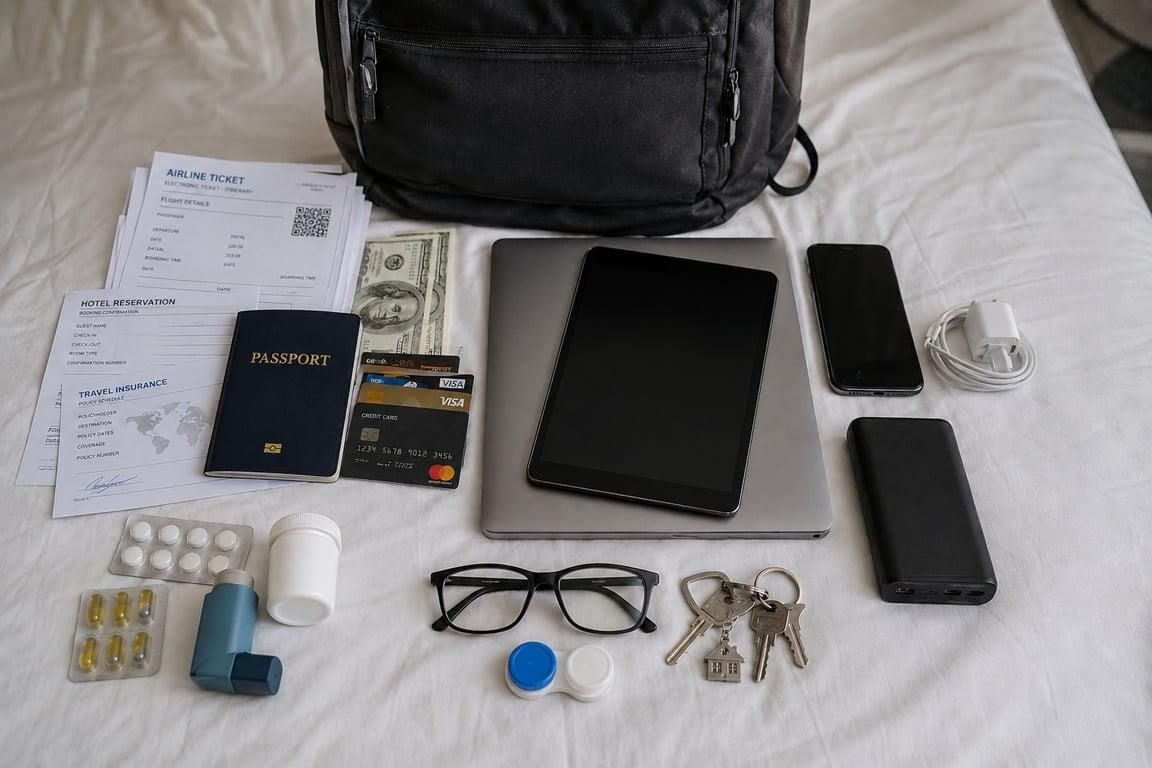
We recommend preparing a separate personal travel bag containing:
- Wallet, cash, credit cards, and identification.
- Passports and important documents.
- Jewelry and watches.
- Prescription medications.
- Cell phones and chargers.
- Laptops and other personal electronics.
- Keys and garage door openers.
- Important financial and legal paperwork.
- Personal hygiene products.
- A change of clothes for each family member.
- Essential items for children and pets.
- Irreplaceable photographs and keepsakes.
One important distinction: Your moving shipment is for household belongings. Your personal travel bag is for the things you cannot afford to lose access to during the transition.
Items to Discuss With Your Moving Company Before Packing
Not everything in a household can automatically go into a moving truck. Restrictions can vary by carrier, transportation method, and destination.
Before packing, ask your moving company about:
- Gasoline, diesel, and other fuels.
- Propane tanks and gas cylinders.
- Paint, paint thinner, and solvents.
- Pesticides, fertilizers, and pool chemicals.
- Fireworks and ammunition.
- Aerosol products and flammable materials.
- Certain lithium batteries and battery-powered equipment.
- Perishable and frozen food.
- Open or leaking liquids.
- Houseplants and restricted agricultural materials.
- High-value artwork, antiques, and collectibles.
- Safes, oversized equipment, and unusually heavy items.
Never place hazardous or questionable materials in a moving box without first confirming that they can be transported.
Few Final Recommendations From LIFE Moving Co.
Packing is one of the biggest parts of preparing for a move, and doing it correctly can make a tremendous difference in how smoothly your relocation goes.
At LIFE Moving Co., we understand that moving an entire household can feel overwhelming. Our company is family owned and operated, with four generations of moving experience and a focus on direct-service relocations throughout Texas and across state lines.
LIFE Moving+1
Here are our three biggest pieces of advice:
1. Start early. Don't wait until the last few days. Give yourself enough time to organize, sort, and properly protect your belongings.
2. Pack with the destination in mind. Think about where each item will go in your new home. Proper labeling and organization now will save hours of work later.
3. Let professionals handle what they're trained to do. If something is unusually heavy, fragile, valuable, oversized, or difficult to pack, don't risk damaging it trying to do it yourself.
Need Packing Materials or Professional Moving Assistance?
Let LIFE Moving Co. Help Make Your Move Easier!
Whether you're moving across Texas or relocating out of state, LIFE Moving Co. is here to help.
We offer direct-service moving solutions without brokers or third-party moving crews, along with packing materials and moving assistance to help make your relocation as smooth as possible.
LIFE Moving+1
Contact LIFE Moving Co.
- Website: www.lifemoving.net
- Phone: 512-317-9119
Family Owned & Operated. Direct Service. Personal Relocation.
